

Does This Easy-To-Grow Herb Really Keep Wasps Away?
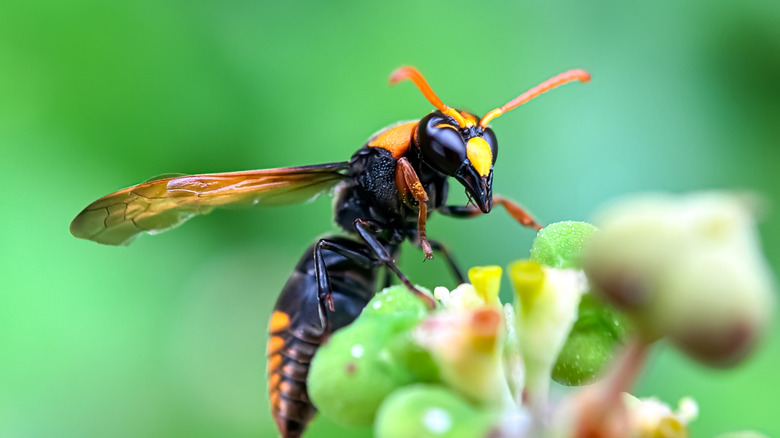
No one wants to stumble upon a wasp in the yard. Many species, especially yellow jackets, can be aggressive and sting anyone in their path. As with other pests, there's a common plant that is rumored to repel them, but does it work? While planting rosemary isn't a guaranteed forcefield against these stinging insects, some gardeners say they have luck with it.
While there's a lot of anecdotal evidence that wasps don't like the smell of rosemary, there's limited scientific proof. According to a Pest Management Science study, rosemary in essential oil form did successfully repel yellow jackets. Essential oils, of course, are not the same thing as plants. Essential oils are typically the concentrated form of an herb or flower, so their chemical essence is at its most powerful. Carnosic acid and camphor are two main active ingredients in rosemary, which give it some antioxidant properties and contribute to the herb's unique scent.
Current evidence points to concentrated rosemary as being effective in warding off these flying insect invaders, but there's little concrete proof that the rosemary plant itself will keep wasps away in its natural state. Still, since it couldn't hurt and might even help, there's little harm in growing rosemary. If it doesn't protect against wasps, at least you can harvest it for its flavor in all kinds of recipes.
How to grow rosemary
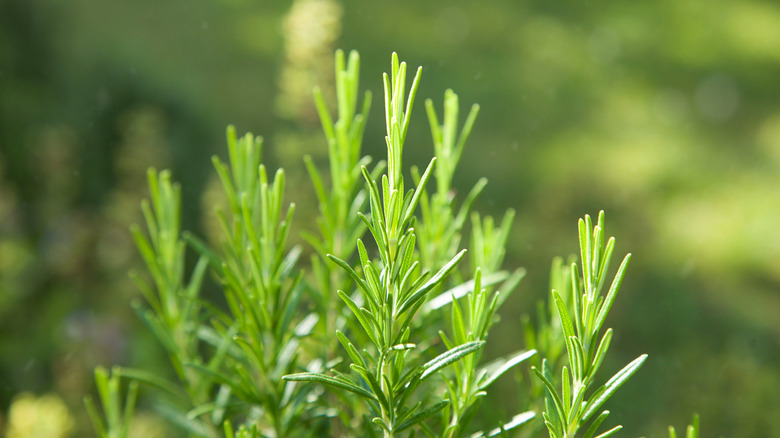
Rosemary is a perennial herb that prefers warmer temperatures and is only hardy down to USDA Hardiness Zone 7. The good news is, if you live in a zone lower than that, you can easily grow it in a pot to keep outside during wasp season and move indoors when the weather cools. You can even prune this cute little evergreen shrub to look like your own mini indoor rosemary Christmas tree.
Rosemary needs lots of light and well-drained soil. It also likes humid air and can suffer in dry environments. Often, the first distress sign when the humidity is too low is brown needles. So, rather than increasing your watering, if you see the tips of the needles brown, try setting the herb on a tray filled with pebbles and water. Or use a mister to keep foliage moist and see if the plant improves. And don't forget that pruning or harvesting rosemary can help keep the plant healthy.