

The Ideal Patio Tree For Its Shady Benefits And Fruit Supply

There's something about a patio that just screams summer. After all, who doesn't want to live their "Golden Girls" fantasy, lounging on a chaise with a fruity beverage in hand? It might be even better if that beverage is made with fruits plucked from your own backyard tree, and better still if that same tree provides some much-needed shade from the hot afternoon sun. With its delicious fruits and dense, shady canopy, guava (Psidium guajava) can be a highly useful addition to your patio. Guava trees are rapid growers, and can even begin to fruit at very small sizes, so you won't have to wait too long to enjoy fresh guavas off the tree, on top of ice cream, in pastries, or as fresh juice.
Although this tree is only winter hardy in USDA Zones 8 to 11, it also makes an excellent container plant and can be overwintered indoors in colder climates. There are many varieties of guava available, with pulp that may be red or pink, white, or green. Some, such as 'Red Malaysian' and 'Nana' — a dwarf variety— may be particularly well-suited to growing in pots. You'll often find young trees for sale in containers, or you can grow guavas from cuttings. You can also grow them from seed, but be aware that they may not come true from seed and may take a few years to produce fruit, whereas a purchased sapling will probably deliver fruit in a year or so.
How to grow and care for a guava tree
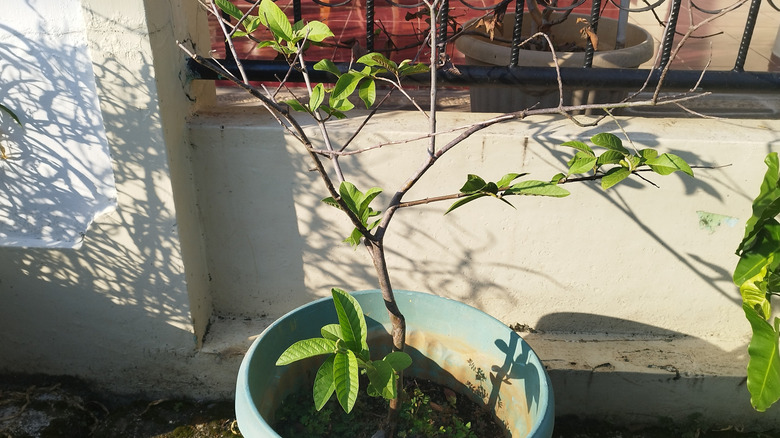
If you're planning to grow guavas in a container, you can start with a small tree planter size (one to three gallons), but you'll eventually want to transplant them into the largest container you can feasibly transport. Plastic pots may be better than ceramic, if only to reduce the amount of extra weight when you move them. Although guava trees can thrive in a wide variety of soils, a mixture containing acid soil mix, peat, core, and bark can be a good choice for potted plants. You can keep guavas small and compact through pruning, and keeping them below 10 feet tall may actually be ideal, as a strong wind might blow them over. Prune guavas yearly after they're done fruiting to maintain their size.
These tropical trees need quite a bit of sun and warmth in order to produce the best fruit. Unless you have a greenhouse, such conditions can be tricky to maintain indoors during the winter, so you'll want to place your potted guavas in a sunroom or near your sunniest window, and you may want to plug in a space heater. During warmer months, fertilize your guava trees with plant foods such as pelleted fruit tree fertilizer. Every two or three years, trim off the two outermost inches of roots to prevent them from becoming root-bound. Finally, although guavas are self-fertile, you'll see a higher yield of fruits if you have multiple trees that can cross-pollinate, so maybe consider getting your tree a friend.