

5 Fruit Trees You May Want To Avoid Growing, And 5 Better Alternatives To Try Instead
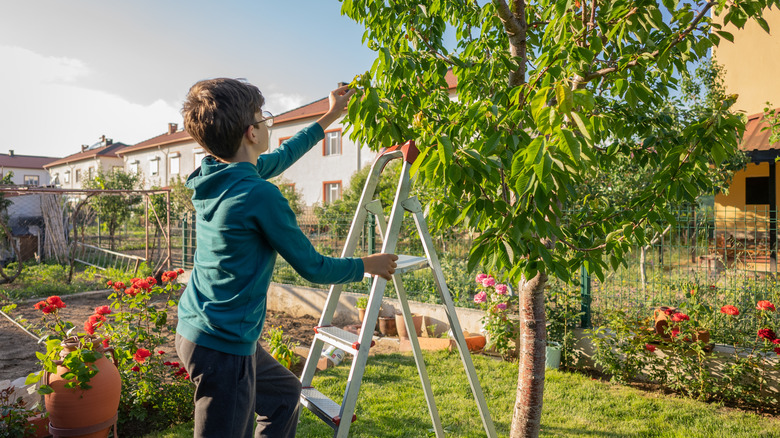
Whether you want a steady supply of tasty natural snacks, a unique ornamental touch, or a buffet to tempt birds to your backyard, fruit trees can be a great addition to your landscape. When selecting the perfect fruit tree for your garden, there are many factors to keep in mind, including the climate and soil it will be growing in, how much space is available, and whether they need chill hours or cross-pollination to set fruit. Just as important as knowing what fruits are suited to your yard, however, is knowing which ones aren't — and sometimes the reasons for their incompatibility aren't apparent without a bit of research. Some fruit trees, such as Surinam cherry and the camphor tree, may be classified as invasive species in your region. Luckily, no matter what factors attracted you to a problematic species in the first place, there is usually a native or less invasive species with comparable characteristics.
Avoid: Autumn olive
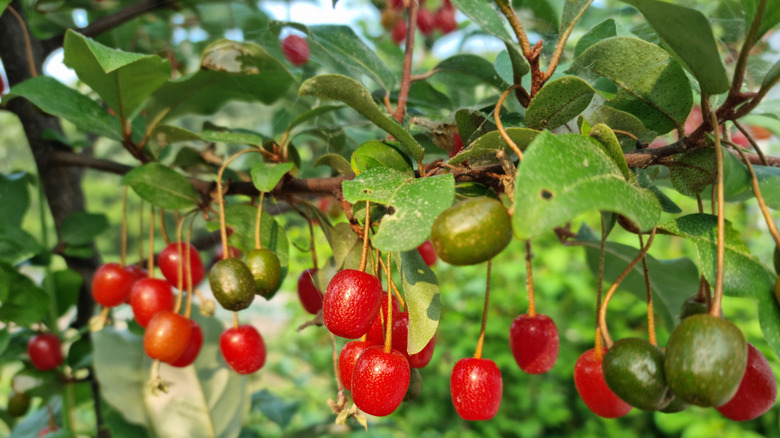
With its silvery leaves, fragrant blooms, and pretty, edible berries, at first blush, it's easy to see why autumn olive (Elaeagnus umbellata) was introduced to the U.S. as an ornamental garden selection in the 19th century. In addition to being aesthetically pleasing, it's a survivor, able to tolerate drought and poor, eroded soil. However, this east Asian import has escaped cultivation to become a problematic invader, as its seeds can be widely dispersed by animals who eat its fruits — and unfortunately, it tends to displace native plants that bear more nutritious fruits richer in protein and fat.
Instead: American fringetree
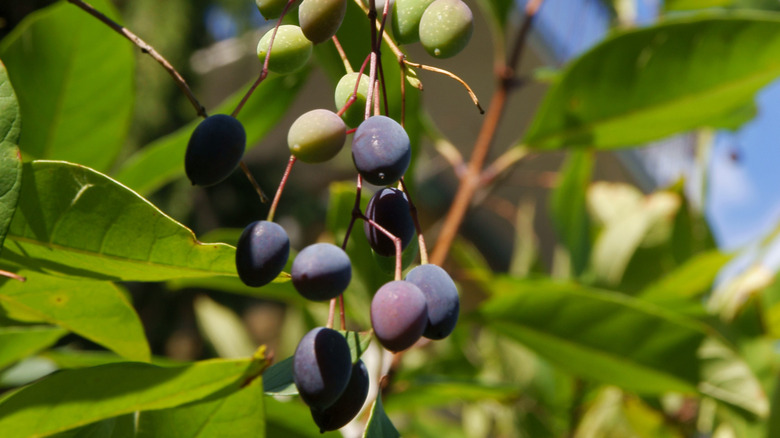
One potential alternative for the invasive autumn olive is the American fringe tree (Chionanthus virginicus), which is native to the eastern U.S. Interestingly, unlike the autumn olive, which belongs to the oleaster family, American fringe tree is actually a member of the olive family! Hardy in USDA Zones 3 through 9 (comparable to autumn olive's 4 through 9 range), this petite tree typically attains heights ranging from 12 to 20 feet. It boasts fringey, fragrant white flowers in the spring and shows off golden fall color. Like autumn olive, fringe tree is drought tolerant and has the additional benefit of being fairly fire resistant.
Avoid: Surinam cherry
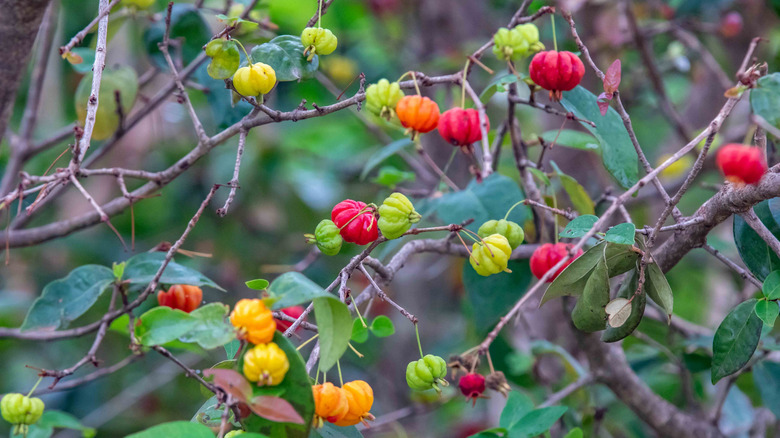
Although it was ubiquitous in Florida yards and gardens for quite a long time, the South American native Surinam cherry (Eugenia uniflora), also called pitanga, is now considered persona-non-grata in the central and southern parts of the state due to its tendency to shoulder out native species. The fruits of this tree, which sort of resemble tiny pumpkins, are edible, but they have a resinous flavor that makes them a bit polarizing, or at the very least an acquired taste. Additionally, ingesting the pit can upset your stomach, and the tree tends to host populations of fruit flies.
Instead: Simpson's stopper
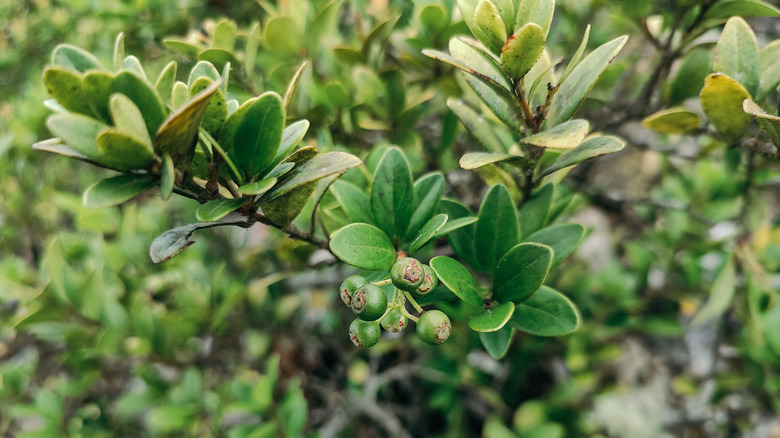
You might try ditching the potentially invasive Surinam cherry for a native selection, Simpson's stopper (Myrcianthes fragrans), or twinberry. Ideal for zones 8b to 11, Simpson's stopper is a low-maintenance selection that makes a fragrant addition to the landscape with its nutmeg-scented leaves and pollinator-attracting blossoms. The flowers give way in summer and fall to berries, which are edible though not considered especially tasty, and provide a pop of orangey-red color; plus, they draw in hungry birds. The branches even have exfoliating bark that delivers additional visual interest. At home growing in salty and alkaline soil, Simpson's stopper is a great choice for coastal locations.
Avoid: Callery pear
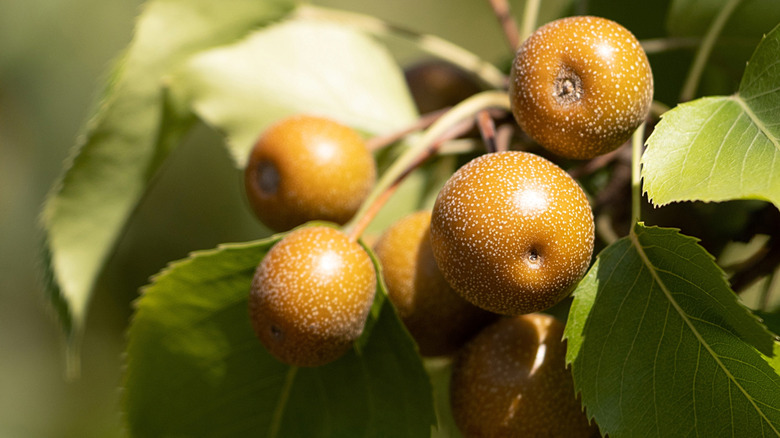
Even if you're not really familiar with the name 'Callery' pear (Pyrus calleryana), you've probably encountered a cultivar, the 'Bradford' pear. Midcentury city planners were fond of this tree for its rapid rate of growth and relatively small size — not to mention the fact that its roots don't usually damage sidewalks — so it's still a pretty common sight in streetside landscaping. Although the Bradford cultivar was meant to be sterile, its foul-smelling white flowers cross-pollinated and hybridized with other Callery pear varieties, resulting in seeds which could be dispersed by fruit-eating animals to create thickets of invasive Callery pears elsewhere.
Instead: Serviceberry
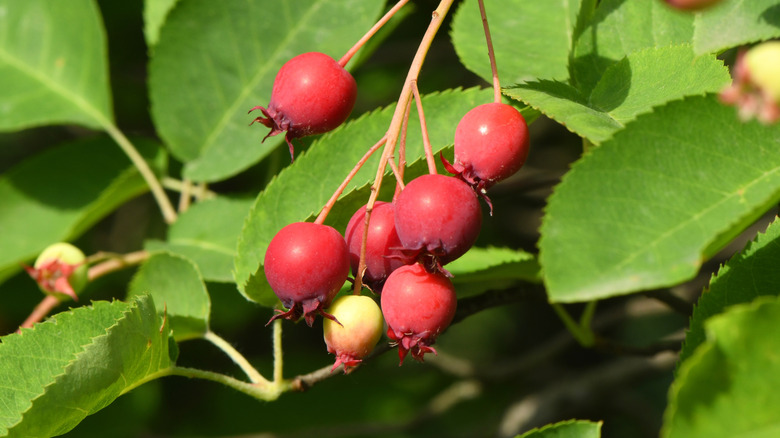
If you want white flowers in springtime without the invasive nature of the Callery pear, serviceberry (Amelanchier spp.) might just be the way to go. Like Callery pear, serviceberry is among the earliest trees to flower in the spring; unlike Callery pear, serviceberry blossoms actually smell nice! The tiny fruits of the Callery pear are inedible to humans and aren't even that nutritious for the birds and wildlife. Serviceberry fruits, meanwhile, are tasty to eat and cook with and are high in nutrients such as iron and calcium. Plant this tree in zones 4 through 9 in full sun or partial shade.
Avoid: Common buckthorn
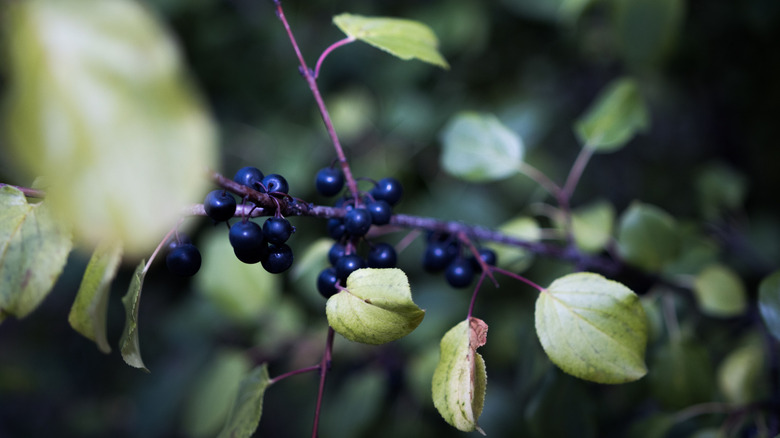
A Eurasian native introduced for ornamental use to the U.S. in the 19th century, common buckthorn (Rhamnus cathartica) is yet another invasive tree whose unwelcome spread is largely thanks to birds eating its fruits. It tends to shade out native plants with its tendency to hold onto its leaves until late fall, and may even have allelopathic properties. This invader can be tricky to get rid of, as it will grow again from stumps and the seeds may still sprout even after years. One particularly charming detail: its fruits have a purging (that is to say, laxative) effect, hence the species name cathartica.
Instead: Blackhaw viburnum
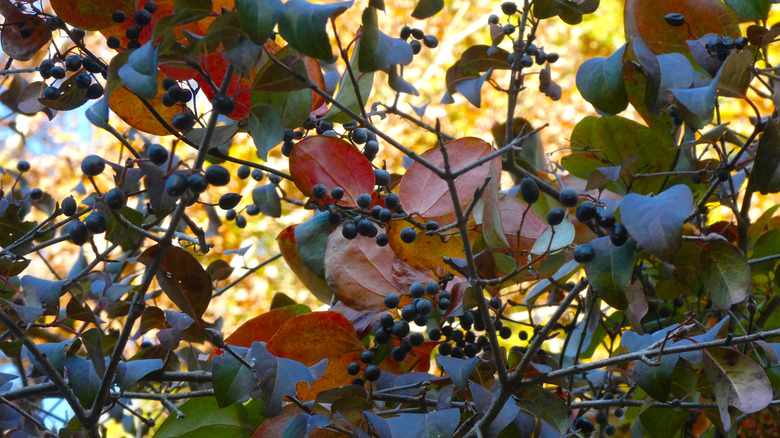
One potential native alternative to common buckthorn is blackhaw viburnum (Viburnum prunifolium). With lovely and sweet-smelling white flowers in spring and edible berries perfect for jam in fall — not to mention stunning autumnal color — blackhaw viburnum has a lot to offer in zones 3 through 9. Additionally, planting blackhaw viburnum can be greatly beneficial to your local wildlife. In particular, it tends to attract native bees, and its berries also provide food for birds and other critters. A fairly tough little tree, blackhaw viburnum can thrive in many types of soil and can easily weather cold winters and tolerate drought.
Avoid: Camphor tree
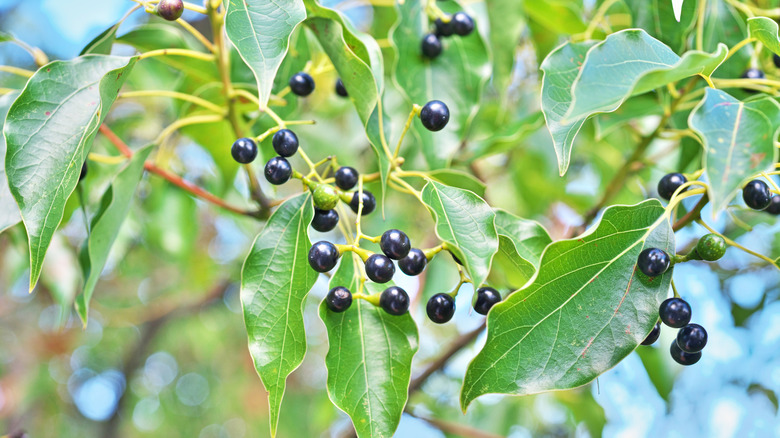
The camphor tree (Cinnamomum camphora) hails originally from east Asia, and was brought to the U.S. as both an ornamental plant and a source of camphor (a terpene with many uses, including medicinal, industrial, and sometimes culinary). A large evergreen, camphor is easy to identify just by crushing and smelling the leaves: if it immediately calls to mind the scent of Vicks VapoRub, in which camphor is an ingredient, you'll know it's the camphor tree. Unfortunately, this tree is considered invasive in several states and is particularly a problem in Florida, where it tends to bully out vulnerable native species.
Instead: Red bay
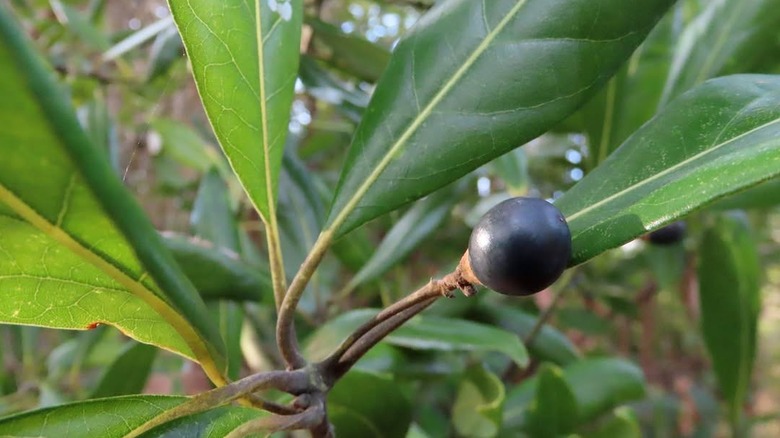
An especially good alternative for the camphor tree in Florida is red bay (Tamala borbonia), a native tree that delivers the grand size and evergreen leaves that might have drawn you to the camphor tree in the first place. It even has fragrant leaves, which emit a spicy odor when you crush them and can be dried and used instead of bay leaves in cooking. Hardy in zones 7 through 9, red bay will happily grow in sandy or salty soils. One note of concern is that red bay is susceptible to the laurel wilt disease carried by the red bay ambrosia beetle.