

What The Old Farmer's Almanac Says About Seed Germination (And If They're Right)
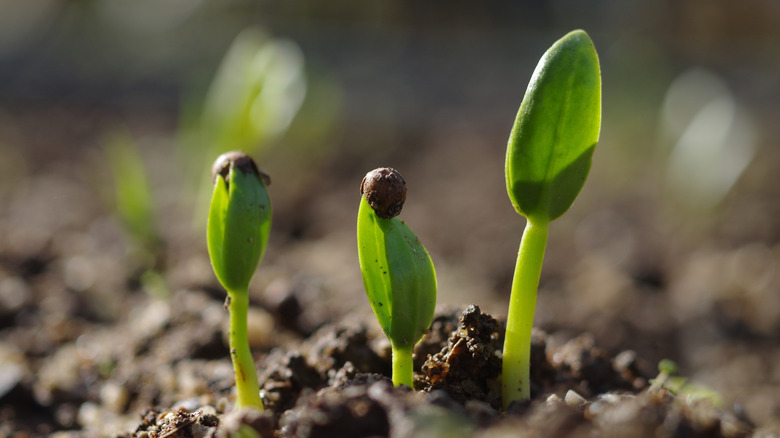
The Old Farmer's Almanac says that one of "the biggest mistakes" we make sowing seeds is to do so at the wrong temperature. Planting seeds when it's too cold or too hot outside can mean they might not germinate. But are they right? Most experts say yes.
Temperature can be a major factor in terms of whether or not a seed germinates. Different crops require different minimum temperatures to sprout, and all of them have ideal climate ranges, making growth more or less likely. Some seeds need a cold stratification period of about one or two months, which is why the Almanac says you should sow some seeds outdoors in winter. It also says the temperature can affect how quickly seeds sprout as well.
All seeds stay in a dormant period and will be shy until the right conditions arrive, which include the perfect amount of air, moisture, and the ideal temperature. Then, they'll crack the shell of the seed and grow their first small radicle that turns into a root. If you plant a seed in soil that's too warm or too cold for a particular variety of plant, then you're asking for trouble. How and when you plant garden seeds can be as important as what kinds of seeds you plant.
Here's how to increase the chances your seeds germinate
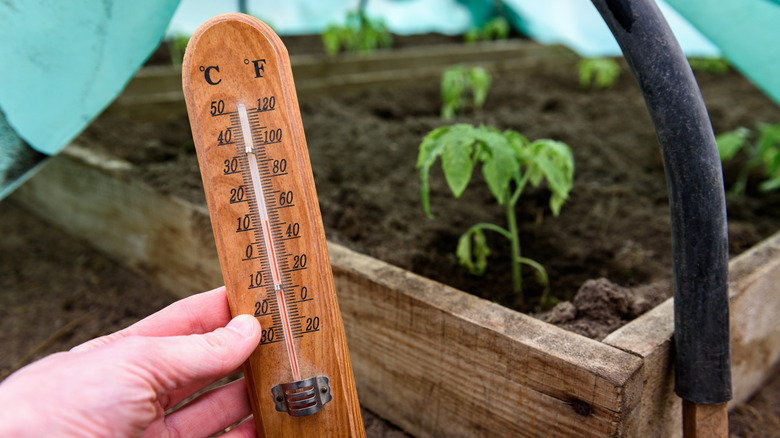
The Almanac warns that planting a seed when it's too cold or too hot for that particular plant will doom your sprout before it even appears. That's because there are certain temperatures that are ideal for certain seeds. Lettuce, for example, is a cold season vegetable so its ideal germinating temperature falls between 40 and 80 degrees Fahrenheit. Meanwhile, peppers and squash, warm season vegetables, prefer soil temps a little warmer, between 65 and 95 degrees.
This built-in temperature trigger lets seeds know it's the right time to grow. It really prevents them from germinating at the wrong time. If tomato seeds started to sprout in November, just to get clobbered by freezing temperatures in December, that would be devastating for the plant. You can best germinate your tomato seeds when planting them shallowly in soil during the warm, humid weather of spring well after the danger of any frost has passed.
Keep in mind that sometimes, no matter what you do, a seed might not germinate. But putting it in the ground or in a container when the temperature is right will increase your chances that the seed will sprout. If you want your plants to germinate, do your research first and know the ideal temperature to plant certain seeds. Take the Almanac's advice on this one, and you'll be glad you did.