

Neither Coffee Grounds Nor Miracle Gro: DIY A Unique Fertilizer For A Healthy Garden
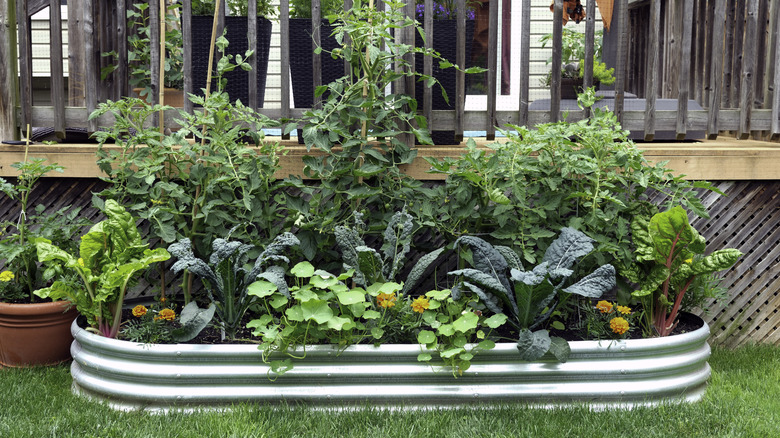
There are a range of both store bought and homemade fertilizers available to help your garden reach its fullest potential. Few have as much history as fish based fertilizers though. Long used by Indigenous North American groups including the Haudenosaunee (Iroquois), decaying fish beautifully nourishes crops and provides them with nitrogen, potassium, and phosphorus. While fish fertilizers are now readily available in stores, there are also a few ways you can DIY your own and help your plants grow faster and healthier.
Of course, the simplest way to use fish as a fertilizer is to simply wait until you've enjoyed a good fish dinner and bury the scraps or carcass of the fish among your plants. One of the major downsides of this method though is how easily the decomposing fish can attract animals, from dogs and flies, to even bears, depending on where you live and whether your garden is fenced in. Adding fish into compost bins is also a popular strategy, but is only appropriate if you are working with a large enough amount of compost. Without the right setup, simply adding fish remains to compost or soil has the potential to not only smell extremely strongly, but also encourage the growth of bacteria like E. coli and salmonella. One good way to avoid this, while still taking advantage of the fertilizing powers of fish is to make your own fish emulsion or hydrolysate.
How to make and use fish emulsions and fish hydrolysate fertilizers
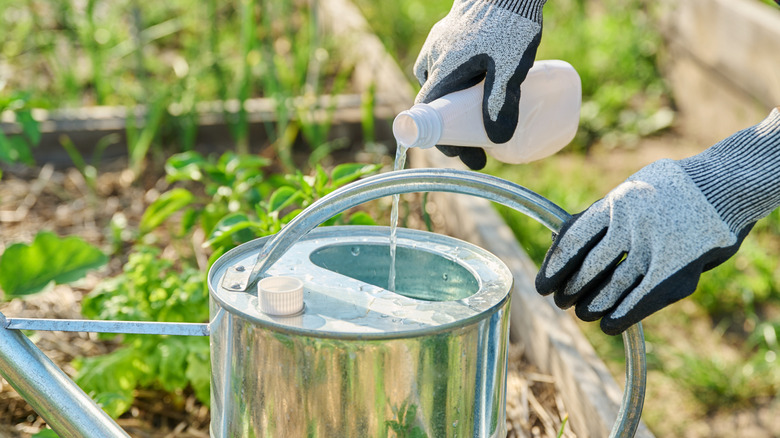
Fish emulsions are generally made by cooking fish or fish carcasses at temperatures over 180 degrees Fahrenheit. Then, after filtering, the product's pH is stabilized using citric acid or a similar product. This can then be used as a fast acting fertilizer. Some people also apply it not just to their soil but also use fish emulsion as a foliar spray, though there is not enough evidence to support this strategy.
Another great option for making a fish fertilizer is to create a fish hydrolysate fertilizer. For this strategy, instead of using high temperatures, you instead mix your chopped up fish remains with equal amounts of wood chips and leaves. Add molasses and water and put the entire concoction in a bucket or other container with a lid. After a few weeks, you should have a liquid you can strain and then add to your garden.
Keep in mind that regardless of what fish fertilizer you opt to use, and whether you make it yourself or buy it, there will likely be at least a bit of a fishy odor. You may therefore want to avoid using these types of products for houseplants or right before hosting a garden party in your yard.