

The 2026 Plant Of The Year Is Almost Impossible To Kill
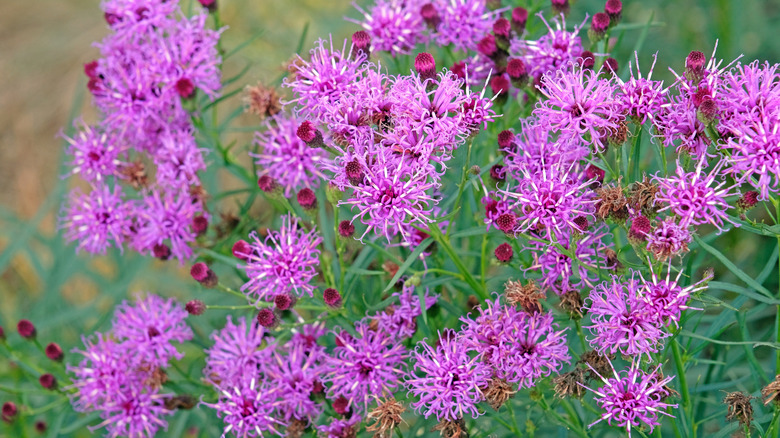
With a history that dates back to 1913, the American Garden Club clearly knows a thing or two about plants. So when they announce their plant of the year, gardeners would do well to take notice. For 2026's plant of the year The Garden Club of America picked a plant that isn't just beautiful, but it's also extremely resilient and deserving of more recognition — 'Iron Butterfly' (Vernonia lettermannii 'Iron Butterfly').
A type of ironweed cultivar, 'Iron Butterfly' is native to Oklahoma and Arkansas but is hardy in zones 4 through 9. Not only is this herbaceous perennial drought tolerant, but it also thrives in poor soil and grows well on slopes. Its frilly flowers bloom in mid to late summer and are a hit with pollinators including bees and butterflies. And just like their other ironweed relatives, they're a great way to ensure hummingbirds keep coming back to your garden. It's not just the flowers that make 'Iron Butterfly' plants stunners; they also boast thin delicate leaves which are perfect for adding a unique texture to your landscape. With a mounding habit and a height and width of around 2 feet, 'Iron Butterfly' is an ideal addition for those working to design xeriscape gardens.
How to care for 'Iron Butterfly' ironweed in the garden
If you want to add 'Iron Butterfly' plants to your garden, they may not be easily available at your local garden center, but you should be able to find these North American natives through reputable online shops. Make sure to plant your 'Iron Butterfly' in a spot where it will receive full sun and where the soil isn't too rich. They also appreciate well draining soil. While they are quite drought tolerant, they can also handle some occasional flooding. If you pair them with other plants that need little water and take full sun, they should flourish with little effort.
'Iron Butterfly' is a cultivar, and any seeds it drops won't grow identical looking plants. So you may want to prune your 'Iron Butterfly' before it goes to seed, unless you don't mind some taller and broader leafed ironweeds nearby. You also want to give your 'Iron Butterfly' a chop in spring to help prevent it from becoming too tall and floppy.