

The Best Soil Mix For Healthier Vegetables In Raised Garden Beds
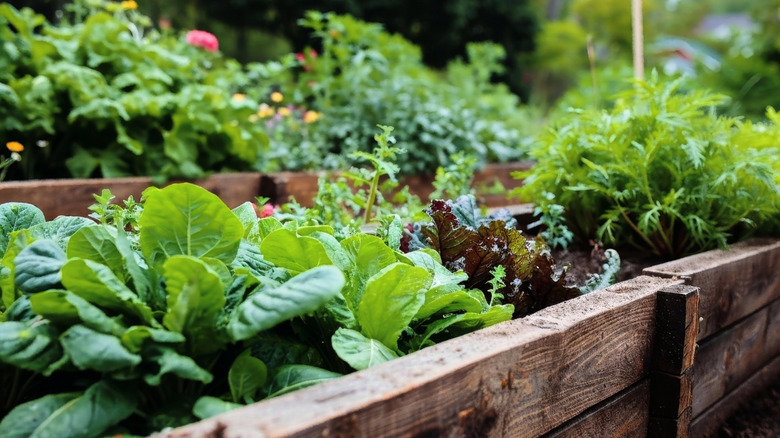
Raised beds are a fantastic gardening option. Among other benefits, they solve any issues you may be having with gardening in the ground, like poor drainage or compaction, because you're adding the soil. So building your raised beds isn't necessarily the hard part! Deciding what to fill the beds with is one of the most important decisions you have to make.
There is a wide range of fantastic soil recipes for creating thriving raised bed gardens. One mix that has been shown to work well long term is advised by Rutgers' New Jersey Agriculture Experiment Station, which recommends using a combination of compost and your native soil to fill the beds. The recommended ratio varies slightly, with Penn State Extension recommending a ratio of about 7 parts soil to 3 parts compost and Rutgers' warning that about 20% compost by weight is still on the high end for natural soil.
Especially in modern gardening, there's a mistaken thought that more compost might mean better veggies. If we add compost to make plants grow better, why not just add fluffy, organic matter-rich compost and skip the soil part? But crop plants have actually evolved in mineral soils, which is what we might just think of as "dirt." This native soil contains essential minerals (thus the name) that can help with the soil's structure — meaning the spaces around the individual grains of the soil that water and air move through – and benefit root growth. Despite containing little organic matter, it provides better long-term results than many other raised bed mixes that are compost-heavy.
How to source your soil mix for long-term success
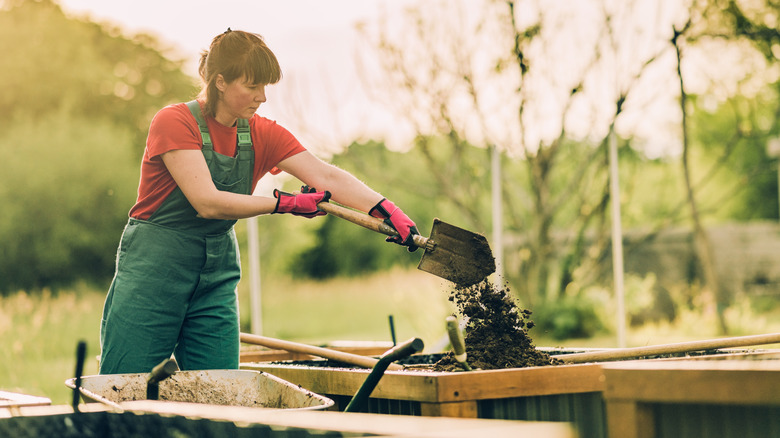
For some, hearing that it's perfectly acceptable to add mostly soil from your own yard sounds like great news. Hypothetically, it saves money! But there are a couple of points to consider. Unless you're sitting on a large, loose dirt pile, you're probably not going to want to dig up that much of your yard. Also, make sure to test your soil before adding it to your raised bed to confirm that it isn't contaminated and to learn what, if any, nutrients or additional amendments you should add. Adding unhealthy soil, native or not, is not helpful. If you don't have native soil on your property to add to your raised bed, you can also use topsoil sourced from a reputable landscape company.
So if mineral soils are the most natural, why add compost at all? Honestly, the compost is less for the plants and more for the soil microbes. Compost is partially broken-down plant matter and sometimes animal waste. It may help with water retention and drainage as well, but feeding the soil microbes in mineral soil is a long-term system for healthy plants, including veggies. You only need about 1 or 2 inches of compost mixed well into the top 6 inches of native soil to set yourself up for success.
If your raised beds are especially deep and require a lot of soil to fill, you may want to consider adding old logs, sticks, and other organic material to the bottom of the beds to take up some of the space. This technique saves money and is reminiscent of the traditional Central and Eastern European Hugelkultur method. Now you're finally ready to plant things in your raised vegetable bed and enjoy watching your veggies grow and thrive.