

The Biggest Downside To Removing A Tree Stump Naturally
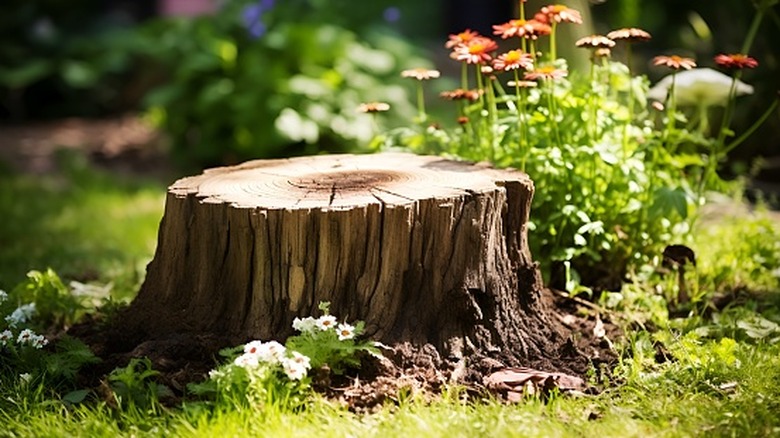
As if it's not bad enough you've lost a tree to disease or a storm, the drama continues when you're stuck figuring out what to do with the stump. If you don't want to pay hundreds of dollars to have a tree removal service grind it down and you want to let it decompose on its own, know that there's one big downside. Letting it break down naturally could take years.
With wild landscaping becoming the future of gardening, there are plenty of good ecological reasons to leave one where it is. It can become food and shelter for a whole host of critters, like birds and insects. An old tree stump can also help prevent soil erosion and it can sop up excess rain, too. While all this sounds good, just know that if you let nature take its course, it could take 10 or more years for a stump to fully decompose.
A number of factors go into how quickly the remnants of a tree might break down. Things like how much wood-eating fungi might exist in your soil, as well as how much moisture hangs around in the ground, all factor in. And while there are some things you can do to accelerate the rotting process for stumps, such as drilling holes in the top to encourage more entry points for bugs or fungi that might eat the wood, you really can't control how long it will take. Natural decomposition will take a certain amount of time, no matter what you do.
Natural stump decomposition can take years
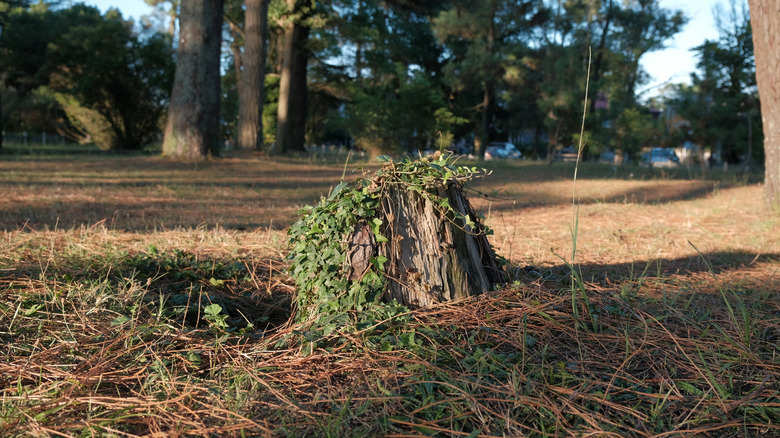
When it comes to letting nature slowly consume a stump, how long it will take depends on what kind of tree you've got. Soft wood trees, like pine, might disintegrate well before the 10 year mark, while hard wood trees, like oak, could take as long as 20 years to fully break down. How quickly this happens depends on whether conditions are right for the fungus, beetles, and other organisms that feast on dead trees.
The critters that consume a tree like warmth and moisture, so dry, cold conditions can put the brakes on meal time. They also like rich environments, so adding fertilizer encourages them to eat more. And if you're tempted to use chemicals, you should reconsider. Chemicals designed to break down wood can often kill the microorganisms eating them.
Now, just the time it takes for a stump to decompose isn't the only drawback to leaving one in your yard. There's also a chance that a large decaying block of wood attracts hungry pests you don't want near your home like termites or carpenter ants. Plus, a slowly decaying stump can also be an eyesore or wind up taking away valuable space in the yard you could be using to plant flowers. So, no one will blame you if you get tired of waiting. Know you can always remove a tree stump without harsh chemicals or heavy equipment by digging it out by hand.