

The Classic Flowering Shrub Hilary Farr Uses For A Cozy Yard Or Garden

HGTV's "Love It or List It" host Hilary Farr knows how important a cozy outdoor space is. "I absolutely LOVE being in the garden," she gushed in an Instagram post. Her garden is filled with lush greenery and pretty white flowers, including the large blooms of a hydrangea. If you want to reproduce her cozy backyard vibe from one of these posts, then some form of this lush, flowering shrub will serve you well.
They are native to a whole bunch of places, including North America, South America, and Asia, depending on the species. So they do well in several climates, too, since they'll tolerate USDA Plant Hardiness Zones 3 to 9. While hydrangeas may need special care in the fall, these deciduous woody perennials will have a big payoff if they're planted in the right spot. And with their big, classic blooms, it's no wonder Farr has them featured in her garden.
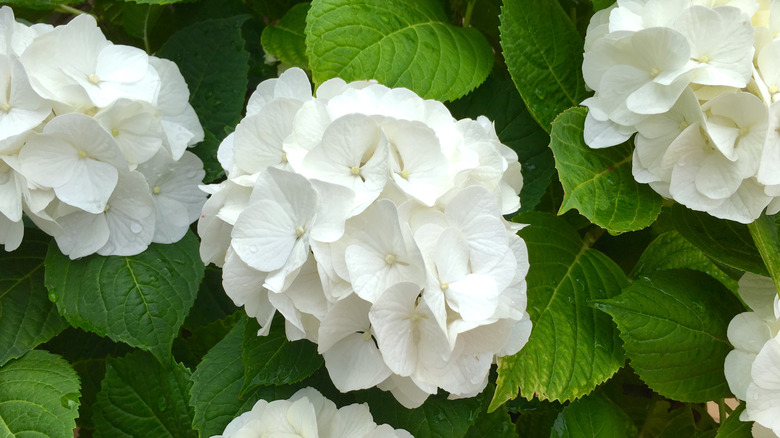
You've no doubt seen hydrangeas in all kinds of shades, including pink, purple, and blue, but Farr opted for a white variety in her yard. To love your garden just as much as Farr does, pick white cultivars like 'Incrediball' (H. arborescens) or the smaller, dwarf type 'Invincibelle Wee White'. For striking, cone-shaped flowers, plant 'Gatsby Gal' (H. quercifolia, an oakleaf hydrangea). Some, such as 'Little Lamb' (H. paniculata) or 'Limelight Prime' (H. paniculata), bloom white and then slowly morph into green or pink.
How to plant hydrangeas
It's very important to note that the different species of hydrangea will all have different care needs and specifications. Generally, you can plant these perennial shrubs in the spring, as long as there's no threat of frost, and fall can also be a great time to plant. Most don't care if the soil is loam, sand, or clay. They'll also tolerate a little bit of alkalinity or acidity, preferring pH levels between 6 and 8. However, hydrangeas need well-draining soil regardless.
While you'll have to double-check the species you buy, many hydrangeas prefer partial sun but will tolerate full sun, as well. If you get a climbing hydrangea, it will need a trellis or fence to grow on, though most species naturally grow as shrubs. There are even stunning varieties of hydrangea trees. So you have a lot of options to find the perfect species for your spot.
Whatever kind you plant, regular watering is an important part of caring for your hydrangea. Young plants, especially, need deep and regular watering so that they grow long, strong roots. Be sure to water your hydrangea near the ground, so you can keep leaves dry and defend against powdery mildew. Of course, fungal disease isn't the only thing to watch for. Be on the lookout for aphids that love to munch on new hydrangea leaves. To control your aphid population and protect your hydrangeas, roll out the welcome mat to ladybugs, their enemies.