

What Joanna Gaines Suggests For A No-Mow Fixer Upper-Inspired Landscape

Joanna Gaines is known for her ability to transform homes and landscapes. She, along with her husband Chip, has helped a variety of homeowners through their HGTV show "Fixer Upper" and their Magnolia Network brand. While Joanna Gaines loves her flowers and trees, she's also practical about what types of landscaping will work best in different locations and situations. Whether she's designing the paths between her own raised beds or helping homeowners improve their curb appeal, the materials she often turns to are pea gravel and river rocks.
Not only does using gravel or small rocks save you from mowing a lawn and allow you to make stunning and low-maintenance garden paths, but these materials are also perfect for creating drought-tolerant, dry garden beds. This is ideal for gardeners living in dry regions where water-wise gardening is especially important. Xeriscaping fans may recognize some of the plants that Joanna Gaines tends to pair with these styles of gardens. They often include drought-tolerant classics like yucca. Carefully placed boulders and rocks in the landscape can help to tie the whole look together.
How to use pea gravel and river rocks in your own landscape
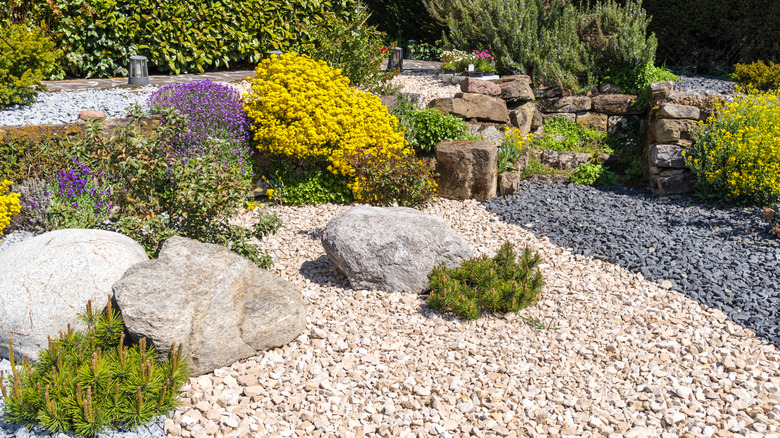
Pea gravel can be a practical path and lawn alternative material, especially if you don't want to deal with mowing grass or live in an area where it won't grow without significant irrigation. You just want to make sure to use enough gravel. Bare spots are a common landscaping mistake that can easily lead to weeds popping through. You'll also want to consider what type and color of gravel works best for you. Joanna Gaines uses a light colored pea gravel on her garden paths, which allows the colorful flowers in her raised beds to really pop in contrast.
On some of her "Fixer Upper" landscapes, Gaines instead opts to use larger river rocks. These smooth rocks are better for low-traffic areas like garden beds or low-traffic yards instead of paths. When paired with drought-tolerant plants, these beds can be every bit as beautiful as grass-covered yards, if not more so. And they're certainly better for your water bill.
The only downside to really consider is how much heat gravel can trap. If you live in a place with lots of direct sunlight, your gravel can really heat up. One way around this is to plant mature perennials that can shade the gravel.