

The Garden Feature That Can Attract Birds Without Relying On A Messy Feeder
We may receive a commission on purchases made from links.
Even if you're a dedicated backyard birder, there have probably been times when the never-ending cleanup associated with your bird feeders has made you want to put the kibosh on the whole operation. It's even more tempting to toss the feeders if you've been battling squirrels, rats, and other unwanted rodents — not to mention the fact that an uptick in the seed-thief population tends to also attract snakes to your garden. Luckily, there are other, potentially less messy amenities that might draw in feathery tourists. In particular, installing a roosting box can make your yard a destination for migratory birds looking for a safe, warm place to rest, especially during the colder winter months.
A roosting box differs from a bird feeder or even a bird house in that it's meant to keep sleeping birds warm and cozy, so it tends to make ventilation less of a priority and focus instead on trapping body heat inside. Also, rather than being filled with eggs or baby birds, it's usually meant for adult birds, often cuddled together in groups. (The typical birdhouse generally isn't large enough for multiple birds.) Because heat rises, ideally, the entrance hole for a roosting box should be located near the bottom of the structure in order to prevent warmth from escaping. Because it's meant for resting and not nesting, a roost box needs to offer some "furniture," whether that be a ladder, perches, or even textured interior surfaces that tree-climbers, such as woodpeckers, might hang onto.
How to find DIY roost plans or repurpose your birdhouse
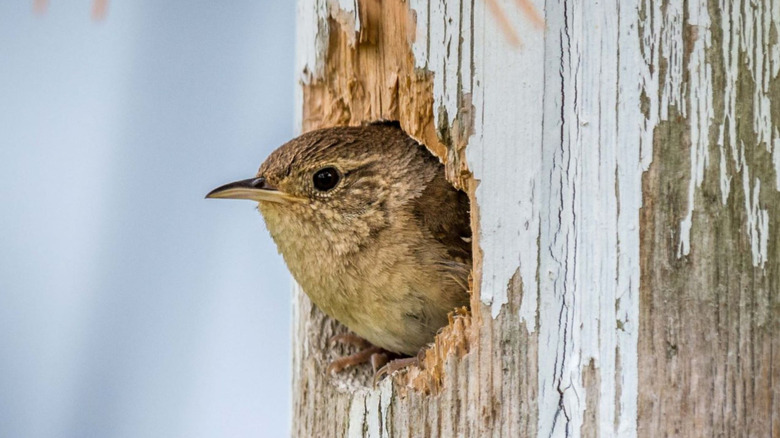
A quick search online will yield plenty of results for roosting boxes that you can either purchase — like this Coveside convertible winter roost and birdhouse on Amazon — or build yourself, if you're up for a DIY project. The Pennsylvania Game Commission actually offers free plans for a winter roost. The Washington Department of Fish and Wildlife does as well, so you have plenty of options.
You can even use a birdhouse you already own. Although birdhouses and nesting boxes may be a bit small, it can still be worthwhile to clean and flip them in the fall for seasonal use as roosting boxes. And we mean literally flip them, if possible. Some birdhouses have an entrance that is near the top, and turning them upside-down can make them more heat-retentive. Make sure to seal any cracks or extra ventilation and drainage holes as well.
Strategically locating and mounting your roosting box is also important. It's a good idea to mount the box high off the ground. Maybe put it on top of a pole with a baffle beneath to keep your slumbering guests safe from predators that might be sniffing around at night. If you can, try to choose a spot sheltered from the wind, and make sure the box faces south, as this will maximize the amount of warmth the box will receive from the sun. If you really want to make your yard a five-star winter getaway for birds, another project to consider is keeping your bird bath from freezing with DIY insulation!