

How Often You Should Water A ZZ Plant For Healthy Growth
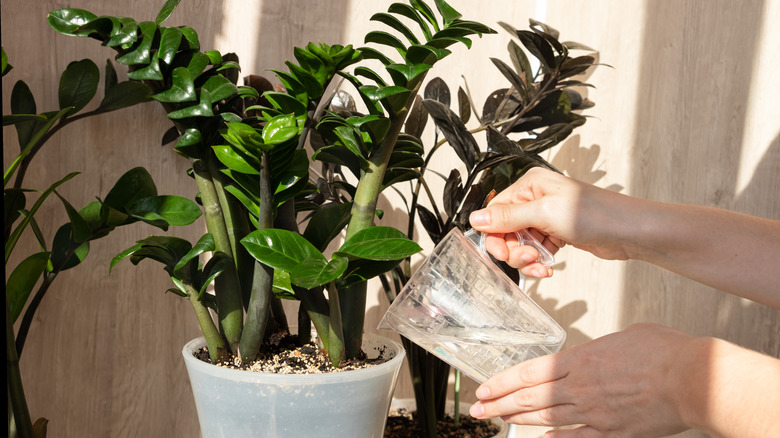
The ZZ plant (short for the scientific name of Zamioculcas zamiifolia) is a unique and popular foliage plant. Thanks to their ability to tolerate a range of lighting conditions and add a shiny pop of cheery green to almost any room, they're great plants for beginners and those still working on developing their green thumbs. While caring for your ZZ plant isn't difficult, you do have to pay attention to how you water it.
While ZZs are relatively tolerant of a range of growing conditions and can grow without a ton of natural light, they do require appropriate watering to thrive. In fact, they can easily rot if overwatered. So, if you aren't sure if your ZZ needs to be watered, it's generally better to underwater it a bit than to water it too often.
ZZ plants are impressively drought-tolerant, thanks to their rhizomes' water-storing ability. This means they thrive with similar watering techniques and growing media as you might use for cacti and succulents. Using the right growing medium is an essential part of making sure your ZZ plant doesn't get more water than it needs. Soil that holds onto too much water can easily cause your plant to suffer and die. Using or making a potting mix that is designed for succulents is the best way to make sure your soil isn't working against you and your plant. Opting for a potting mix similar to what you use for aloe vera plants should work well.
Know when to water your ZZ plant

While ZZ plants are generally grown as indoor foliage plants in North America, they're hardy in USDA Hardiness Zones 9 and 10. Regardless of whether you're growing your plant indoors or outdoors, though, it's important to give your plant's growing medium a good examination before watering. You can do this by sticking your finger a few inches into the potting mix and confirming that it is dry. As long as you provide them with well-draining soil and check that their growing medium is dry before watering, your plant should grow well and thrive for years.
However, it's best to get into the habit of observing your plant's foliage as well. If you start to notice a lot of yellowing leaves, this could be a sign that your ZZ plant is struggling due to overwatering. Stop watering immediately, and let your soil dry out again.
You should also consider the time of year when deciding how often to water. They generally need irrigation more often during the summer when they are actively growing. Aim to water your ZZ plant around twice a month during the summer and only around once a month during the winter. But don't forget that other factors, including the type of pot you use, the temperature in your home, and the humidity level, can all impact how often you'll need to water, so observation really is the key to success.