

Bring A Fixer Upper-Inspired Vibe To Your Yard With A Tree Joanna Gaines Loves

If you're a fan of Chip and Joanna Gaines, you may have noticed a certain tree that these HGTV stars regularly planted during their hit show "Fixer Upper." Not only that, but they also named their magazine and store after it! That's right, the magnolia tree is a recurring guest star in many aspects of the Gaines's life.
In the final episode of "Fixer Upper" in 2018, Chip Gaines explained to his kids that not only do he and his wife both simply love the tree, but it also reminds them of one of their first dates. On this memorable date, Chip Gaines climbed a magnolia tree to get a flower to give to Joanna. And who can blame the Gaines family for loving the stunning tree? Not only does it boast gorgeous blooms, but many species are also native to the United States, ensuring they'll be a huge hit with your local pollinators and songbirds.
With species and cultivars that can range from just 8 feet to around 80 feet, there's a good chance you can find a magnolia tree or shrub that will work for your space. The right variety won't take over your garden, even if you're working with a small space. While perhaps the most well-known magnolia tree in the United States is the iconic southern magnolia (Magnolia grandiflora), which can grow to around 80 feet, this Joanna Gaines-approved tree has plenty of smaller relatives, too.
Find the perfect spot for your magnolia tree to thrive
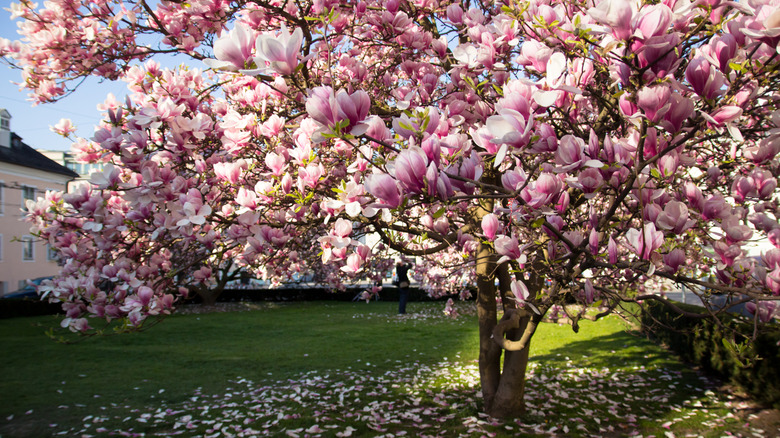
The iconic southern magnolia is hardy in USDA Hardiness Zones 6 through 10, but other magnolia species, like the star magnolia (Magnolia stellata), can be hardy down to zone 4. Magnolias thrive in the sun, so be sure to find a nice, bright spot in your yard for your stunning tree. And don't forget to mulch well around it to polish off the look and protect its roots.
Magnolias also need acidic soil to grow well. If you're not sure if your soil needs to be amended, then test your soil pH before planting this tree. Additionally, while they appreciate moist soil, most species can't handle overly soggy or waterlogged locations. One exception to this is the sweet bay magnolia (Magnolia virginiana), which flourishes in wet soil. So even if you're gardening in an area where most magnolia trees can't thrive, you may still be able to find the best magnolia tree for your space.
These trees do come with a few downsides. Southern magnolias need to be pruned if you want them to have a proper tree shape instead of looking more bush-like. Magnolias are also notoriously messy trees due to their dropping of leaves and spent flowers, despite many magnolia species, including southern magnolias, being evergreen. In cooler zones, you may lose some blooms early to a late frost as well, so you'll have to watch the weather and consider ways to protect them if you can. The trees can also be vulnerable to scale and other diseases. But if you can put up with all of that, you'll be rewarded with an iconic tree that Chip and Joanna would be proud of.