

What The Old Farmer's Almanac Wants You To Plant When Daffodils Bloom, And Why
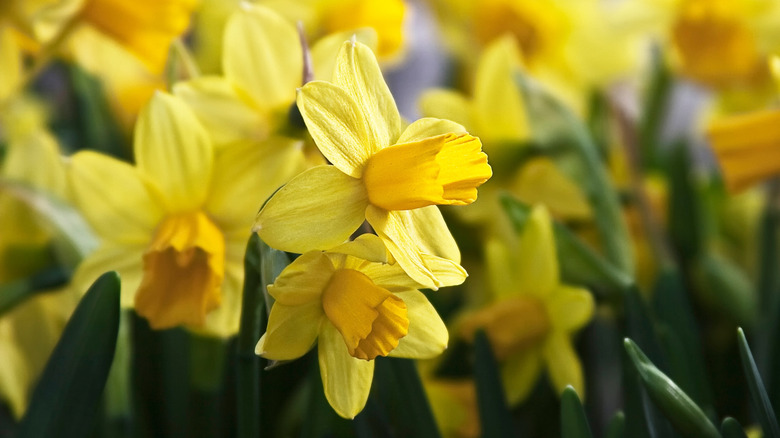
Daffodils are iconic spring flowers, with blooms that can quickly brighten up your landscape and chase away the winter blues. But that might not be the only thing daffodils can help with. The Old Farmer's Almanac argues that it can also give you a hint on when to plant certain crops. The centuries-old publication states, "half-hardy vegetables, including beets, carrots, and chard, can be planted when the daffodils blossom".
Half-hardy vegetables are those that can handle cool temperatures and even a bit of frost, but aren't fully hardy. Many of them grow best during spring and fall and can struggle with summer heat. Whether you should use daffodils to decide that it's the right time in spring to plant them out can be a bit more complicated. There is a surprising variety of daffodil cultivars, with bloom times that can often range from early spring all the way through late spring.
While many daffodil flowers can handle temperatures as low as the upper 20s Fahrenheit, that's too cold for half-hardy veggies, which need temperatures of around 40 degrees Fahrenheit to germinate. On the other hand, waiting until your late-blooming daffodils, like the Narcissus poeticus species, flower could mean you've waited too long and passed the ideal planting dates for your carrots and beets. This could mean that your cool-season veggies are stuck dealing with excessively warm temperatures, limiting their success.
When to plant your half-hardy vegetables
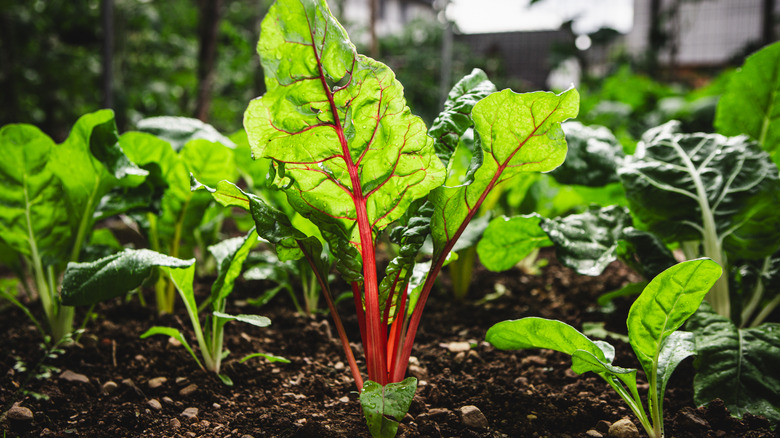
While daffodil blooms are often a good sign that your soil is heating up, as most rarely bloom before soil temperatures are at least 50 degrees, you may not want to use them alone to decide if it's time to plant out your half-hardy veggies like Swiss chard and carrots. Instead, combine the hint that your early-blooming daffodils are giving you with information on your last expected frost date and your long-range forecast.
When and how you plant your cool-season vegetables can vary by zone. In some warmer zones, they can even be grown during winter months. Because daffodils require some amount of winter cold, they cannot even survive in these regions, and daffodils often aren't perennial in zones 9 and above. So while daffodil blooms can be a useful sign of warming soil temperatures in some regions, there are a lot of other factors to consider, and they shouldn't be used alone to decide when to plant out cool-season vegetables.