

The Gardening Tip That Lets You Enjoy Amaryllis As A Year-Round Plant
We may receive a commission on purchases made from links.
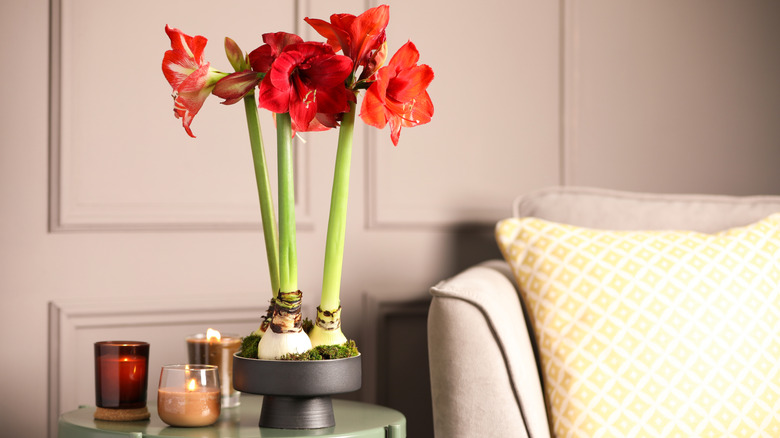
The gorgeous amaryllis (Hippeastrum) bloom is one of the easiest to grow, great for beginners and advanced gardeners alike. Its trumpet-like flowers brighten any room, and the best part is, you don't have to toss this pretty houseplant after the first blooms wilt. Instead, simply incorporate a tip to keep it flowering all year round: Add fertilizer to it monthly, and you'll help it continue to grow.
Native to South America and hardy in USDA Plant Hardiness Zones 8-11, amaryllis are generally house-friendly plants that do well in warm, sunny environments. While they can thrive outside in temperatures above 65 degrees, you can definitely add them to the list of tropical plants better off overwintering indoors. They grow out of oversized bulbs (often the size of softballs) that you can find in most garden centers around the holidays.
You might've gotten your amaryllis, commonly associated with Christmas, as a holiday gift since its upright red or white flowers add a festive feeling to any decor. Some cultivars are even named after the holiday, including 'Christmas Gift' and 'White Christmas.' While some treat them as annuals, tossing the bulbs after the first flowers fade, they can continually produce flowers if they're taken care of in the right way. Give them a home in a pot (if they don't already have one) and add in the key ingredient of monthly fertilizer, and they'll reward you all year round.
Here's how to help your amaryllis plant bloom all year round
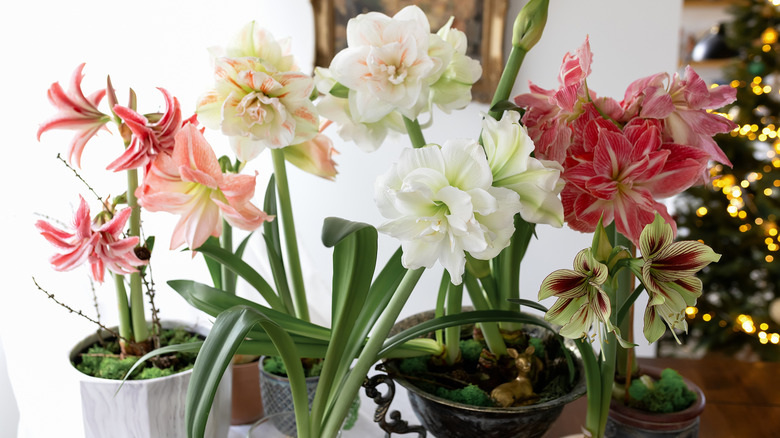
To keep your plant blooming all year round, plant the bulb in a container, leaving about a third of it above the soil. Pick a pot an inch wider but twice as deep as the bulb itself, so there's plenty of room for roots to stretch out. If you've got the type encased in a waxy bulb, then these are often self-contained plants that bloom without the help of soil or extra water. You'll want to cut away the waxy shell before planting.
Once you've got your bulb in a pot, it will typically bloom on its own in a sunny window. However, once it is done blooming, you should cut back the flower stalk before it sets any seeds. Leaving the leaves is crucial for the plant to continue making food through photosynthesis.
After an initial bloom, the best tip for keeping your plant producing flowers is to make sure to feed it once a month with the best liquid fertilizer for indoor plants. This is typically a 5-10-10 or 10-10-10 mixture. The numbers stand for the ratio of nitrogen, phosphorus, and potassium, and are found in common products like Bonide houseplant liquid plant food 10-10-10. Make sure to follow the directions carefully about how much to use for indoor plants to prevent burning the plant.