

10 Herbs To Grow Indoors For A Beginner Friendly Tea Garden

On a cold winter's day, there's really almost nothing better than a steamy cup of herbal tea. Growing your own herbal tea garden conveniently on your windowsill is entirely possible. You don't have to be a gardening expert, either. Even novices can grow some of the best herbs for a beginner-friendly tea garden.
Whether you're interested in growing bracing mint, citrusy lemon verbena, or good old chamomile, there are a host of great herbs for brewing tea that you can grow indoors this winter with little fuss or muss. Planting tea seeds and herbs can be easier than you think. You just need to scout out a good spot indoors with plenty of light and room for plants to grow.
Tucking them somewhere out of sight might be a bad idea, especially if out of sight means out of mind for watering. Moderate temperatures are important, too, so make sure to avoid drafty windows or doors. Some tropical tea plants, like hibiscus, can be susceptible to sudden dips in temperatures. Most herbal tea plants, however, are fairly low-maintenance and easy to grow.
Start with an actual tea plant for your tea garden
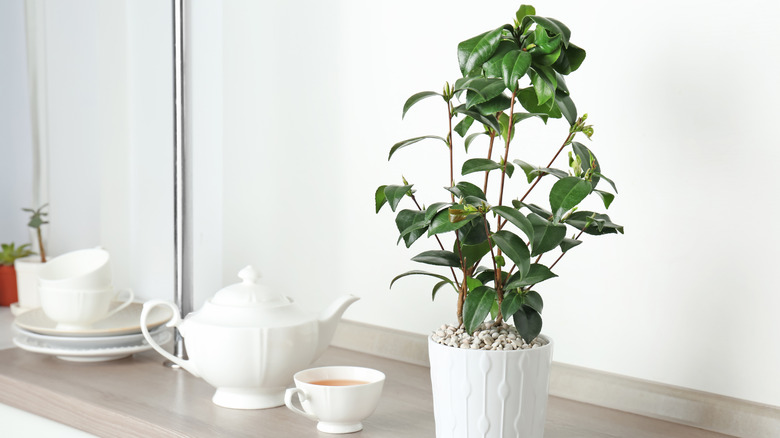
If you want to start with the basics, then you can grow your very own tea shrub (Camellia sinensis), a plant native to China that is the building block for almost every kind of tea you like, including all green, black, white, and oolong teas. When growing it indoors, start with a small plant and choose a pot that's twice the size of its root ball. It'll need lots of indirect light and temperatures kept around 70 degrees.
Plant cozy chamomile for relaxing tea
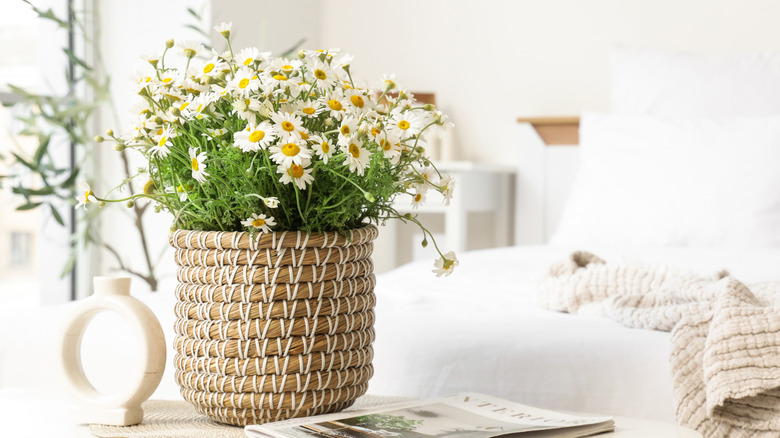
When you think of a cozy cup of tea, chamomile might be the first to jump to mind since it's one of the world's most popular herbal teas. This relative of the daisy produces several dainty, bright flowers that make a relaxing brew after it's dried. It also happens to be an easy plant for beginners to grow. Plant seeds in a pot with lots of good drainage holes and put it on a windowsill for full sun. It's a perennial herb, too, so you can plant it once and enjoy it year after year.
Grow fresh peppermint to snip
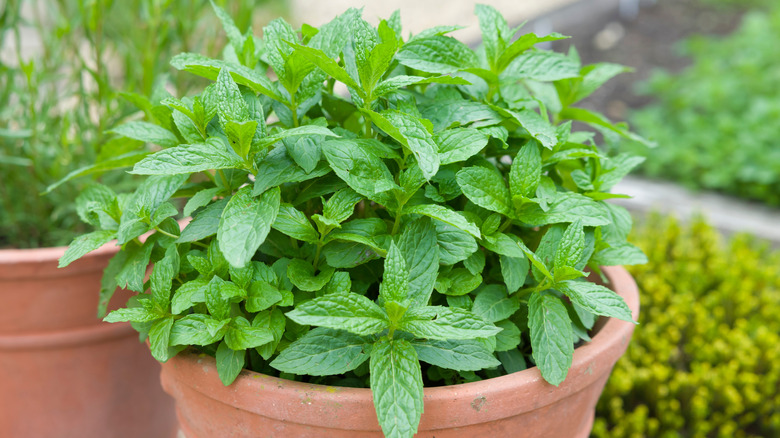
Growing peppermint can be a great way to add a little zing to both tea and other drinks, like cocktails or a homebrewed mocha. Pots are actually an ideal way to grow the herb anyway, since it can grow aggressively in the ground. If left to its own devices in your garden, it might just take over. When growing peppermint, use potting soil rich with nutrients and water it regularly. That, along with lots of sun, will ensure you grow the most minty leaves around.
Tropical hibiscus is soothing and lovely to look at
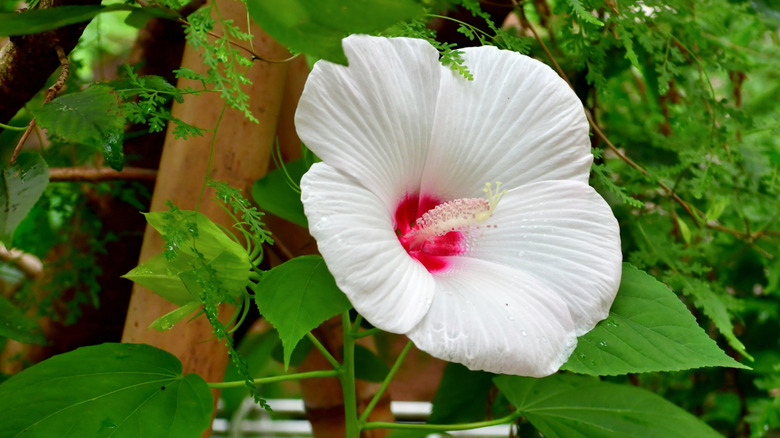
You've no doubt tasted the delicious, ruby-colored hibiscus tea. You can make your own at home if you grow roselle hibiscus, also known as Hibiscus sabdariffa. Unlike chamomile, hibiscus tea isn't made from the petals of the flowers, but from the inner, dark red or pinkish calyx (the lower part that connects the flower to the stem). To care for your hibiscus plant indoors, make sure it doesn't get too much sun. As a short-day plant, it does better with 12 or more hours of shade to grow the most flowers.
Add citrusy lemon verbena to your tea cup
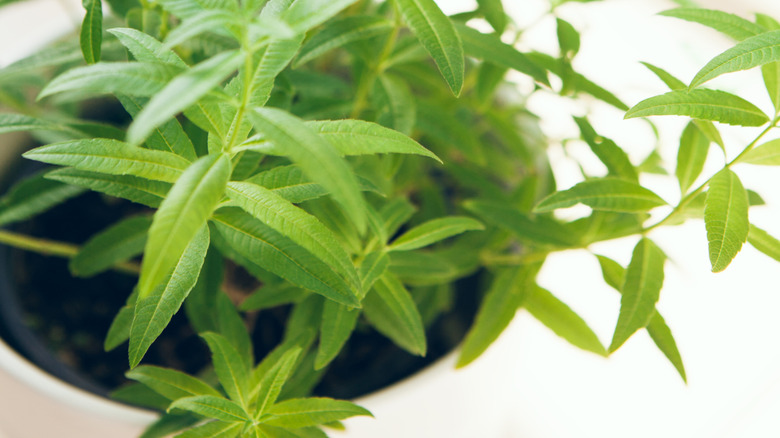
Lemon goes with tea almost as well as honey, so try growing lemon verbena, the citrusy and bright herb that can add a little tartness to your mug. This easy-to-grow tender perennial is perfect for an indoor pot since it can't tolerate cold weather outside. It might be more needy than others, as it likes rich soil and will want some regular doses of liquid fertilizer, but it's still very manageable for novice gardeners. It needs at least six hours of sun a day, so you may need grow lights.
Settle your stomach with ginger tea
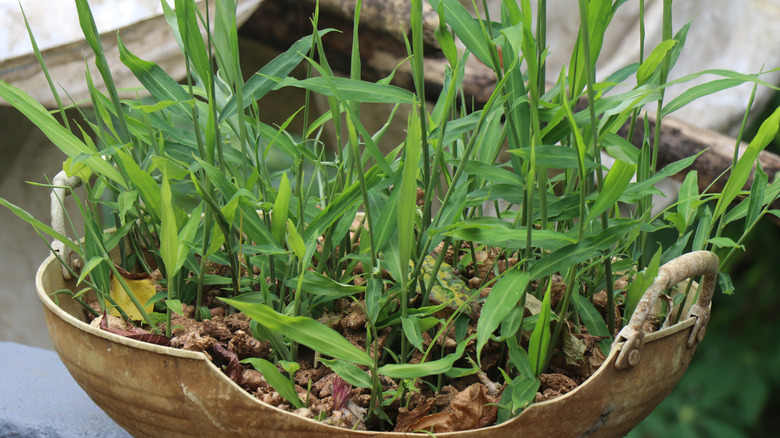
For tea that'll help ease upset stomachs, try growing ginger. Your home-grown version is even likely to taste better than the kind you find at the grocery store due to being fresher. You'll use the root or rhizome, not the plant stems or leaves, for tea. Ginger does best if it gets some shade with room temperatures kept between 70 and 90 degrees. Since the root structure is what you really want to grow, make sure your container is at least a foot in diameter to accommodate the rhizomes you'll want to harvest.
Lavender will help give tea a floral flavor
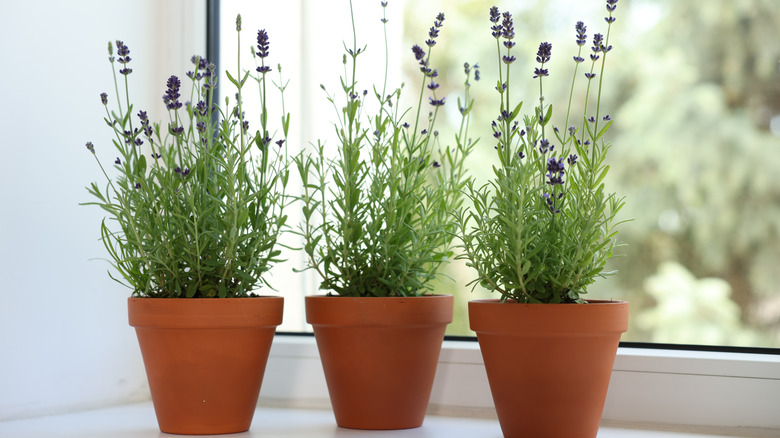
Lavender seems to be the flower of the day when it comes to flavoring pretty much everything from honey to lattes. To add some to your next cup of tea, grow fresh lavender right in a pot on your windowsill. This relative of mint is an easy-going plant that can thrive as long as it gets 6 to 8 hours of sun a day (or more with grow lights). Be careful not to overwater, since it's not a super thirsty plant. This low-maintenance herb doesn't need a lot of soil amendments either.
Sweeten the pot with your own homegrown stevia
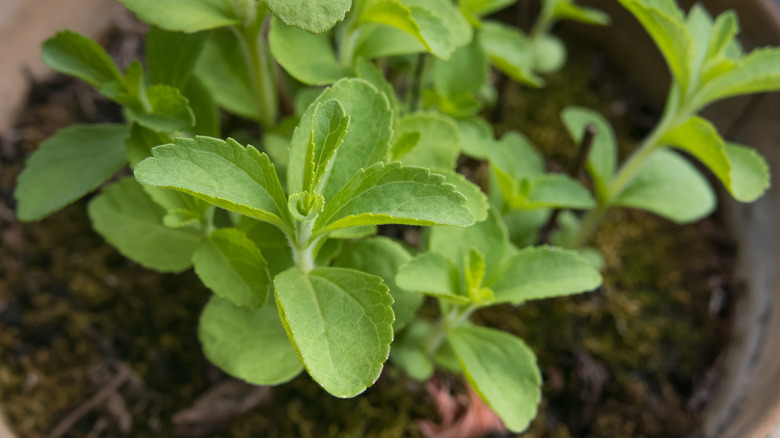
If you like your tea sweet, then you might want to consider growing the all-natural sweetener, stevia. This naturally occurring sweet leaf contains no calories and won't raise blood glucose levels, either. You can pluck leaves off the plant and eat them straight off the stem, or you can brew them with tea. This is another plant you've got to be careful not to overwater. Only water stevia when the soil is dry to the touch.
Calendula makes for a bitter brew
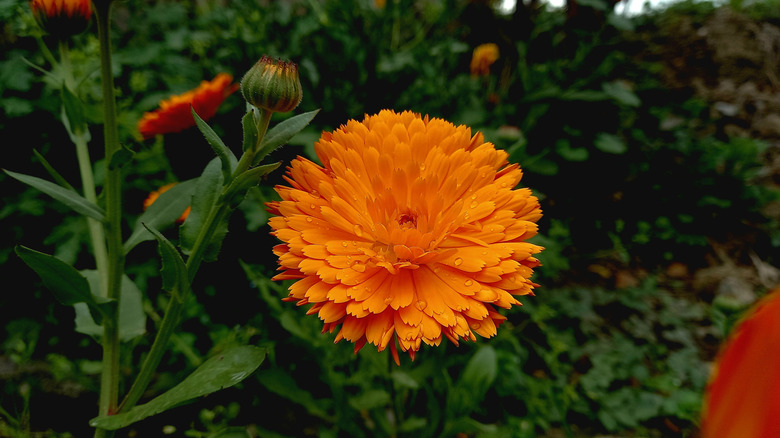
For a tea known to reduce inflammation, try calendula flower tea. Calendula, also known as pot marigold, can be grown in containers indoors (thus its nickname). These bright-colored flowers actually have no relationship to marigolds and are cousins of the daisy. This easy-for-anyone-to-grow flower likes moist but not wet soil and lots of sun. If left to produce seeds, you'll have plenty of offspring to keep growing! Meanwhile, in tea, it has a bit of a bitter medicinal taste.
Grow lemongrass for a flavorful tea
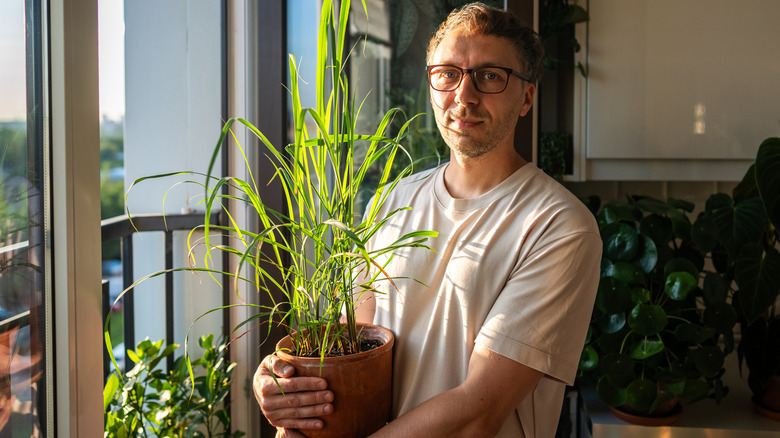
Lemongrass-flavored tea doesn't just taste delicious; it may also help you relax, with some claiming it lowers anxiety levels. Growing lemongrass indoors helps keep it going through the winter in colder climates and adds a nice texture to your indoor plants. This low-maintenance grass prefers organically rich soil and needs to be watered regularly to not get too dry. You may need to transplant into bigger pots as the plant grows. Dry the leaves and trim them down to use them in your next brew.