

The One Thing The Old Farmer's Almanac Wants You To Do When Planning A Veggie Garden
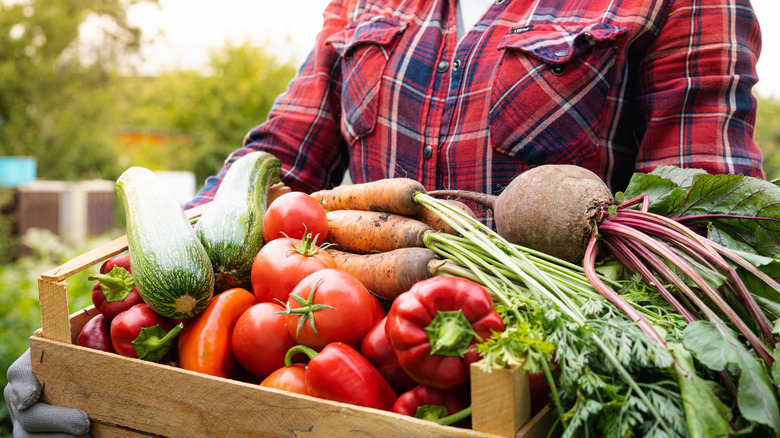
Growing your own vegetables is a rewarding experience and helps make dinners healthier. But before you grab your tools, there's one thing you need to do first. When it comes to growing a vegetable garden, The Old Farmer's Almanac suggests that you draw up a plan.
Plotting out exactly what and where you want to grow might seem basic, but it's a step some gardeners overlook. You might be tempted to plop in vegetables simply in any empty space, but this can lead to less-than-ideal results, including overcrowding, uneven watering needs, and too much or too little light. For example, many vegetables, like tomatoes or peppers, require 8 full hours of sunlight a day, and very few fall into the category of plants that need shade. You also need to consider other important elements that affect whether your vegetables will thrive, such as slope. Low-lying areas can accumulate lots of water, which could drown some vegetables that prefer well-draining soil.
Planning ahead can save you time, effort, and expense. And drawing up your plan, either by using a pencil and paper or a program on your computer, will help you stay organized while you figure out the very best places for certain crops to grow. To get started sketching out the best vegetable plan for your yard, you'll need to grab paper and four different colored pens or markers. Or, you can use the Old Farmer's Almanac Online Garden Planner.
Here's how to start drawing up your vegetable garden plan
When drawing up your plan, first measure your yard. Take note of the size of your house, lawn, pathways, or trees. Try drawing these items on graphing paper, where one square can equal one foot. This will help make sure that everything is drawn to scale. Note which part of your garden faces north, south, east, or west as well.
Once you've got a sketch of your yard, take a day to observe the sun – a vital part of any garden plan. Gardens that point south tend to get the most sun, while yards that look north absorb the least. To test how much light your yard gets, observe light in the morning and color in the areas on your map where the sun falls in yellow. After lunch, mark sunlight in a different color, like orange. Check for a final time around 5 pm, shading in where the sun lies in a third color (say purple). Take a look at the map. Do you see colors that overlap? That means you've got sun during multiple periods of the day, which is great for vegetable gardens. Draw garden beds where your yard gets the most sun. As a general rule of thumb, they should run north-south.
The next part of your vegetable garden plan should be marking down where water might pool in the yard, especially after a hard rain. Most vegetables hate sitting in water. If you want to grow vegetables there, add a raised garden bed that can help with drainage. Finally, note on your map ahead of time where your water source for your garden is. Running hoses and irrigation can be a hassle if you don't plan out your garden with this in mind.
As the final part of your plan, draw in your veggies
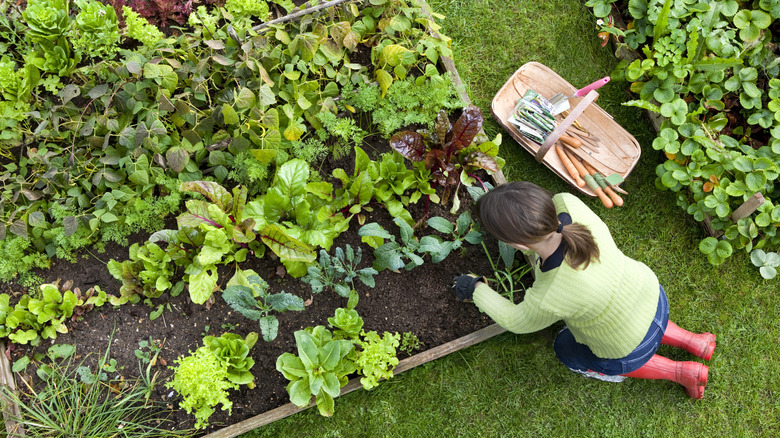
Once you know about water and light in your yard, you can start sketching where you want the plants to go. You may want to make a copy of your initial plan first, though. This way, if you mess up or need to reorganize, you don't have to start over. Try laminating your map and using dry-erase markers to do initial plant placements. You'll want to consider seasonal crops (warm- vs cold-weather) as well as harvest times in order to keep your beds full and producing, so perhaps multiple copies for each month would be helpful.
Write in light-hogging plants like cucumbers and other vining vegetables in the part of the map that gets the most sun. Make sure to put trellised plants or tall veggies like corn on the north end of any bed. This works best as long as plants on the southern end of the bed don't grow so tall that they give too much shade to plants in the north. For parts of the garden that didn't get as much sun on your map, try leafy vegetables like endives, lettuce, or spinach, which can get by with just 3 or 4 hours of direct sun. You can also put potatoes in spots with a little less sun.
For plants that tend to spread out, such as squash or zucchini, draw them at the edge of your beds, perhaps near pathways or grass. This means they can overflow beds towards empty space, rather than choke or crowd out other plants. After you finish your plan, it'll be time to plant. If you stick to your plan, you'll be on the right track for a healthy harvest of yummy veggies.