

How To Grow A Fig Tree Indoors Or Out For A Fresh Supply Of Delicious Fruit
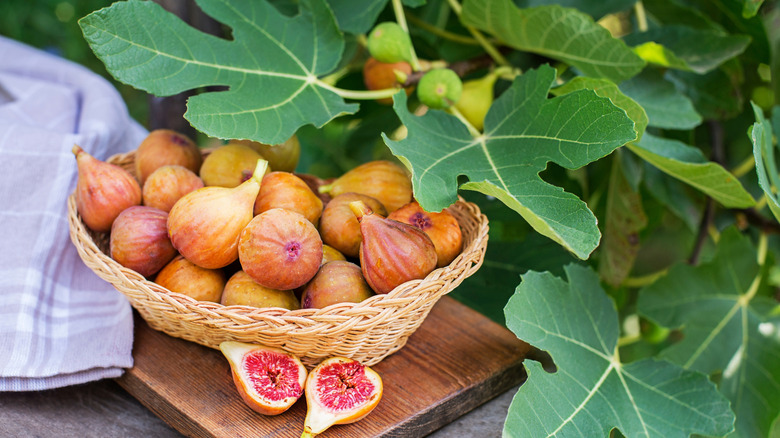
Thanks to their fruit's distinctive and juicy flavor, fig trees can be unique and delicious additions to homes and gardens. And they also have surprisingly beautiful leaves that can add a unique texture to your landscape or home. Depending on your zone and the cultivar you opt for, you can either grow your figs in the ground or in a container so they can safely live inside for some or all of the year.
While not all species in the Ficus genus provide edible fruit, there are a few that do. The common fig (Ficus carica) is generally the best choice for home gardeners because these plants don't require pollination. This means you'll get figs even if you're only growing one plant and there aren't any specialized wasps around to assist with fertilization — avoiding one of the most interesting facts about fig trees. Even within the common fig species, there are still multiple cultivars, though, so finding one that works well for your needs is essential.
If you live in a cooler zone but want your fig tree to grow outside, consider cultivars like 'Brown Turkey' and 'Chicago Hardy,' which are known for their cold tolerance. 'Brown Turkey' is hardy down to USDA Hardiness Zone 6, and 'Chicago Hardy' even survives down to zone 5. On the other hand, if you want a small plant that can easily grow in your home, you may be better off looking at a dwarf cultivar like 'Fignominal,' which should grow less than 3 feet tall and wide and still produce excellent fruit. Growing your own figs is just a matter of picking the right fig tree variety, providing it with appropriate lighting, and meeting its soil and water needs.
How to care for a fig tree and meet its needs
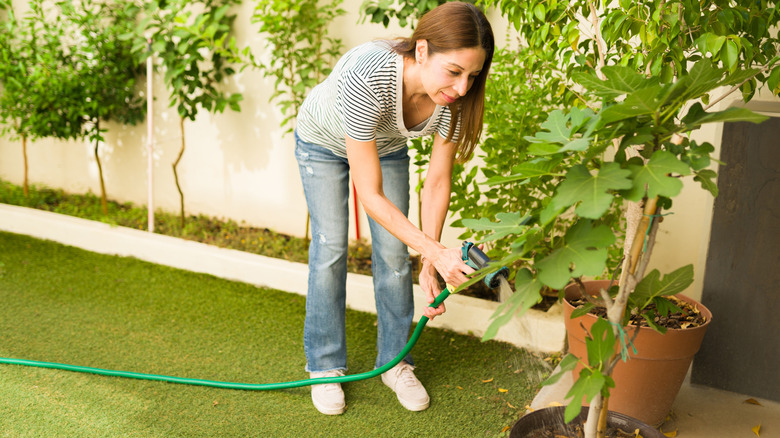
As with most fruit trees, figs need plenty of sun to grow their best and provide you with tasty fruit. You should ideally find your plant a spot where it gets at least 8 hours of sunlight. If you're growing it indoors, make sure the tree has a nearby grow light or access to a south-facing window.
It's not just proper lighting that figs need to thrive; they also require well-draining soil. They're vulnerable to damage from root-knot nematodes, a pest that can also damage tomatoes and some other crops. These nematodes are especially common in sandy soil, so growing your fig in a medium that is heavy in organic matter and has not previously been used for tomatoes is essential. If you're growing your fig in a pot, pick one that's around a foot and a half in diameter and either make a soil mix for potted figs or use a well-draining potting mix. Of course, you also need to make sure the pot has drainage holes. Figs generally benefit from additions of a nitrogen-heavy fertilizer, especially if you are growing your plant in a container.
While young fig trees need regular watering while getting established, mature trees grown in the ground may need relatively little additional water, as long as they are getting at least an inch a week from rain. Container plants usually need to be watered more often, so be sure to regularly check the top few inches of your fig's soil to see if it is dry, and water deeply when needed.