

Remove Pesky Crabgrass With A Chemical-Free Solution
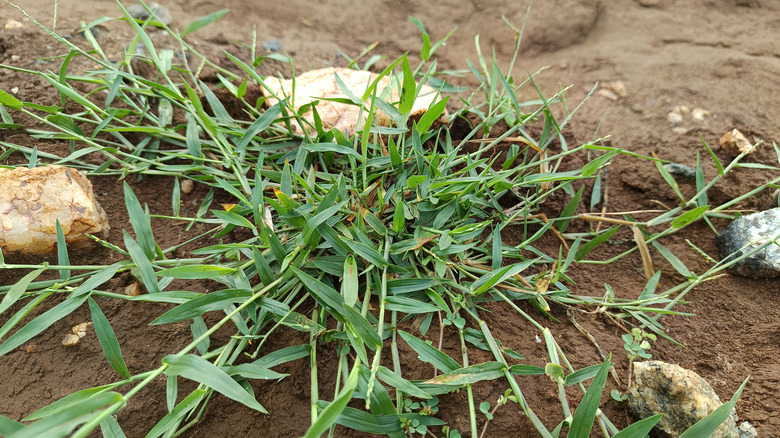
Nothing mars a lawn faster than a clump of ugly crabgrass. The unsightly weed can pop up most anywhere, but especially in places where grass has thinned or there are patches of bare soil. If you're tired of using herbicide sprays, try a chemical-free, organic solution: Boiling water.
The origins of crabgrass (Digitaria sanguinalis) can be traced to Europe, and it's a living cautionary tale about why you don't want to introduce nonnative plants to a new place. Europeans brought crabgrass to the U.S. in 1849 when people used the plant to feed livestock. It clearly didn't stay in the pasture — now the unsightly weed grows in nearly every yard. No surprise, since crabgrass isn't deterred by either hot or cold weather, thriving in USDA Hardiness Zones 2 through 11.
If you want to skip the Roundup, boiling water is a cheap home remedy weed killer. The heat from the water kills any part of the plant it touches instantly. Just be careful where you pour boiling water because it kills indiscriminately. Healthy grass or flowers might also die if they get doused with steaming hot water. There are also limits to what boiling water can do. Since it only kills what it touches (any growth above the soil), it doesn't actually kill roots, as some herbicides do. That's why boiling water is best used on young plants that are more susceptible to foliage damage.
Here's how to use boiling water to kill crabgrass
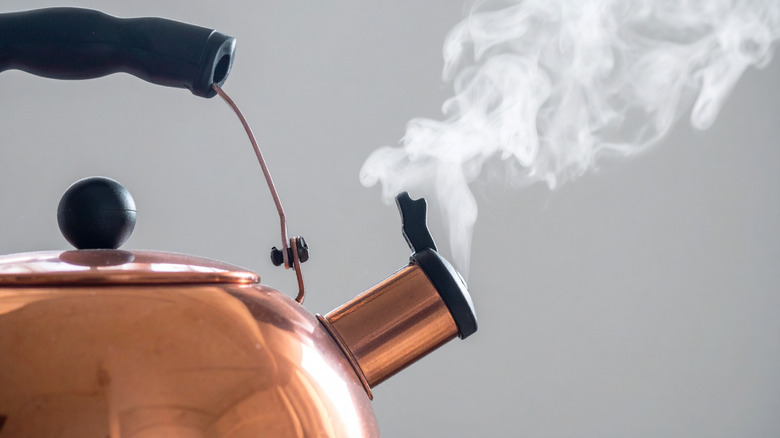
Boiling water is no great difficulty, but use a tea kettle or another vessel with a narrow spout instead of a pot to help you control the flow of water. This helps you aim for the weed, but it also protects your own ankles from the splash. (Though obviously, take the time to think through your own safety when handling boiling water.) You want to use enough water to soak the plant entirely.
If you're worried about burning healthy parts of the lawn, you can always save boiling water for places where there are few other plants to worry about. The unwanted crabgrass that pops up between stones and cracks can be doused without worry of damaging healthy grass or nearby flowers. Watch out for splashing from a hard surface, though!
After you pour the boiling water, it's time to wait and see if the weed shrivels. You may need to reapply boiling water a week later if the tough crabgrass has survived the first dose. Mature types are very likely to need more than one treatment, so if you're attacking an established problem, get ready to refill that kettle and heat it again. To amplify your efforts, you might want to use boiling water in conjunction with other natural remedies. You can mix together dish soap, vinegar, and salt as a weed killer, too.