

Which Variety Of Hydrangea HGTV Recommends Using As A Garden Hedge
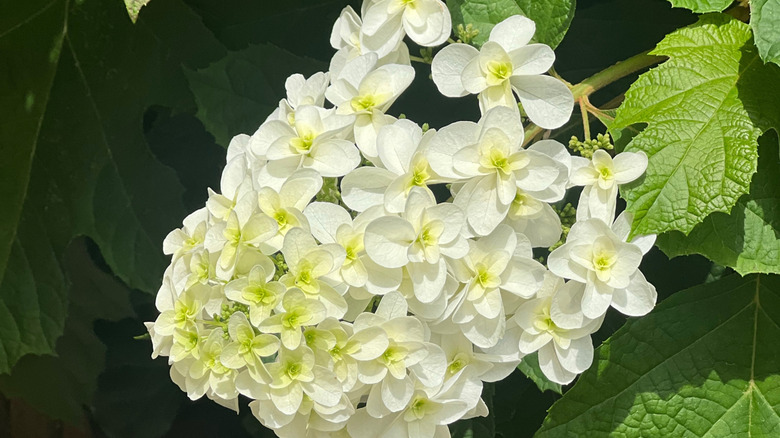
Hydrangeas are known for their beautiful blooms, but not every variety is right for every space. In fact, some types of hydrangeas are so high-maintenance that gardeners and homeowners are turning to gorgeous hydrangea alternatives. That's not always the case, though. One hydrangea isn't just beautiful and relatively easy to care for; it's also perfect for creating hedges, according to HGTV. This is the stunning North American native plant, the oakleaf hydrangea (Hydrangea quercifolia).
The oakleaf hydrangea is a great option not just as a shrub but as a hedge because it can easily spread to form colonies thanks to its suckering. Planting multiple in a row can speed up the process, but make sure to give them plenty of space to grow. Many cultivars can reach sizes of around 8 feet tall and wide!
Oakleaf hydrangeas are also easier to care for than many of their hydrangea relatives, as they can better tolerate drought and can handle conditions ranging from full sun to part shade. Oakleaf hydrangea hedges also have the benefit of providing multi-season beauty and interest, thanks to the plants' spring and summer blooms, and the leaves' brilliant autumn colors. And, even better, they're also a hit with pollinators like butterflies.
How to care for an oakleaf hydrangea hedge
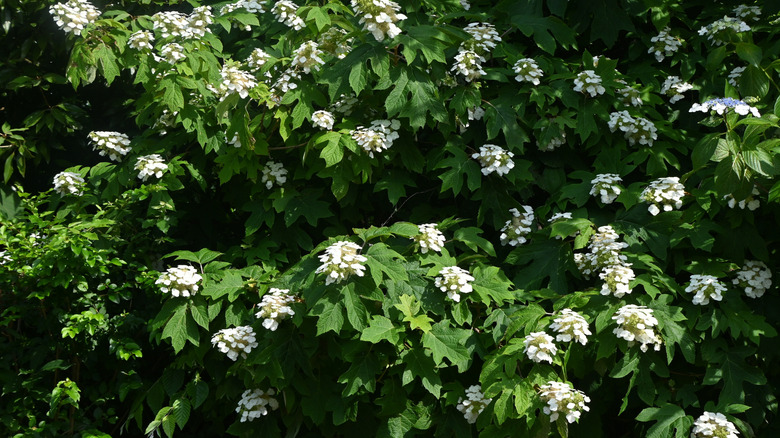
Caring for your shrub comes down to understanding its native environment and preferences. Hardy in USDA Hardiness Zones 5 through 9, oakleaf hydrangeas are native to the Southeastern United States. In addition to their fondness for full to part sun, they also need rich and well-draining soil. While they are relatively drought-tolerant, they do best with moist soil. Be aware that the flowers naturally change from white to pink as they mature, but changing the soil pH won't change the hydrangea color, as it does with bigleaf hydrangeas.
An important thing to keep in mind with your oakleaf hydrangea is that it blooms on old wood. That means that if you want to do any pruning, you should take care of it as soon as the plant is done flowering. Otherwise, you'll be risking the next season's blooms. If your plant begins to spread in the wrong direction, you may also need to remove some of the suckers to help it create your desired hedge shape. However, be careful not to remove more than a third of the plant at a time.
After you find your perfect spot, you can make your shrub more comfortable. You should be sure to mulch well. This not only helps protect the roots during winter, but also keeps the soil moist during hotter and drier months. Then in the fall, enjoy the beautiful display of typical Autumn reds and oranges.