

The Old Farmer's Almanac Shares A Tip For Successfully Germinating Old Seeds
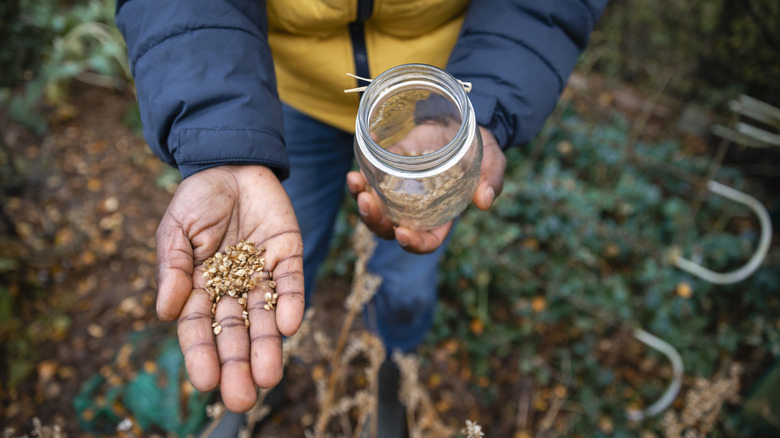
If you're rummaging around in your garden shed or a utility drawer and come across a package of old seeds, you might wonder if they're viable or not. After all, if you're direct sowing in the garden, just for all of the seeds to be bad, that would be unfortunate. But don't throw them away just yet. The Old Farmer's Almanac has a tip for successfully germinating old seeds to check for viability: Wrap them in a moist paper towel, tuck them in a plastic bag, and then see what happens.
Old seeds lying around aren't necessarily dead. In fact, many last quite a long time. While some aster, onion, or sage seeds will only be good for about a year or two, others, like cucumber, tomato, and zinnia, can last for up to five years. This is reason enough not to toss any extra you find lying around, especially if you've already done the hard work of harvesting seeds from vegetables.
Seeds, in general, stay dormant until the ideal time. They're tough and can survive blistering temperatures, drought, and even freezes, just waiting around until the thermometer hits a sweet spot while they get the right amount of water and oxygen. Of course, as any gardener knows, even in the perfect conditions, new seeds sometimes don't grow. And the older a seed is, the greater the chances that it won't sprout. To germinate older seeds without playing the guessing game in the garden, you'll need to start the seeds indoors. To begin, grab a moist paper towel and a plastic bag or plastic wrap.
How to test the viability of old seeds
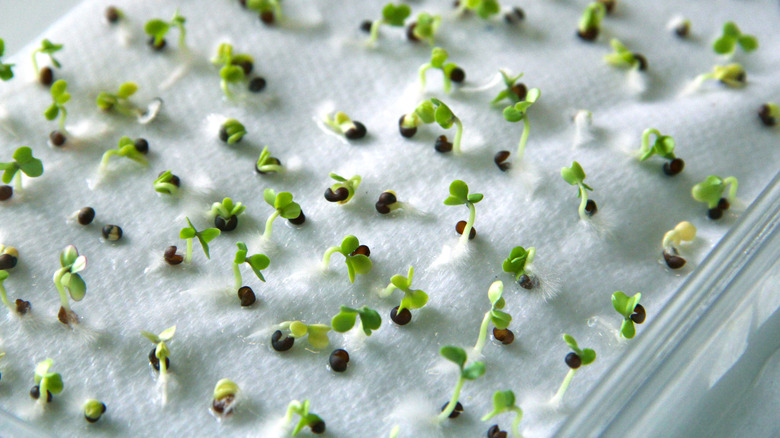
The method is to simply place a sample of about 10 seeds on a damp paper towel in a thin layer. The Almanac suggests putting all the same kind of seeds on one towel. This will help you keep track of what's what, so you don't accidentally plant a zinnia instead of a cucumber.
Next, either fold the paper towel over them. Wrap another moist paper towel around the first for the best results. Then, tuck it into a plastic bag or plastic wrap for it to stay moist. Store the bag in a warm spot, where the temperature hovers in the mid-70s. This will especially help tomato seeds germinate. Check the seeds every few days to see signs of growth. Many kinds of vegetables and flowers take about a week to 10 days to sprout.
In the best-case scenario, all the seeds grow, and then you can plant as usual with no worries. In cases where 70% show signs of life, consider doubling the seeds you plant as an insurance policy. If you look at the paper towel, and half or less of the seeds germinated, then you've got a decision to make. These seeds might be too old, and you could be better off buying new ones rather than risking betting on plants that might not thrive.