

The One Place You Shouldn't Plant Shrubs, According To Mike Holmes

We all love the idea of our homes framed by shrubs and pretty greenery, but celebrity builder Mike Holmes says putting shrubs next to your house is probably the one place you actually shouldn't plant them. Despite their aesthetic appeal, they can actually be inviting some problems for your home's foundation. Here's how even the most innocent-looking common shrubs could be making a mold problem for you.
Holmes warns homeowners on his Make it Right blog that putting shrubs or trees too close to the side of your house can cause moisture build-up and humidity as the foliage traps water. The moisture then encourages the growth of mold. It's especially true if the ground slopes towards your house, creating a funnel that sends water rushing to your foundation.
Mold can be a serious problem for a foundation. Not only is it a health hazard, but it can also cause structural damage. If you notice any growth along the outer foundation, then it's likely that moisture and spores have gotten into cracks in the concrete. Once mold begins to grow, it can cause more damage because it actively eats into whatever it's attached to. With concrete, it works like a wedge, expanding and creating even more cracks and fissures. If it gets a foothold in the foundation and isn't treated, it can eventually cause the slab to crumble. So, as it turns out, the best shrubs for the entrance of your home might be the kind you plant with plenty of space between the plant's base and the siding.
How to plant shrubs so they don't encourage mold
If you want to take Holmes' advice and keep mold away from your home, then don't plant shrubs right up next to your foundation or siding. Instead, you should keep at least a foot and a half between the base of your home and any shrubs you plant. The idea is that you want air circulation between the two to help keep surfaces dry.
To keep walls dry, you might need more than a foot of space for some shrubs, since many varieties can get as wide as they do tall. For some, you may need to plant shrubs five or even eight feet away from the outer wall of your home, just to be on the safe side. Or, instead of shrubs, try planting blooming perennials, like low-maintenance daylilies. Just make sure to keep the good air flow tip in mind, even for flowers.
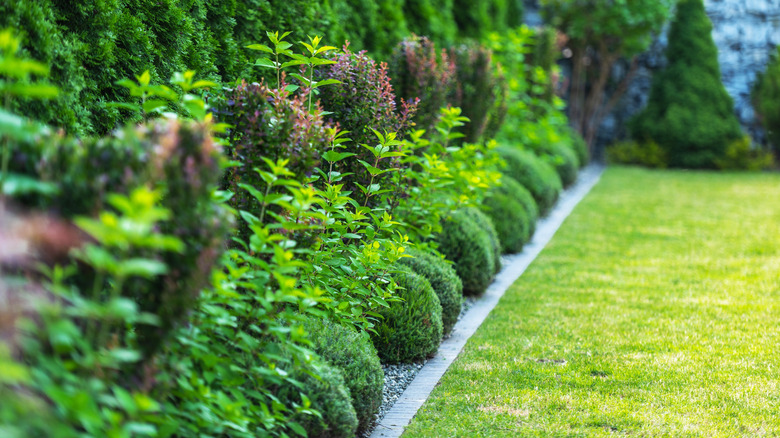
Shrubs can be better used as borders to your garden beds or pathways. Be warned, however, that if you're tempted to move shrubs from the side of your home to right up next to your fence, don't. The moisture they accumulate near foundations can also rot wooden fence panels, too. Worst case, you'll need a new fence, and have the perfect excuse to check out Holmes' game-changing technique for installing new fence posts.