

Do Fireplace Ashes Have A Place In Your Garden? Here's How They Can Be Helpful
We may receive a commission on purchases made from links.
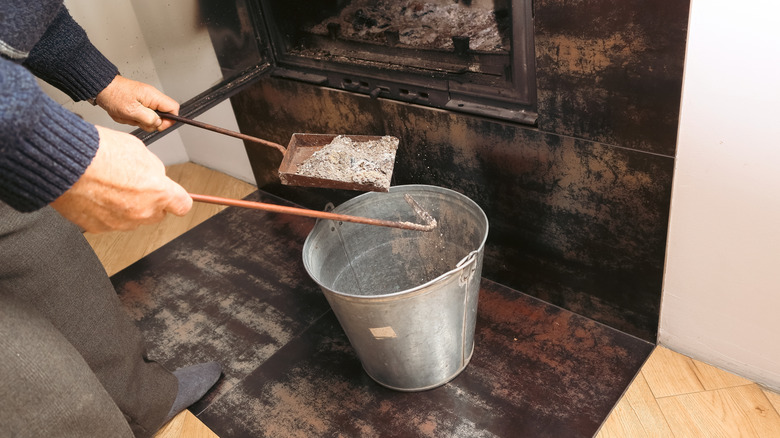
When Jack Frost comes knocking at our doors, it's time to enjoy the cozy fireplaces if you have them. And whether you have a wood-burning fireplace or a little fire pit in the backyard, you may be able to upcycle those ashes in the garden! This nutrient-rich ash can be helpful in feeding plants and to modify soil — but only in moderation.
Wood ash can be beneficial to the garden in a number of ways. For one thing, the carbonates in it can neutralize soil, which can raise the soil pH and make it less acidic. For another, it's filled with nutrients that plants love, like calcium, potassium, magnesium, and more. You can even use fireplace ashes to fertilize trees. But before you go filling garden beds with ash, know there can be some downsides in using too much. And, depending on the wood you've burned, some remnants may contain lead and other heavy metals. That's why you shouldn't use the remains of treated wood or wood gathered near manufacturing plants.
Also, you should always check your yard's soil pH before you use it in the garden. If you've got a high alkaline reading already, then ash might do more harm than good. Also, acid-loving plants might not care for this additive too much. If you're not sure where to start with evaluating the dirt, an affordable mail-in test like the My Soil test kit can give you readings on soil pH and nutrient levels in your garden beds.
How to use fireplace ashes in your garden
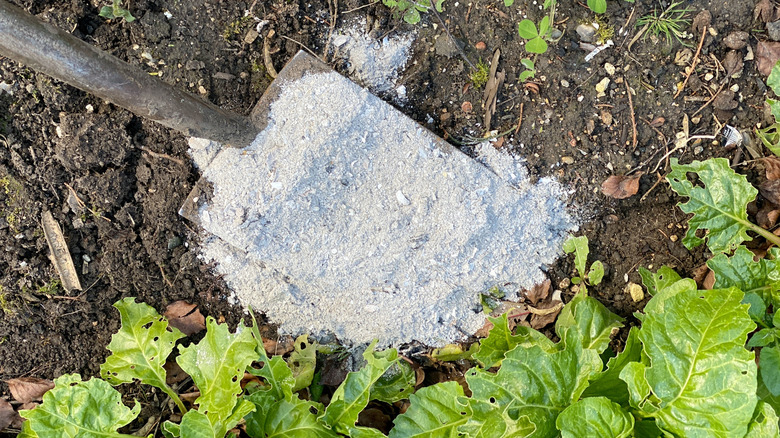
To properly use ashes in your garden, start by reading up on how to handle it safely! It can irritate skin and your eyes and nose. Then, before adding it to the garden, always sift out bigger chunks.
While some think a winter application is good, others say spring is better. What's likely true is that if you throw it out on top of snow, there's a chance the nutrients will wash away well before young sprouts get to use them. Whether you apply in winter or spring, make sure to do so on a calm day. Ash is fine and light, so avoid spreading it out on blustery afternoons unless you want more of it in your hair than on the ground.
The key to properly using ash in the garden is to not use too much. Ten pounds distributed to every 100 square feet of your yard should be the most you use for a whole year. If you use more than that, you might be polluting the soil more than enriching it. Heavy dumping of ash in soil prevents all plant growth. Not to mention, if you add too much magnesium to plants, you'll interfere with their ability to absorb other nutrients and cause them harm. As long as you sprinkle a light layer evenly across your garden and not go overboard, the fireplace ashes can be helpful for your plants.