

13 Varieties Of Poisonous Plants The Old Farmer's Almanac Can Help You Identify
Whether choosing flowers at the garden center, pulling weeds in the yard, or encountering local flora while hiking, it's always a good idea to learn a bit about the plants around you. While plenty of garden selections, wild plants, and weeds are harmless or even edible, others might be hiding dangerous properties. One resource to consider when trying to discern whether a plant is poisonous or not is the Old Farmer's Almanac. From plants whose berries contain toxic compounds, like privet and lily-of-the-valley, to plants that can cause skin irritation, like the abhorred cousins poison ivy and poison oak, the Old Farmer's Almanac offers an abundance of information that might help you quickly identify potentially harmful plants.
The world is full of plant-eaters ranging from elephants to microorganisms, so it makes sense that plants, as living organisms, have evolved their own defense mechanisms. Often, these toxic compounds are by-products of other functions that just happen to have defensive benefits. Not all poisons are harmful to all animal species, and often, the severity of symptoms depends on the size of the dose — or the size of the poisoned person.
If you have young children, you know that they tend to investigate new things mouth-first, so making informed garden choices and knowing how to tell if a wild berry is edible or non-edible might be particularly crucial. The Almanac advises also teaching kids never to eat anything that hasn't been approved by an adult first.
Privet
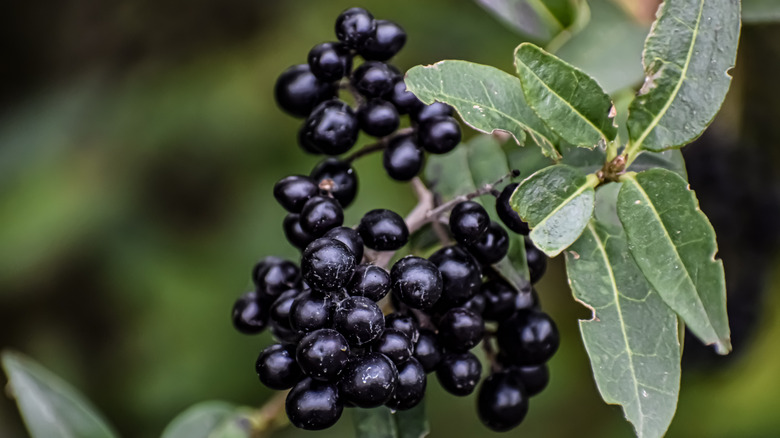
Although its dark blue fruits may look appetizing, you'll want to resist the urge to help yourself to a handful of privet (Ligustrum spp.) berries: According to the Almanac, the berries and leaves of privet are both poisonous to humans as well as dogs. Ingesting them could cause symptoms such as abdominal pain, vomiting and low blood pressure, among others. Beyond that, privet is considered invasive in some states, so you should probably avoid planting it and consider removing existing plants from your yard. Try replacing it with a similar-looking native alternative like flowering dogwood (Cornus florida).
Laburnum
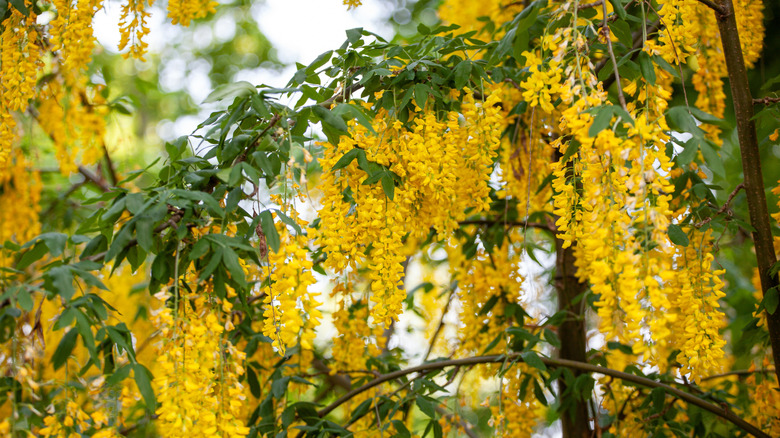
Also known as goldenchain, laburnum (Laburnum spp.) is a tempting selection to bring a touch of elegance and color to sunny sites. Just keep in mind that when its cascading yellow blossoms fade, the seedpods that follow are highly poisonous if consumed, with the Almanac pointing to symptoms ranging from vomiting to coma. In fact, if you eat enough of the pea-like seeds, it's possible you may not live to tell the tale. Savor this visual feast with your eyes, not your mouth! It's advisable to remove the seedpods when they appear, and to wear gloves when doing so.
Lily-of-the-valley
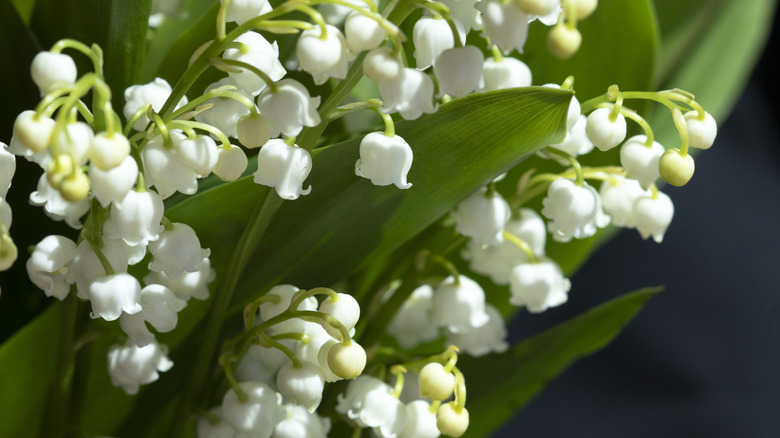
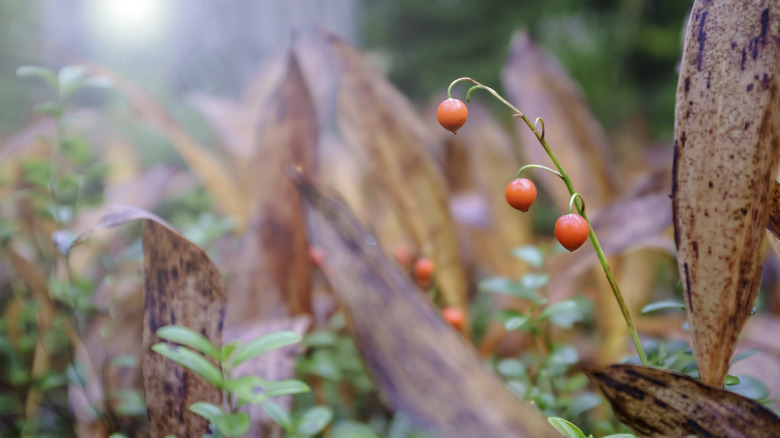
With its tiny bell-like flowers and cheery red berries, dainty lily-of-the-valley (Convallaria majalis) makes a beautiful ground cover, but according to the Almanac, that's just the problem: those pretty berries are toxic and are at perfect grabbing-level for toddlers. The bright color and sweet taste might draw the attention of little ones, and ingestion can lead to symptoms ranging from vomiting to cardiac arrhythmias or, in severe cases, death. To avoid accidents, consider planting native foamflower (Tiarella cordifolia) as an alternative ground cover for the same USDA Zones — 3 through 9 — as it's not known to have toxic effects.
Foxglove
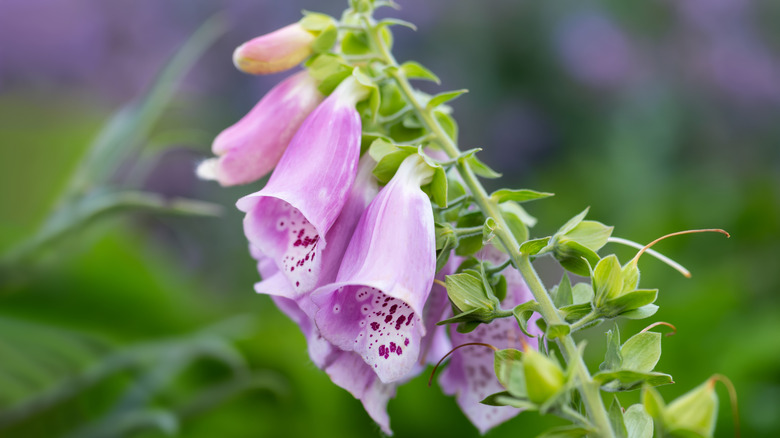
A striking potential addition to a hummingbird garden in zones 4 through 9, foxglove (Digitalis purpurea) looks gorgeous in a bouquet and has the additional benefit of being unappealing to browsing herbivores like deer. However, the Almanac cautions that the flowers, stems, seeds, and leaves of the foxglove plant are poisonous, containing cardiac glycosides, which can cause severe reactions including stomach pain and vomiting, tremors, arrhythmias, or death. However, if you aren't planning on making yourself a foxglove salad for lunch, you can probably safely plant these flowers. You'd have to ingest parts of the plant to experience symptoms.
Poison ivy
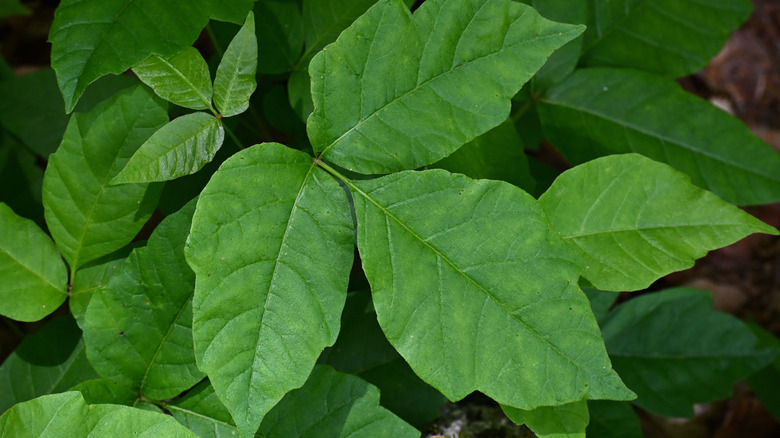
Although some of the plants on this list are otherwise desirable in a garden, the notorious poison ivy (Toxicodendron radicans and Toxicodendron rydbergii) probably isn't welcome in your yard. The Old Farmer's Almanac can help you recognize it. "Leaves of three, let it be" is a good aphorism to help you avoid a rash that can last two to three weeks. Young leaves tend to be glossier than old leaves, and they may or may not be toothed. It may be easily confused for Virginia creeper, which typically has clusters of five leaves instead of three.
Morning glory
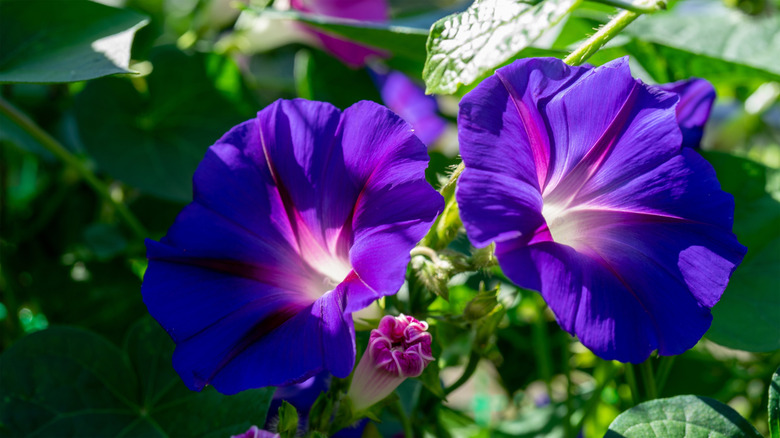
Not to be confused with its invasive cousin, perennial morning glory or field bindweed, morning glory (Ipomoea tricolor) is a lovely annual vining flower that blooms in the morning in shades of blue, purple, pink, and white. But beware: The plant self-seeds, and the seeds are poisonous and should be kept away from children and pets. The lysergic acids in the small, black seeds can cause hallucinations as well as vomiting, extremity numbness and muscle tightness. The Almanac notes that you can reduce the number of dropped seeds by deadheading the flowers before they become seed pods.
Bindweed
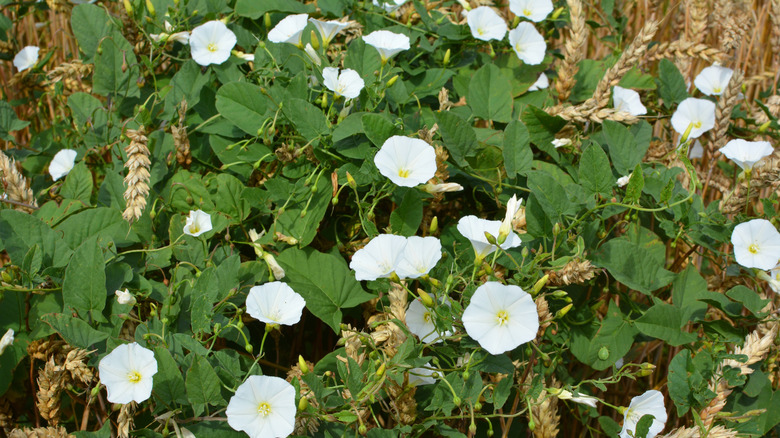
Although it goes by the common names perennial morning glory and wild morning glory, invasive field bindweed (Convolvulus arvensis) is not a garden visitor you want. Probably an accidental import, this Eurasian native can be a real pain to control, in part due to its root system, which the Almanac says can grow through other plants' roots and reach depths around 14 feet, allowing the plant to persist for years. Plus, it's poisonous, and is particularly a problem for livestock like horses. Unfortunately, it's best to remove field bindweed by hand, as tilling can just move around rhizomes and seeds.
Delphinium
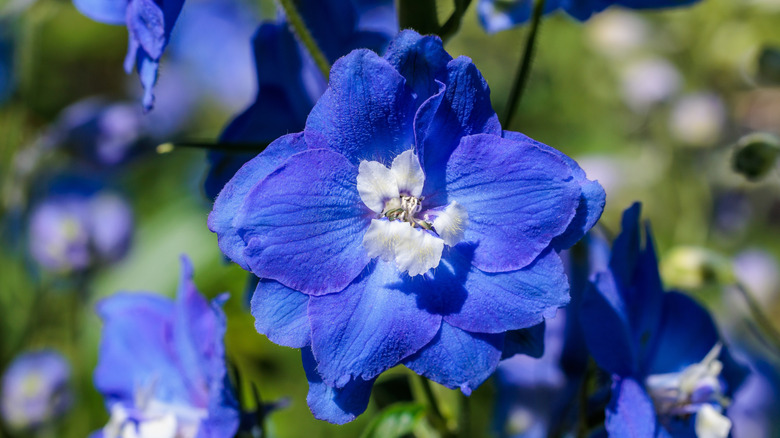
Lovely in the garden or cut in a vase, delphiniums (Delphinium spp.) are perennial flowers that the Old Farmer's Almanac says will bring butterflies and hummingbirds to your yard. Although you'll often see them in blue, there are pink, purple, white, and red varieties available. Use caution with animals or small children around this genus, however. The seeds and seedlings are highly toxic if ingested. Symptoms of poisoning include burning or numbness in the mouth and throat, severe vomiting and diarrhea, and muscle spasms and weakness, as well as life-threatening issues like respiratory paralysis, convulsions, and cardiac failure.
Poison oak
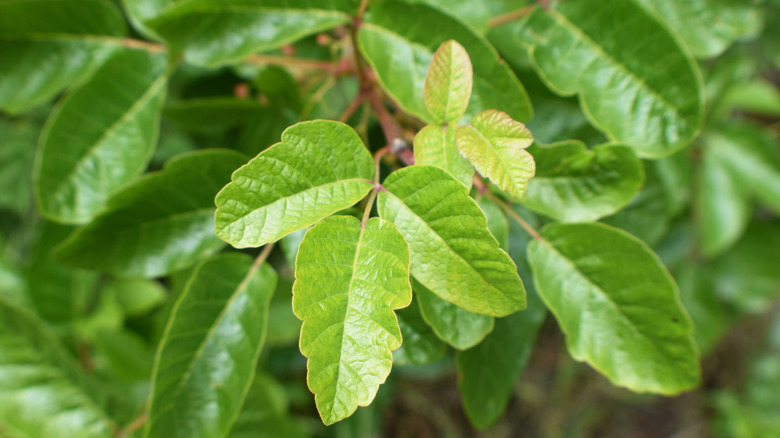
There are two species of poison oak found in the U.S.: The upright and shrubby eastern poison oak (Rhus toxicodendron) and the shrub or vining western poison oak (R. diversiloba). Both poison oak species, as well as poison ivy and poison sumac, are members of the same genus, Toxicodendron, and contain the same rash-inducing plant oil, urushiol. Interestingly, urushiol doesn't seem to have the same toxic effects on animals as it does on humans! Like poison ivy, poison oak typically has three leaflets and white flowers, but poison oak's leaves look somewhat like the unrelated oak tree leaves.
Mountain laurel
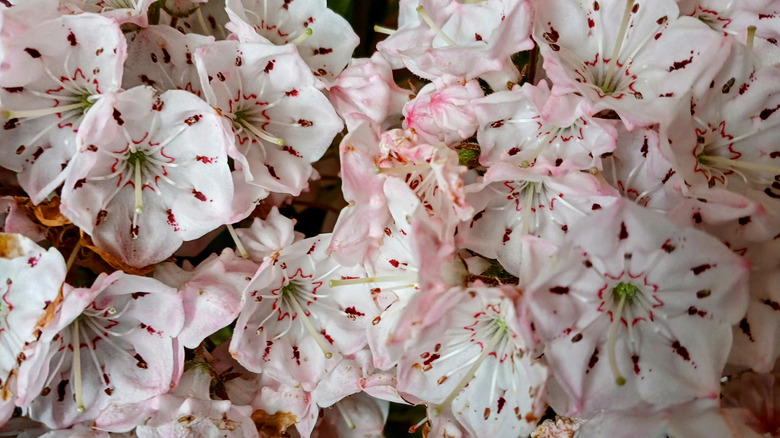
As Pennsylvania's state flower, mountain laurel (Kalmia latifolia) offers attractive evergreen foliage and showy blossoms in a variety of pinks, whites, and reds. Plus, it's a U.S. native that the Almanac says blooms well in the shade and attracts pollinators. A major caveat: Mountain laurel is toxic to humans if ingested, as all parts of the plant contain andromedotoxin, arbutin, and grayanotoxins. Symptoms include drooling and digestive distress, stupor, loss of coordination, and weak pulse; coma or death may also occur. Honey from bees with extensive exposure to mountain laurel can even cause "mad honey disease" in humans.
Burning bush
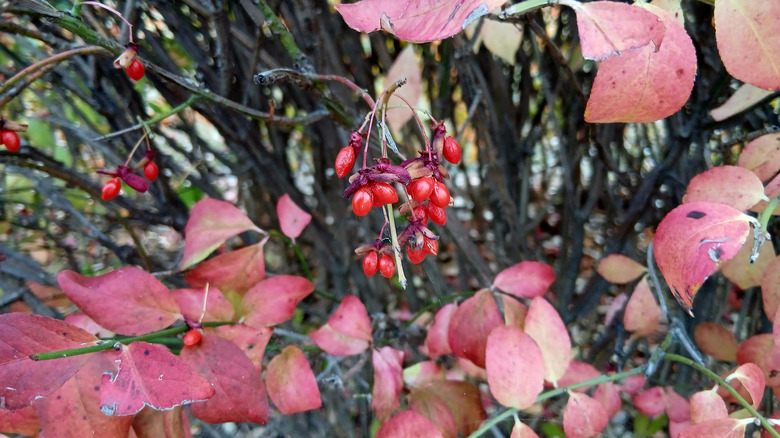
Although burning bush (Euonymus alatus) is invasive, you may encounter it in gardens anyway, as its brilliant fall foliage and pretty berries make it difficult to part with for some gardeners. All parts of this plant are toxic, but in particular, children tend to be attracted to its fall berries. If ingested in large quantities, the berries and other plant parts can produce symptoms ranging from gastrointestinal upset to chills to coma. For a native alternative that has nontoxic and edible (albeit extremely sour) berries and similarly gorgeous fall color, try planting the red chokeberry (Aronia arbutifolia) instead.
Heliotrope
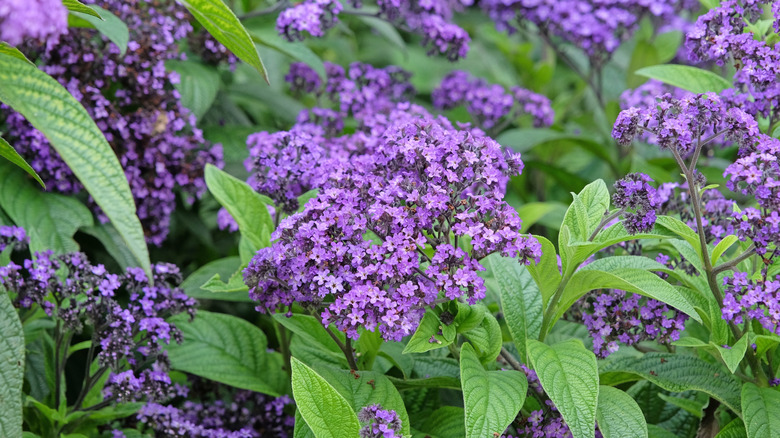
A purple-blooming shrub that can be grown as a perennial in warmer climates (zones 9 and 10), heliotrope (Heliotropium arborescens) is also known as the cherry pie plant due to the cherry-like fragrance of its blossoms. However appetizing they might smell, avoid nibbling on heliotrope flowers, as they — along with the rest of the plant — are poisonous. If you ingest enough heliotrope, you can expect to experience symptoms ranging from gastrointestinal upset to potential liver damage. Luckily, you'd have to consume quite a lot to do real harm to yourself; it's even sometimes used in herbal teas.
Monkshood
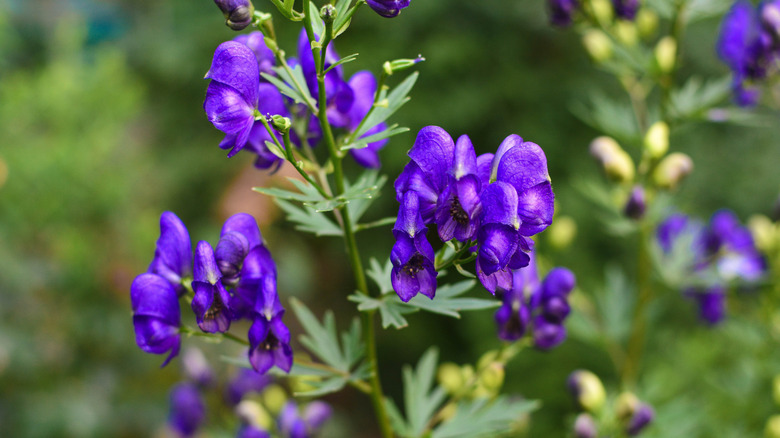
For whatever reason, observes the Almanac, it seems that a lot of purple plants are toxic. Purplish-blue-blooming monkshood, or wolfsbane (Aconitum spp.) is no exception, as all parts of the plant (especially the seeds, young leaves, and roots) contain dangerous monobasic diterpenoid alkaloids. These alkaloids can prove fatal to humans and pets if ingested, causing sudden cardiac arrhythmias. Keep in mind that monkshood is a member of the buttercup or Ranunculaceae family, most of which are similarly toxic. In other words, always do a bit of horticultural research on the plants you're selecting for your garden.