

Why Snow Is A Secret Weapon For Garden Bulbs In The Winter
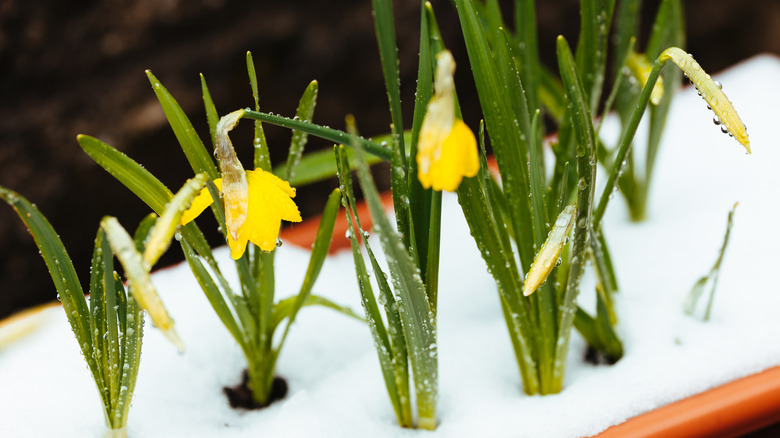
Gardeners often have a complicated relationship with snow. While a light dusting can add beauty to the landscape, it's often painful and worrying to see your garden buried under feet of frigid white powder. In some parts of the country, it can be months before bare ground is visible again. While you may associate snow with cold and assume that it can do only harm to your plants and bulbs, all that snow isn't necessarily a bad thing for your plants. And in the case of your fall-planted garden bulbs, it could even be beneficial. Snow can act as everything from a mulch, to a watering can, to even a fertilizer.
Much like mulch, snow is a surprisingly impressive insulator. That means that if your garden and the bulbs buried in it are covered by a thick blanket of snow, the bulbs are far less exposed to below-freezing air temperatures. Snow also protects your bulbs against temperature fluctuations, much like mulch does. This can prevent frost heave, which is the process where cycles of freezes and thaws lift bulbs, or even whole plants, out of the soil. The last thing you want is to find your carefully planted flower bulbs on top of your soil instead of properly buried in it. Frost heaving can also cause cracks in the soil that will expose the bulbs to freezing temperatures without their soil or snow insulation.
Snow is also great for moisture and even fertilizing
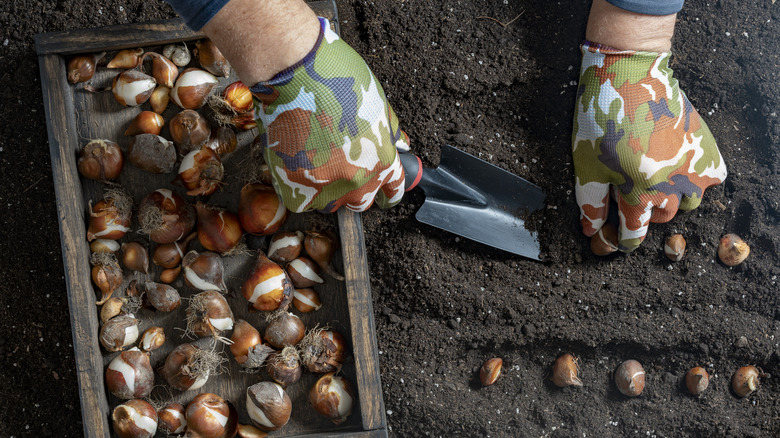
Snow's insulating effects aren't the only way it can benefit your bulbs. When it begins melting in spring, it can also ensure your garden stays hydrated. Because the snow melt tends to happen relatively slowly, your soil is likely to absorb the water quite well. And even better, snow can also provide a bit of fertilizing for your garden.
That's right! Snowflakes hold small amounts of nitrogen from the atmosphere, which then can benefit your plants once the snow melts. In some cases, it can even improve your soil's structure, leading to better drainage come spring. Of course, don't count on snow to do all your amending and fertilizing for you. You should still test your soil and consider amending it if necessary.
For all of snow's amazing benefits, that doesn't necessarily mean you want it once your flowering bulbs have started to bloom for the spring. If a late snowfall is predicted, prepare your garden for the heavy snow. For example, consider protecting your tulips and daffodils using buckets or other rigid containers if they've already started flowering. Snow can be surprisingly heavy, and while that can be beneficial during winter when it's acting as a blanket for your sleeping garden, you don't want it to crush your spring flowers.