

Forget Store-Bought Rosemary: How To Grow An Endless Supply In The Garden
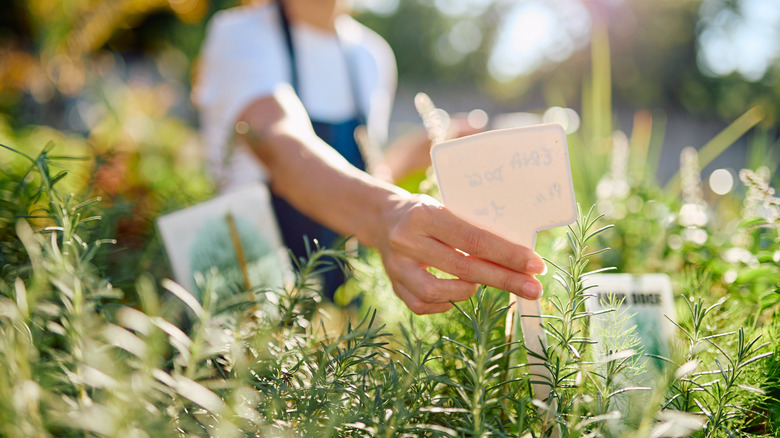
Whether you're cooking lamb or potatoes, the fragrant herb rosemary can perk up almost any recipe. If you're tired of hunting for it in the produce section of your local supermarket, then why not try growing it in your own garden for an endless supply? This evergreen perennial thrives in USDA Plant Hardiness Zones 8 through 10, but there are workarounds for even the colder climates.
Rosemary isn't just good in your kitchen. It's also a hardy perennial that can keep ticks out of the garden. We might like the smell of the herb, but some bugs don't. However, as you can guess from its hardiness zones, rosemary isn't a fan of frigid temperatures. When outdoor temps drop below 10 degrees, this woody perennial probably won't make it. A couple of cultivars, though, are known to be hardier, surviving winters down to zone 5, such as 'Hills Hardy' and 'Arp.' For most other types of rosemary in regions with cold winters, you can treat it like an annual or grow it in pots to bring in during the winter.
Whether you decide to put rosemary in a container or plant it in the ground, know that you should keep it there and don't shuffle it about. This woody perennial doesn't like being moved. For best results when planting, use cuttings from a mature plant. While you can grow rosemary from seed, it can take years for seeds to mature into a plant big enough to supply herbs for your recipes. Using cuttings or a small plant from the nursery will help you harvest faster.
The perfect time and place to grow your own rosemary
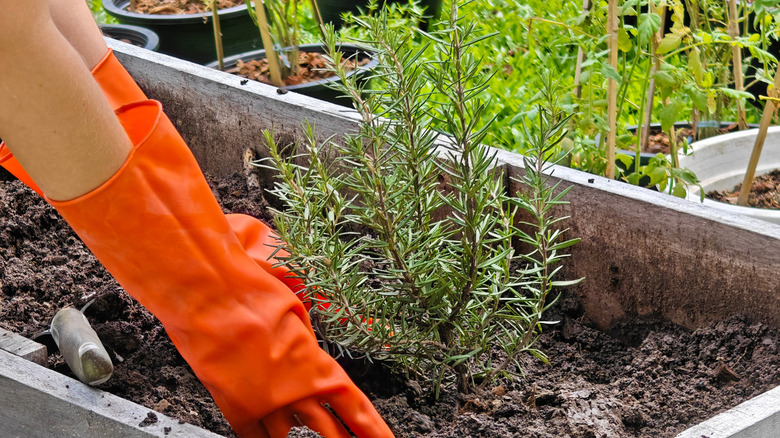
To grow this potentially tick-repelling herb, you just need the right conditions. All rosemary really wants is full sun, well-draining soil, and good air circulation. When planted in the spring, it'll reach a decent size in just a few months, and you will still be able to harvest the herb. You can also grow it in a pot and bring it inside for the cold months. Just put it near a sunny window, and remember that it likes air that's a little cool in the winter but still humid.
If you're in the right climate to plant outside, you'll want to choose a sunny spot with the right soil. Rosemary needs well-draining soil with a neutral to slightly alkaline pH of 6.0 to 7.5. It's also a drought-tolerant herb once it is established, which is why you want to avoid heavy clay soil. It won't survive consistently wet, heavy soil on its roots. The best watering practice to keep garden rosemary flourishing all season is to only water when the soil feels dry.
If you're growing more than one, give them room to spread out with at least 2 feet between each plant. They can grow to between 5 and 10 feet in Mediterranean coastal conditions, but otherwise, they stay nice and compact. Given rosemary's ability to tick off ticks, try planting this fragrant herb near your garden gate to keep pests away and enjoy its rustic or cottage aesthetic.