

The Gorgeous Hydrangea Alternative You Can Grow Without The Fuss Or Struggle
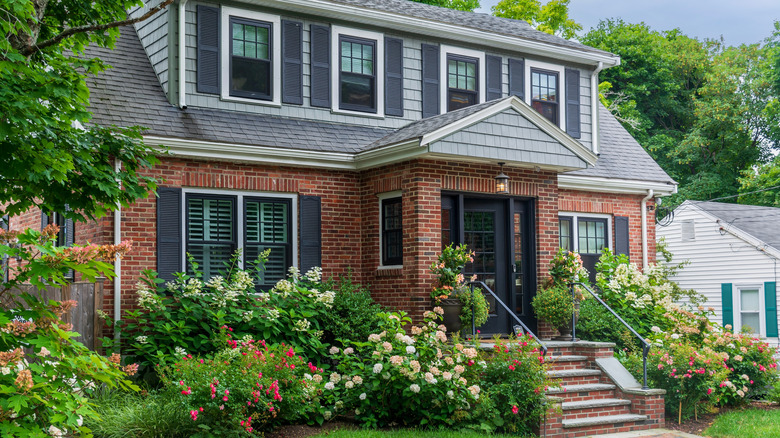
There's a lot to like about hydrangeas, thanks to their beautiful blooms and multiseason interest. Unfortunately, they're also notoriously fussy plants to grow. Additionally, they can be a bit confusing because there are multiple popular hydrangea species, all with different needs. These issues have caused many gardeners to choose hydrangea alternatives instead. If you're looking for something with all of hydrangeas' pluses and few of their drawbacks, consider taking a serious look at Virginia sweetspire (Itea virginica).
Sweetspires, like hydrangeas, boast beautiful blooms and multiseason interest thanks to their colorful autumn leaves and bright red winter branches. They also thrive in many of the same areas as hydrangeas. While sweetspire is hardy in USDA hardiness zones 5 through 9, hydrangeas can be tolerant in zones ranging from 3 through 9, depending on the specific species and cultivar. Also, like many hydrangea species, sweetspire is generally happy in part sun or dappled shade.
With a size of about 6 feet tall by 8 feet wide, sweetspire is the perfect small shrub for in front of the house. It is a hit with pollinators as well, with butterflies and hummingbirds both being huge fans of the plant. Only a few hydrangea species, on the other hand, have much value for pollinators.
Sweetspires are more resilient to their environment
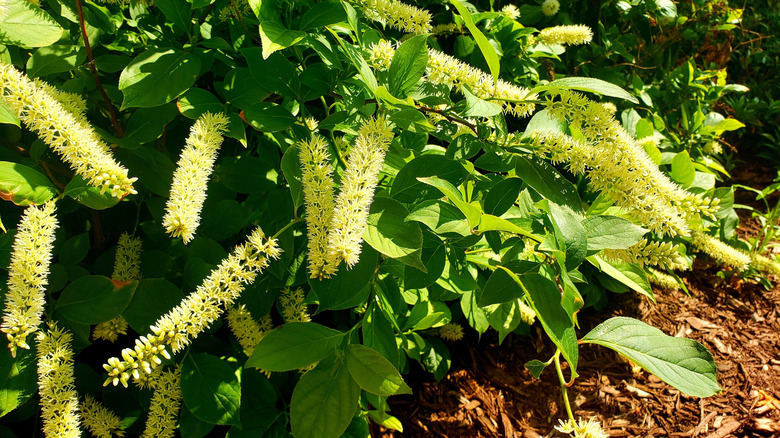
One main issue for growing hydrangeas is their environmental sensitivity. They are known for their need for regular hydration, with bigleaf (Hydrangea macrophylla) varieties being especially notorious for their intolerance of heat and drought. Conversely, they are also intolerant of overly soggy soil. Sweetspire, on the other hand, is quite drought tolerant while also being able to handle wet soil. This flexibility makes it far easier to care for compared to many hydrangeas.
Sweetspire is just a little more resilient in general. While hydrangeas are well-known as being deer food, sweetspire is relatively deer resistant. It is also fire resistant, making it a good option for planting closer to homes in areas with higher fire risks. Additionally, it's native to the United States, unlike many popular hydrangea species. (The exception is Hydrangea arborescens, which is also a North American native.)
Sweetspire does share one drawback with many hydrangeas: It blooms on old wood. This means that you need to pay attention to when you prune, waiting until just after the plant finishes flowering. Otherwise, you may not have any blooms the following year. Another possible issue for sweetspire is that it grows by sending up suckers, which need to be pruned back unless you want to grow it as a hedge. This isn't necessarily a downside and can be quite beautiful, as some feel that the shrub looks a bit like privet. These suckers can also make it a useful plant for erosion control.