

10 Plants To Stay Away From Using In The Garden And Why
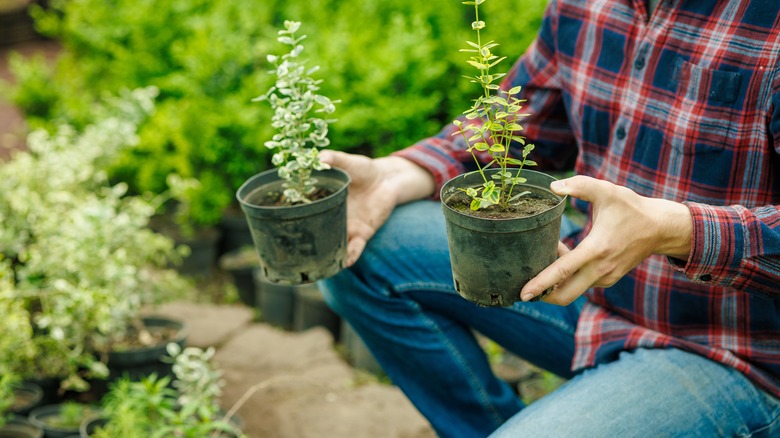
A lot of thought goes into selecting plants for your yard and garden. Beyond planning what might look good where, you also have to take into account conditions such as soil quality, sun and shade, and water needs. On top of all that, you may have to think about what plants can repel rabbits and deer and what plant pests or diseases are common in your area. But make sure you research thoroughly: Just because a plant fits your aesthetic plan and will thrive in your local growing conditions doesn't mean it's necessarily a good choice. Some plants, like Japanese honeysuckle and English ivy, are invasive and difficult to control; others, like the pencil tree, can be physically harmful to you and your loved ones if not handled carefully.
A potentially invasive selection might be tempting, but remember that you're not necessarily in control of how and where these plants reproduce. Often, plants are considered invasive based on how prolifically and quickly they set seed, and birds and other animals, as well as wind or water, may carry seeds to vulnerable environments. Toxic or harmful plants, meanwhile, may attract the attention of curious children or pets, and it's always better to be safe than sorry.
Big leaf periwinkle
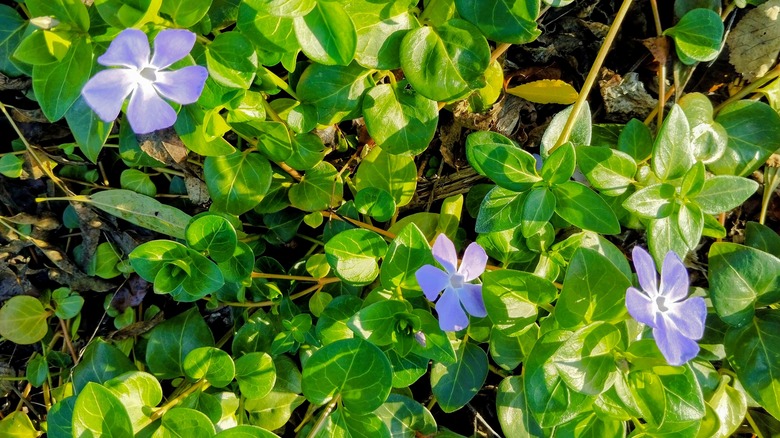
With its glossy leaves and pretty purple blossoms, big leaf periwinkle (Vinca major) may seem like an ideal choice for an attractive evergreen groundcover to use in USDA Zones 7 through 9, but you might want to think twice. This European and African native, introduced to U.S. gardens as an ornamental, is considered invasive in California, as well as many Southern states. It's a relentless vegetative spreader, able to resprout from tiny pieces, and severe infestations can easily outcompete native plants with dense, choking mats. For a purple-blooming native alternative, check out creeping phlox (Phlox stolonifera) instead.
Japanese honeysuckle
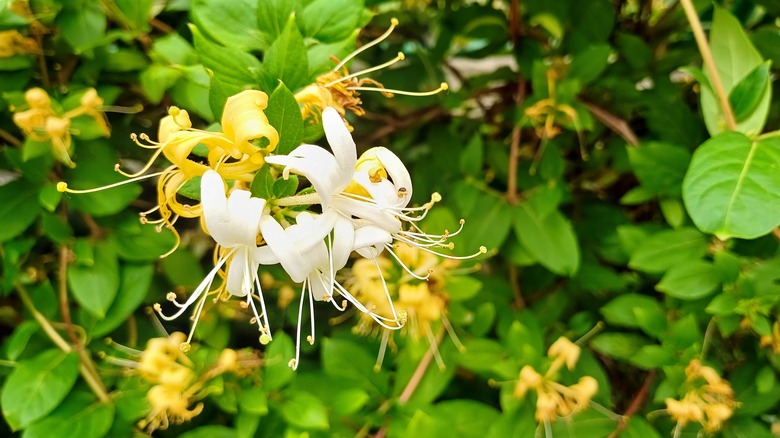
Though the fragrance of its lovely cream and yellow flowers may beckon, you should avoid planting Japanese honeysuckle (Lonicera japonica) in your garden. It was originally brought to the U.S.'s east coast for the dual purpose of controlling erosion and looking pretty while doing so, but this strangling vine quickly demonstrated a penchant for choking out other trees and plants. If you're looking for a less problematic vining flower that still packs a visual punch, look no further than another member of the honeysuckle family — the U.S. native coral honeysuckle, hardy in zones 4 through 9.
English ivy
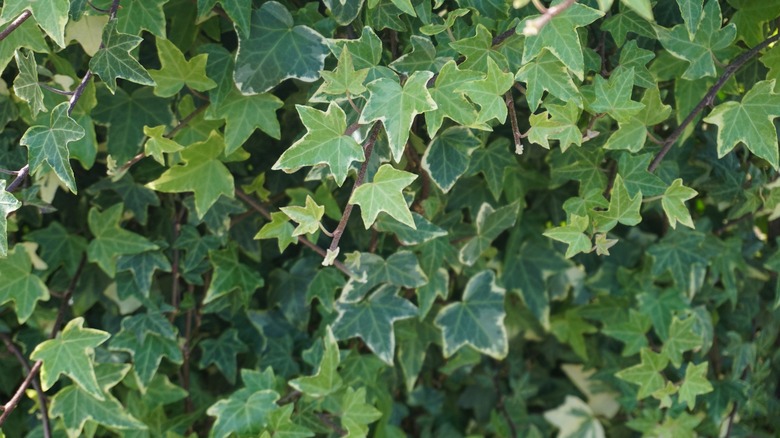
There's definitely something romantic about a house's facade sporting a thick jacket of climbing English ivy (Hedera helix), but resist the urge to plant some. An evergreen European native, English ivy's colonization of the U.S. began in the 1700s, and it has since become known as one of the worst invasive plants in the country. The aggressiveness of this climbing vine can't be overstated: It can rapidly dominate nearby plants and structures and will cost both time and money to eradicate. One shade-loving alternative native ground cover for zones 5 through 9 is Allegheny spurge (Pachysandra procumbens).
Bradford pear tree
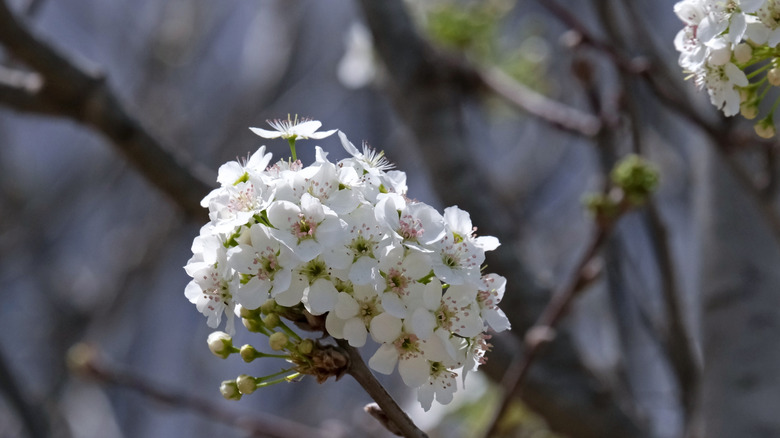
The Bradford pear tree (Pyrus calleryana) became popular in the 1960s because it's a fast grower that puts on a show of white blossoms in the spring. But if you've ever encountered it in full bloom, you already know why you should avoid growing the Bradford pear in your yard: it stinks. Some compare the smell to fish, urine, or even a corpse. This tree is also short-lived, with a lifespan of about 25 years. Plus, its branches are weak and prone to breaking. Do your nose a favor and plant an eastern redbud (Cercis canadensis) instead.
Chinese wisteria
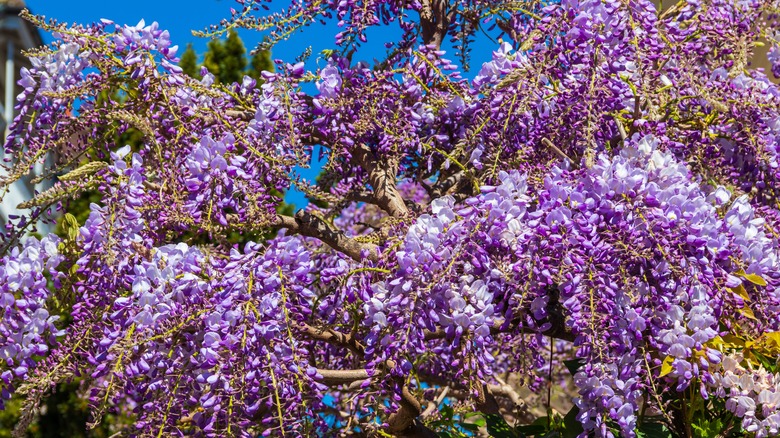
When you see the elegant, lightly perfumed clusters of purple blooms drooping down from Chinese wisteria (Wisteria sinensis) vines, it's easy to covet them for your garden. But beware: These vines are adaptable to most soils and will climb over almost anything. Considered invasive in the U.S., Chinese wisteria is not only a rapid grower, it's also very long-lived with a lifespan of 50 years or more. Luckily, there's a far less aggressive native alternative: American wisteria (Wisteria frutescens). Ideal for moist sites in zones 5 through 9, American wisteria can also fix nitrogen in the soil.
Pencil tree
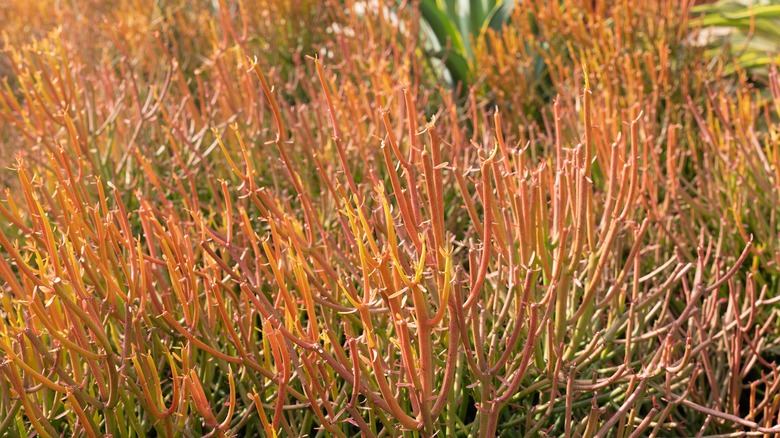
Although it's frequently kept as a houseplant, if you live in a warm region like southern California or Florida, you may have also seen the pencil tree (Euphorbia tirucalli) growing in front yards. The brilliant orange-tipped 'Fire Sticks' cultivar makes an especially striking statement, so you may want to plant this Madagascar native in your own yard. But if you have young children, pets, or sensitive skin, pass on the pencil tree. Its milky sap is highly toxic and skin contact can cause mild to severe irritation, while ingestion or ocular contact may necessitate an emergency room visit.
Trumpet vine
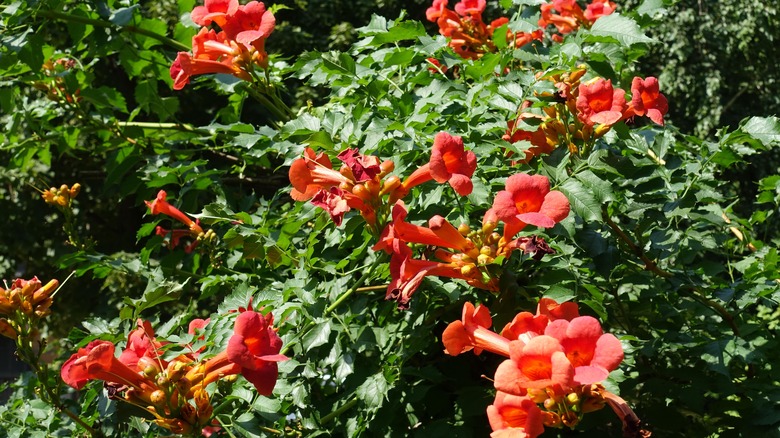
Although trumpet vine (Campsis radicans) is native to the eastern United States and will probably increase hummingbird traffic in your yard, the aggressive nature of this vine is one reason you may want to give it a miss. Not only does trumpet vine enthusiastically self-seed, it also produces abundant suckers from underground runners, making it difficult to contain. Additionally, it's extremely flammable, so it's probably not the best choice if you live in a wildfire-prone region. The similar-looking crossvine (Bignonia capreolata) is a more polite hummingbird-attractor, as its runners don't travel as far as those of trumpet vine.
Running bamboo
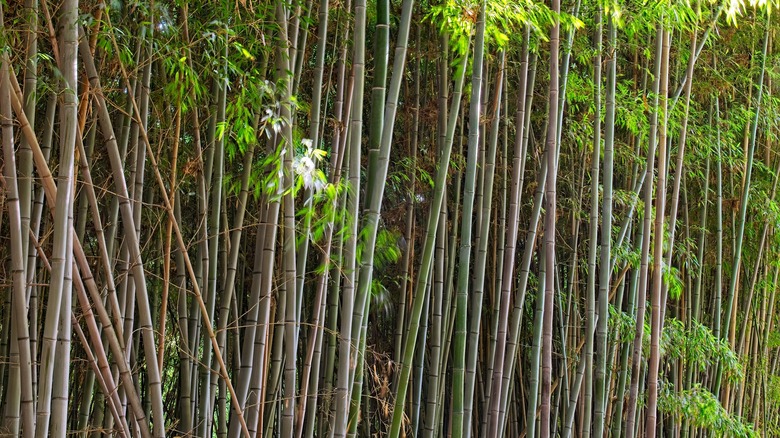
By planting bamboo species in the Phyllostachys genus, you're not just making a landscaping decision for your own yard — you're potentially also conscripting your neighbors into a horticultural war of attrition that can last for years. That may sound dramatic, but the running bamboo species is extremely aggressive spreaders that can be both time-consuming and expensive to eradicate. Spreading via long underground rhizomes, running bamboo can pop up far as 100 feet from the original planting. If you're determined to plant bamboo in your yard, explore some of the tamer "clumping" species, such as fountain bamboo (Fargesia spp.).
Jubata grass
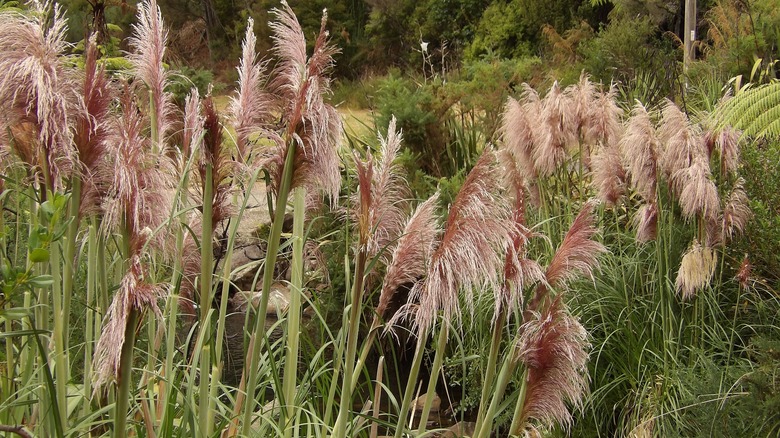
With its graceful pinkish plumes, adaptability, rapid growth rate, and resistance to deer browsing, jubata or pampas grass (Cortaderia jubata) may seem like a no-brainer selection for textural interest in your garden. But however lovely and dramatic this grass may appear, you shouldn't plant it, especially if you live on the West Coast: Jubata grass is considered highly invasive, with a tendency to outcompete native species and clog waterways and wetlands. Its plentiful seeds and sharp leaves make it difficult and painful to remove. Try planting the comparably attractive but native and slower-spreading giant wildrye (Elymus condensatus) instead.
Mimosa
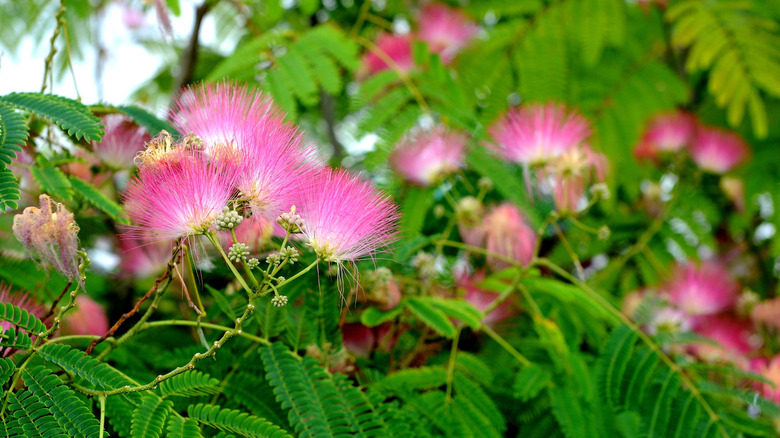
Also known as the silk tree, mimosa (Albizia julibrissin) is a south Asia native that boasts fragrant and uniquely lovely pink pompom-shaped flowers that draw in pollinators along with intriguing fern-like leaves. Unfortunately, this tree — though lovely — is considered invasive in several states. Its seeds (which spread easily via wind) are neurotoxic to dogs and livestock, and it will re-grow if you try to cut it back. The mimosa tree is also highly flammable and messy while dropping leaves. For flowers that have a similar puffball look without the invasive qualities, try a bottlebrush (Callistemon spp.) instead.