

7 Tips To Keep An Herb Garden Alive Through A Chilly Winter
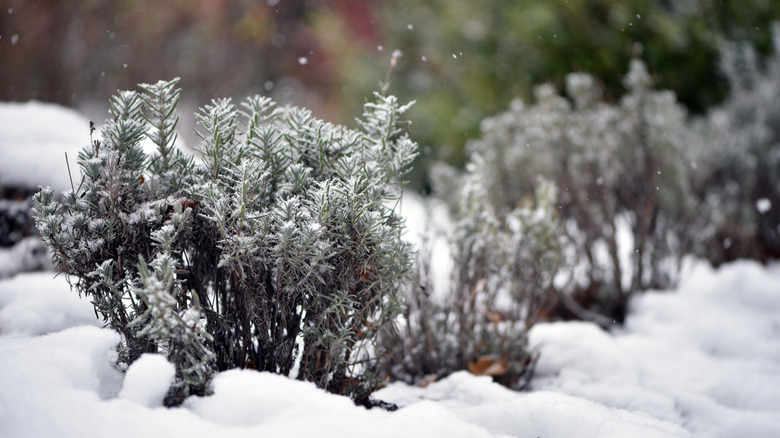
Herb gardens make brilliant additions to almost any home landscape. Not only are they beautiful and able to lend a wonderful smell to your yard, but they're also great for adding flavor to your favorite dishes. Many herbs also benefit local pollinators. And in some cases, an herb garden can last for years with only minimal work on your part. This is especially true if you opt to grow perennial herbs that you can plant once and enjoy year after year.
Unfortunately, an extra cold winter can put a stop to your herbal friends, forcing you to completely replant. Since many herbs are herbaceous (meaning that they are tender and don't have woody stems), you shouldn't necessarily panic if you see them disappear over winter. The plants may still reemerge again as if by magic each spring. In other cases, even the best herbs for growing outside may struggle to survive the winter and need some help on your part to return each year after the cold has passed. While some of the actions you should take to keep your herb garden healthy during the cold need to be done well in advance of winter's arrival, there are also still steps you can take to help your garden even if you forgot to plan ahead.
Choose the right herbs for your region and climate
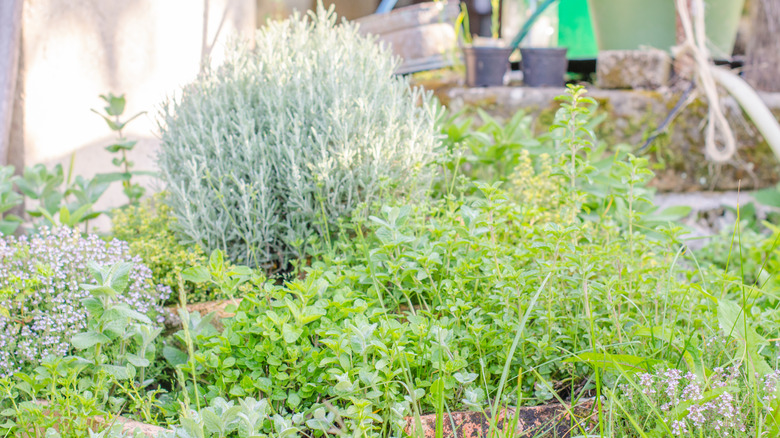
Herbs come from all over the world, with different plants having different cold tolerances. Picking plants that are hardy in your own region vastly increases the chances of your garden surviving the winter with minimal work on your part. Some herbs like basil aren't frost-tolerant at all. Others, like lavender, may be able to survive a chillier winter if you get the right species. While French lavender (Lavandula stoechas) is only hardy down to zone 8, English lavender (Lavandula angustifolia) can survive winters in as cold as zone 5.
Take advantage of your garden's microclimates
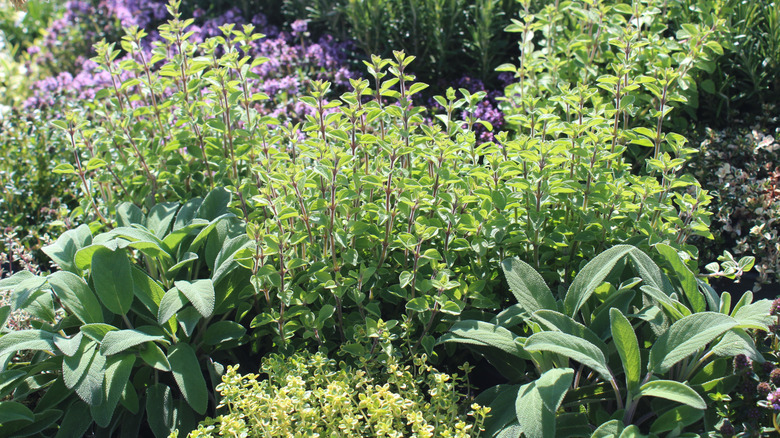
While you may know what your USDA hardiness zone is, don't forget that microclimates also exist. Some parts of your yard are likely warmer than others, even in winter. You can use these warm spots to your advantage by planting herbs that would otherwise not survive the winter in your zone. This is often in the part of your yard closest to your home or another structure and likely on the southern side, where there is plenty of sun.
Frost covers can help protect herbs from the cold
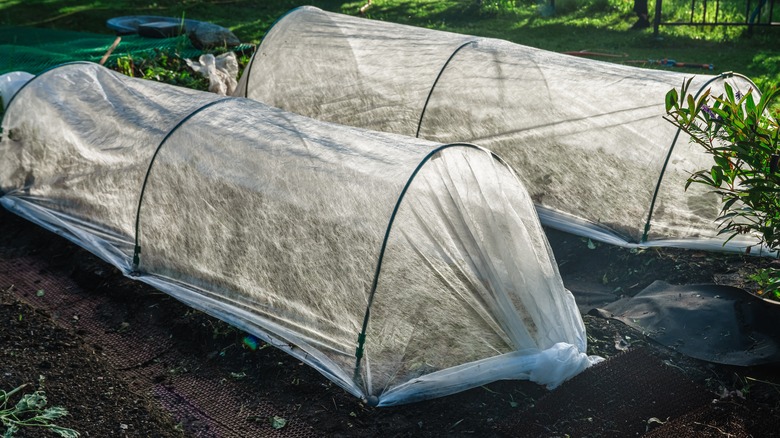
One way to keep herbs safe is to cover them. When the temperature is too cold for your herbs to handle, consider protecting them with a frost cover (or even just a house blanket). This helps trap heat from the ground and keeps your plants protected from ice forming. While this can be a great option for the occasional chilly day, it isn't likely to help much if you have sustained temperatures below 28 degrees Fahrenheit unless you opt for heavyweight frost covers.
Plant your tender herbs in pots and bring them indoors
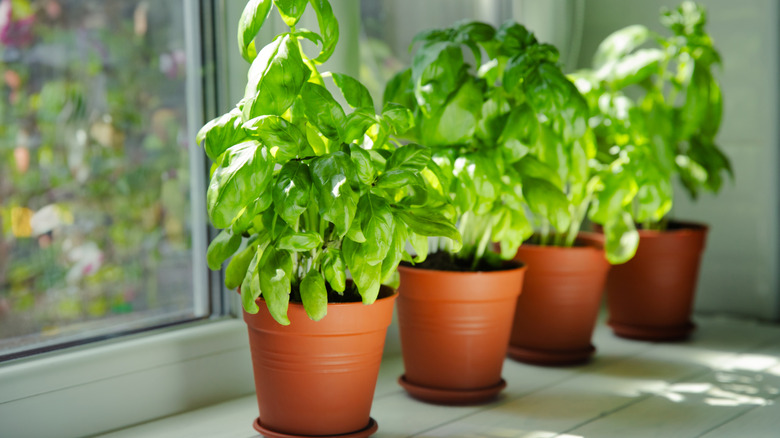
Sometimes growing your least cold and frost-tolerant herbs in a container garden is the best option. This way, you can simply bring them indoors when the cold rolls in or relocate them to a protected garage to survive the winter. Don't forget to harden off the plants both when bringing them indoors in fall and when putting them back out in spring. You should also be sure to check them thoroughly for bugs and other pests before bringing them inside.
Mulch can help to protect your herbs' roots from the cold
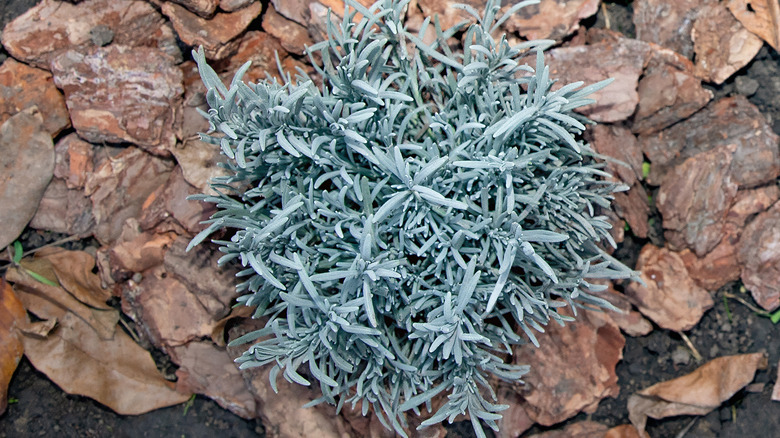
Mulch is an amazing multitasker in the garden. It doesn't just suppress weeds and limit erosion; it can also help your herbs survive winter. One of its many abilities is to help keep soil a bit warmer, protecting your plants' roots from a hard freeze. Because it helps to keep soil temperatures more stable, it also decreases frost heave, which can otherwise result in your herbs being lifted out of the soil.
Make sure your herbs are healthy going into winter
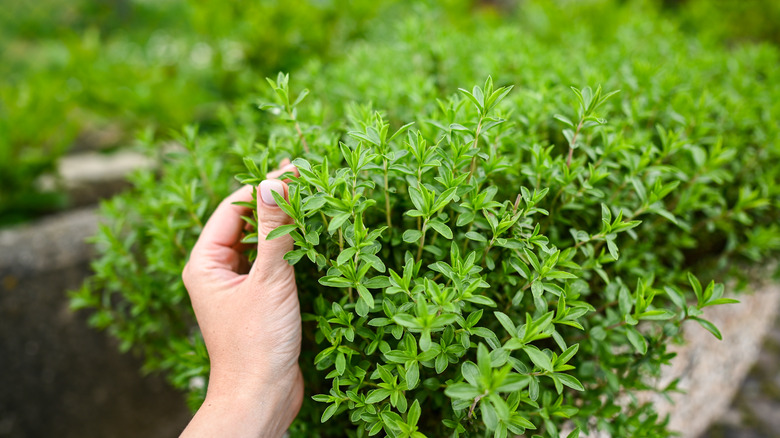
Often, the plants that don't survive the winter are those that were already struggling. Test your soil and make sure your herbs are getting access to the right nutrients to stay healthy well before winter arrives. Fertilizing too close to cold weather can actually be harmful, though, because it encourages your herbs to try to put on new growth that may be too delicate to survive the cold weather.
Strategic watering can be key for herbs during cold weather
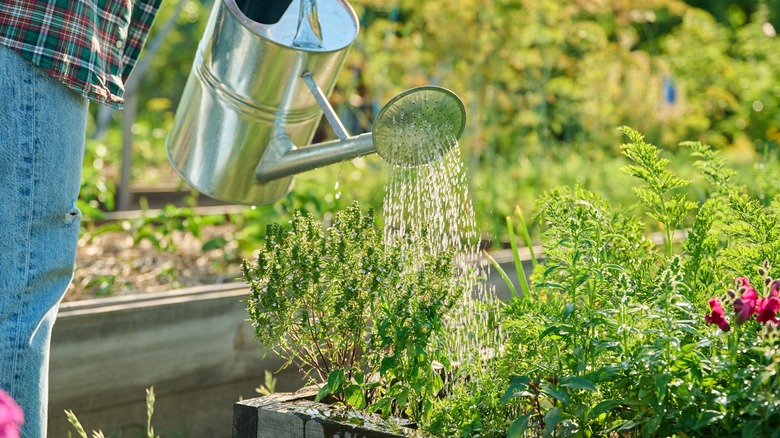
Knowing when to water your garden during winter can be tricky. While your plants likely need to be watered less, that doesn't necessarily mean you should stop watering them entirely — unless your soil is frozen. Watering right before a freeze can help to keep the soil a bit warmer for your herbs' roots. Make sure you're not getting your herbs' leaves wet in the process, though. You should also water after a freeze to help melt any ice left in the soil and prevent plants from drying out.