

Level Up Your Tap Water For Houseplants With A Trick That Couldn't Be Easier
We may receive a commission on purchases made from links.
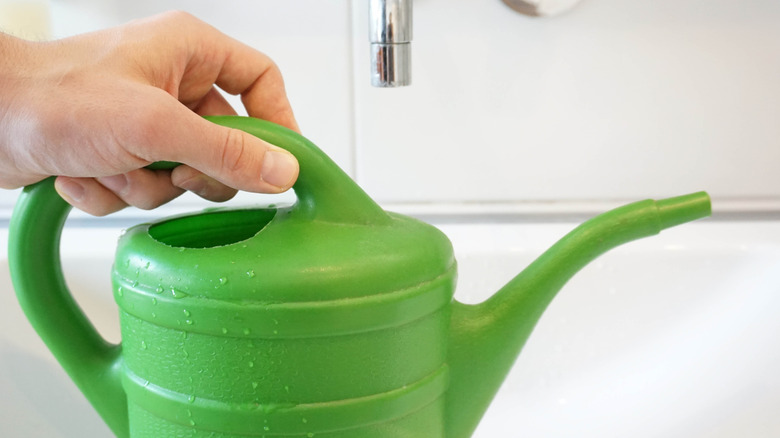
Most of us don't think much about turning on the faucet and filling our watering cans. But chlorine, fluoride, and other chemicals in our tap water might actually be hurting our potted plants. One easy thing you can do now to level up tap water is to add a filter to help keep harmful impurities away from houseplants.
Tap water can be bad for plants in a number of ways. For one thing, the chlorine in it, designed to kill bacteria that could grow in a moist environment and make us sick, also kills beneficial microorganisms in the soil. While it isn't the same levels that are used to kill weeds in the garden using chlorine, over time, it could affect the limited soil microorganisms in potted plants. Fluoride, also added to drinking water, can be toxic for plants over time and cause permanent leaf burn. Some, like spider plants, dracaenas, lilies, and pothos, can be particularly sensitive to it. One sign a plant is struggling with fluoride toxicity is when the tips or edges of its foliage turn brown.
Tap water, however, isn't all bad. It also contains some helpful minerals, such as magnesium and calcium. That's why there's an age-old debate about whether tap water or distilled water is better for plants. But if you've been noticing your houseplant doesn't seem to like the water you're using, why not filter it and see if the plant's health improves?
Filter your water to make it healthier for plants
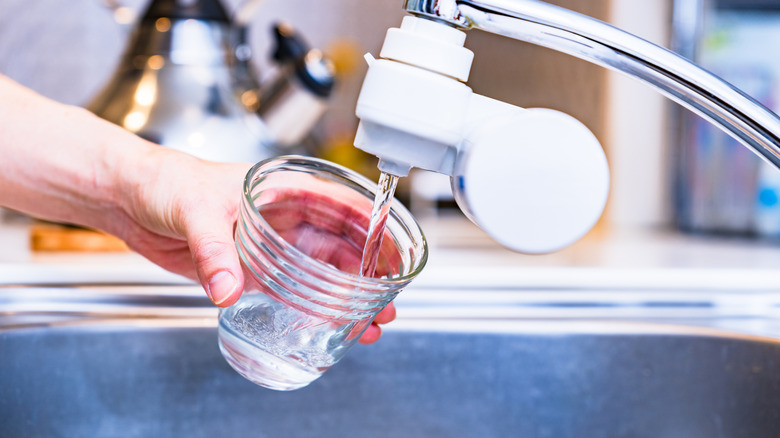
To create purified water for your houseplants, the right filter goes a long way. For the best and strongest, opt for a reverse osmosis (RO) device. RO filters use water pressure and a membrane to help remove bacteria and chemicals. While more expensive than other filters, it tends to remove more chlorine and fluoride. No filter, however, is 100% effective, but you can find a somewhat affordable version on Amazon, like the Waterdrop G5P500 reverse osmosis water filter.
If you'd rather have a cheaper option, try an activated carbon filter. This is a common filter found in the filtered water pitchers sold in many stores. If you're looking for something even less expensive, you can always try collecting rainwater outside (for your plants only!). Or, as a last resort, leave tap water sitting out overnight before using it on plants. Some of the chemicals in it, like chlorine, will evaporate. This won't be as effective as using a filter, especially for houseplants that are extra sensitive to fluoride, but it's better than doing nothing at all.
Once the quality of your water has improved, make sure your watering practices are right as well. Pots sitting in sunny windows will probably need more water than those in shadier spots, but be careful. Overwatering is the fastest way to kill indoor greenery. Always give the soil a chance to dry out before watering, even in winter. Remember, watering at the right time with the right kind of purified water will help keep your houseplant happy and healthy.