

The Natural Resource The Old Farmer's Almanac Calls 'Poor Man's Fertilizer'
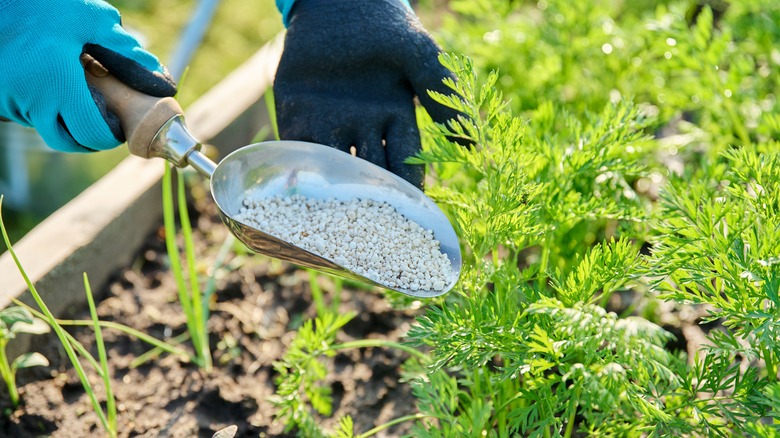
Before you run out to buy fertilizer for next spring, you might want to check the weather forecast. If snow is on the way this winter, it might just help nourish your plants for free. The Old Farmer's Almanac calls snow the "poor man's fertilizer" because it contains nitrogen, an essential nutrient for plants, as well as trace amounts of other beneficial elements. It's no wonder, then, that farmers pay special attention to winter weather precipitation predictions. After all, a snowfall could save them a little bit of money.
It's hard to believe something so cold and unassuming could be so beneficial in the garden, but it's true. Nitrogen exists in our atmosphere, put there by volcanic eruptions, lightning strikes, and the exhaust from our cars and manufacturing plants. As snowflakes form in the clouds and fall through the air, they collect nitrogen in the form of ammonium or nitrate as well as small amounts of sodium, magnesium, and sulfur.
Bayer Crop Science estimates that between 5 and 12 pounds of nitrogen per acre in South Dakota can be attributed to precipitation. How much nitrogen will fall in the wintry mix that blankets your yard really depends on where you live, though. In the western part of the Corn Belt, rates are lower than in the east, probably because there's less human pollution to contribute to nitrogen levels. So, given that it can be a boon to your yard, how do you best prepare your garden for heavy winter snow?
How to take advantage of snow as fertilizer
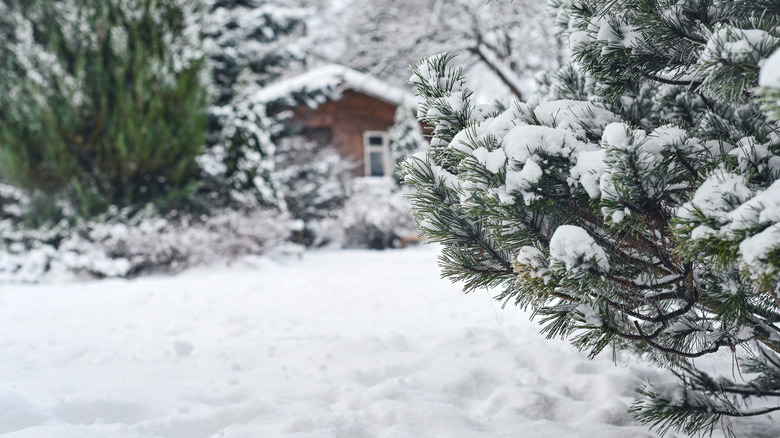
To take advantage of snow as fertilizer, you don't have to do much of anything except sit back and let it melt. When the weather warms, the dripping snowbank slowly releases nitrogen into the soil. This nutrient boost also tends to come at the perfect time: In early spring, when young sprouts crave nourishment.
If you want to help the process along, you can plow the snow into the soil, but only if the ground is soft. Just keep in mind that store-bought fertilizers will have much higher rates of nitrogen than any frozen precipitation. Beggars, however, can't be choosers, and it's hard to beat snow's free price tag. It might be the cheapest and maybe most convenient organic nitrogen fertilizer. And nutrients aren't the only thing snowfall offers free of charge, either. It provides plants with an insulating layer, like mulch, helping to protect perennials from cold snaps and fluctuating temperatures.
Even though snow can both protect plants and feed them, too much of it on limbs or shrubs can still break brittle branches. The Almanac suggests wrapping trees in burlap or lashing together branches with twine before a blizzard to help them withstand the weight. Otherwise, just sit back and enjoy the winter wonderland, knowing this poor man's fertilizer will work its magic in the spring when it melts.