

10 Plants To Prune In January For Healthier Growth This Spring
We may receive a commission on purchases made from links.
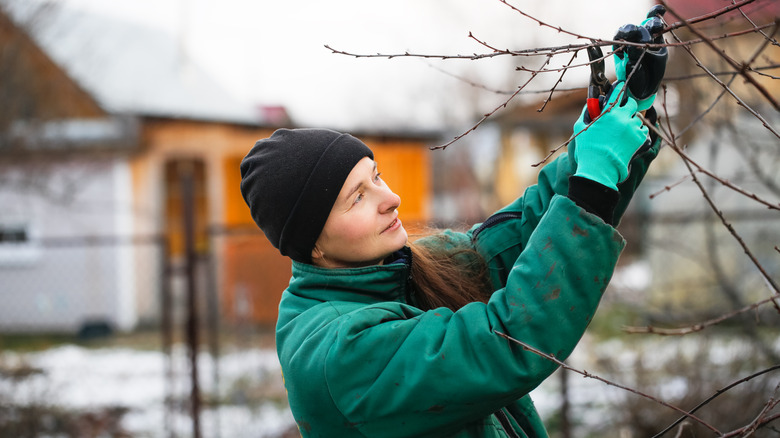
During the dead of winter, you might not be thinking about grabbing your pruning shears and heading outside. But January actually is the perfect time to trim some plants. Many fruit trees, as well as deciduous shrubs and shade trees, benefit from attention now. We've gathered 10 of the top plants you should prune in January for healthy growth next spring.
On the list, you'll find a few shade trees like linden because they're dormant in January. That's when sap flows more slowly, and therefore cuts to branches will heal faster in the cold – making them less susceptible to plant disease. With many insects hibernating, that also means there's a lower risk that they will take advantage of a cut to start snacking and damage the plant further. That's also why it's better to prune oak or elms in winter. Otherwise, fresh cuts attract the attention of borers, which carry fungal diseases that can destroy the tree.
Pruning in January doesn't just help trees avoid pests, either. The clean, bare branches without leaves help you shape the tree or shrub exactly the way you want it. With the leaves gone, you'll also better be able to see branches that might be growing into each other, which could lead to breakage later. Speaking of breakage, you want to make clean cuts with sharp loppers, rather than potentially tearing branches with dull ones. That means utilizing the best way to sharpen your pruning shears. Once your equipment is cleaned, sharpened, and ready, pick a sunny January day, bundle up, and head outside to the garden.
Trim your oak tree in January
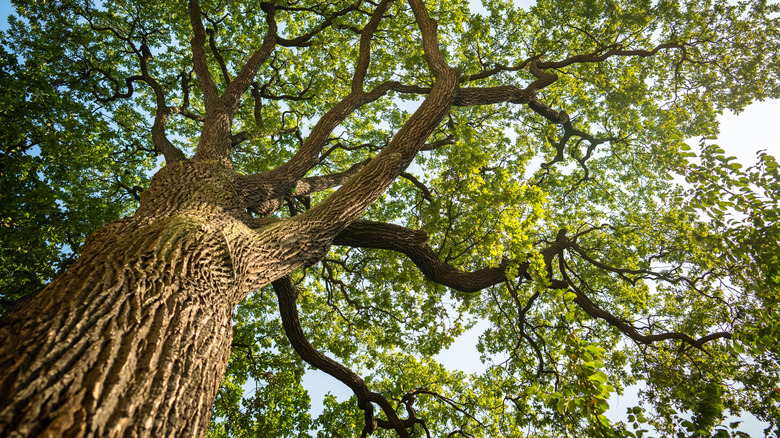
Oak trees (Quercus spp.), perhaps some of the most beloved shade trees out there, are best pruned in January. By trimming when the oak is dormant, you'll greatly reduce the risk of oak wilt disease. This condition, caused by a fungus, blocks a tree's ability to move water from its roots up through its trunk or limbs, which slowly kills the tree from the top down. Beetles or borers often spread this fungus, so prune when they're not active.
Shape American elms in winter
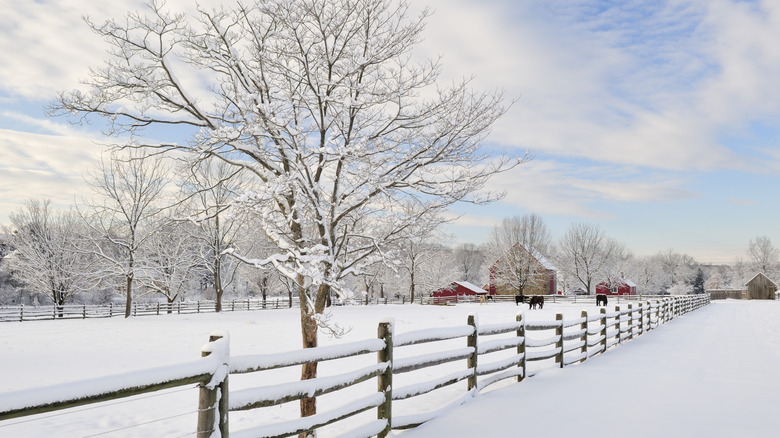
Like the oak, the American elm tree (Ulmus americana) can also fall prey to borers and the diseases they carry. Dutch elm disease can be particularly devastating, so it's best to prune elm trees when their nemesis, bark beetles — who are known for spreading the disease – are hibernating at the height of winter. Pests aren't the only thing to consider when pruning your elm. Make sure you've got parity. The canopy of the tree should have some balance, so don't focus your efforts all on one side.
Cut crepe myrtle when the weather's cold
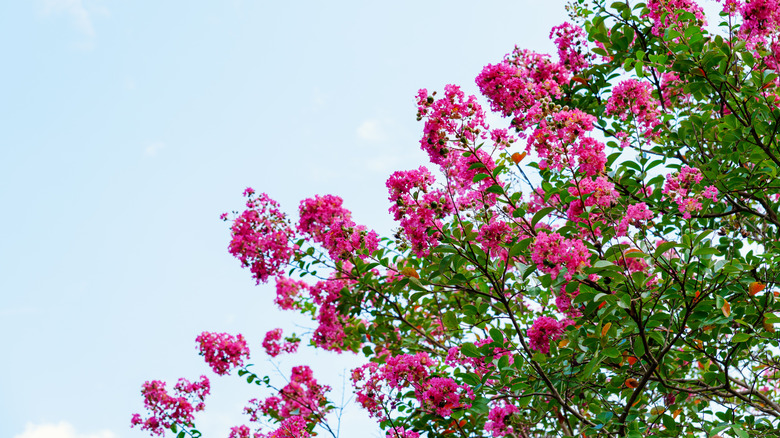
Not everyone prunes the crepe myrtle (Lagerstroemia spp.) the right way or at the right time. Winter is when they should be trimmed, and a little goes a long way. You always want to start with cutting off dead or dying branches first. If you want your crepe myrtle to grow vertical –more like a tree than a bush — then start at the bottom with your loppers and work your way up.
Trimming weeping willows in winter won't make you weep
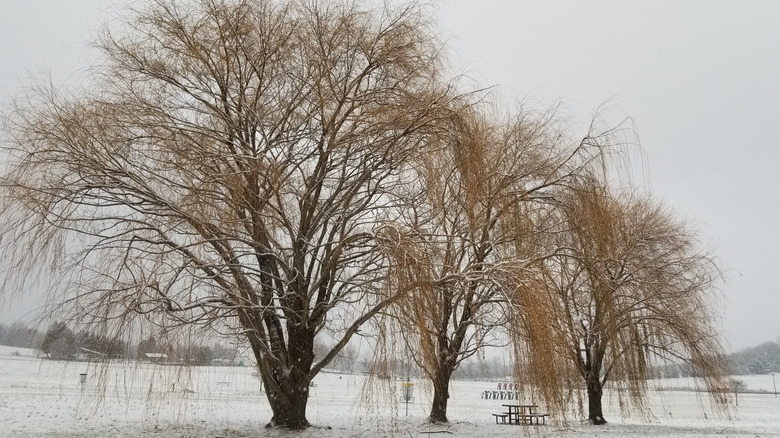
Weeping willows (Salix babylonica) should be pruned in winter when they're not actively growing. For best results, start by cutting back any branches that sweep the ground. Then, focus your attention on any branches that cross together or seem tangled up with one another. Weeping willows need good air circulation to stay healthy, and precise pruning will give them just that. In return, a thriving weeping willow can do you a favor, too, and help manage excess water in the yard.
Cut back poplar tree branches this January
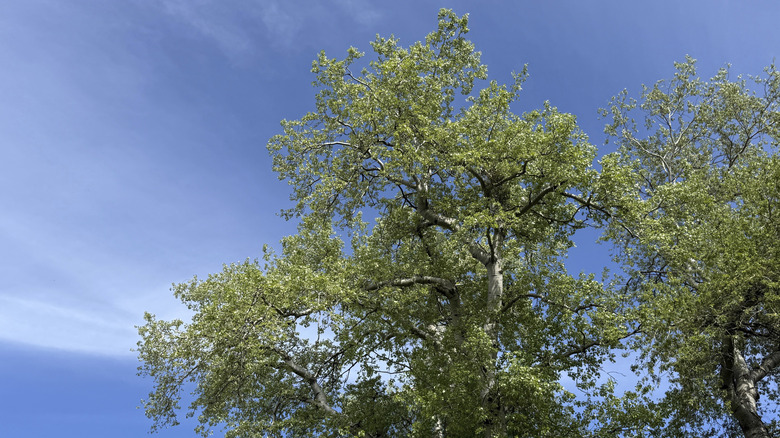
The least stressful time to prune a poplar (Populus spp.) tree is January through late winter when the tree has gone into its dormancy period. Remove dead branches first. If it's an older, larger tree, you might want to get a telescoping saw, like the Likeem 27-foot tree pole pruner. Don't forget the bottom of the tree, either. Go ahead and remove any suckers growing from the trunk or the tree roots. They drain energy from the tree and can also be an eyesore.
Trimming crabapple trees in winter will make them less crabby

Crabapple trees (Malus sylvestris) can be a boon to any yard in winter with brightly colored berries hanging from the branches. This late hanging fruit can provide nourishment for birds through the colder seasons. Crabapples need pruning, and January is the perfect time to grab the shears. For developmental pruning, you'll need to train the branches to grow so competing branches don't fight each other. Keep branches about 15 inches apart and be patient. You may also need to "train" your tree for the first 15 years of its life.
Prune pear trees in January to increase fruit
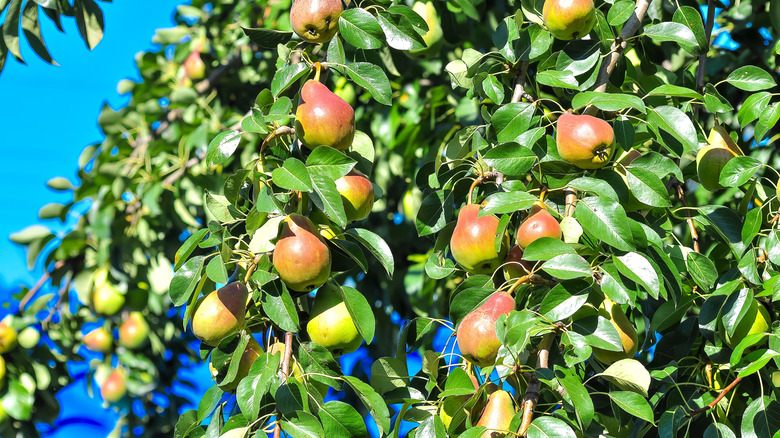
When pear trees (Pyrus communis) fall into their dormant period in January, then grab your pruning shears so that you can ensure the tree is healthy and grows more fruit next year. Trimming certain branches can affect how many pears you'll harvest. Very vertical branches produce hardly any fruit, while horizontal branches produce lots of fruit but few leaves. This hurts the long-term health of the tree. The best angle for branches to grow is 30 degrees, so you get a nice balance of both fruit and leaves.
If your mulberry shrub seems overgrown, trim it now
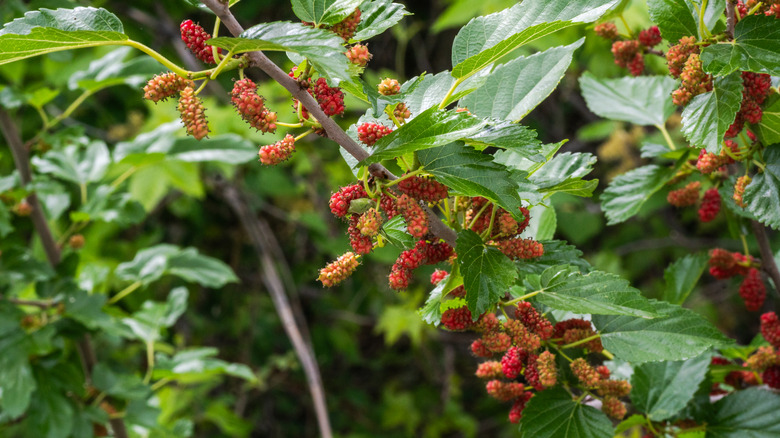
If you've been enjoying the tart fruit of the mulberry bush or tree (Morus rubra) in your jams or pies, then give the shrub a little trim this January to make sure it's healthy come spring. Mulberries don't typically need a lot of pruning, but if yours has overgrown its spot in the yard, or seems a little overcrowded, grab the shears. Just be careful as you cut. Avoid cutting branches that are bigger than 2 inches wide, since the wound could take a long time to heal.
Shape American linden trees in winter
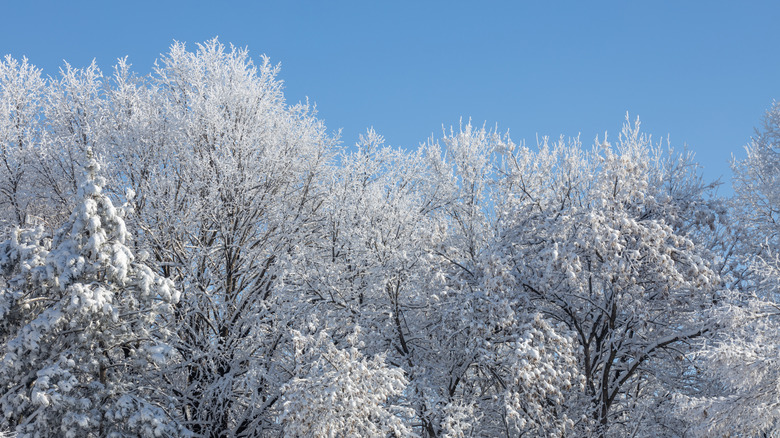
The industrious and quick-growing American linden (Tilia americana) shade tree needs regular pruning, usually every three years, in order to stay healthy and not spread into your neighbor's yard. Winter is the best time to trim the linden, because it will bleed less sap. At warmer times of the year, free-flowing sap makes for a messy job that could wind up leaving a sticky sweet trail, potentially attracting pests such as aphids to the tree.
Thin out rowan tree branches now
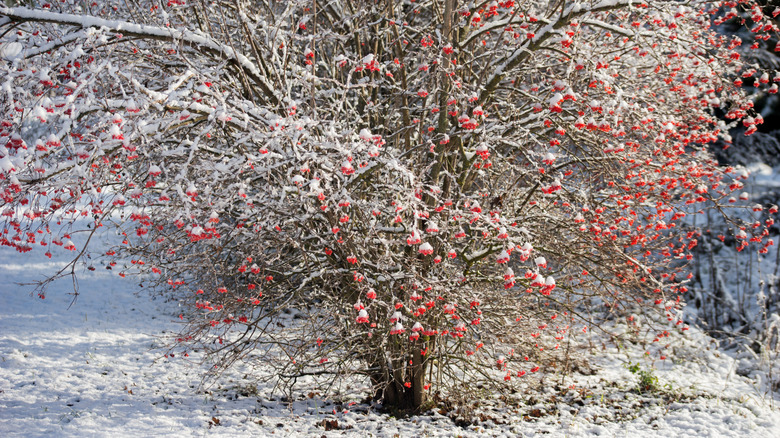
The berry-laden branches of a rowan tree (Sorbus americana) make the yard look festive, even during the dull, overcast days of winter. Rowan tree branches often sag under the weight of the berries they produce, especially if there aren't too many birds or deer feeding on them. January is the perfect time to trim limbs and equalize the branches in the plant. This can reduce breakage. Make sure to thin out branches in the canopy to allow more light and air into this deciduous tree. Pruning now will ensure it's healthier come spring.