

How To Turn An Unused Shady Spot Into A Whimsical Fairy Garden For Mushrooms
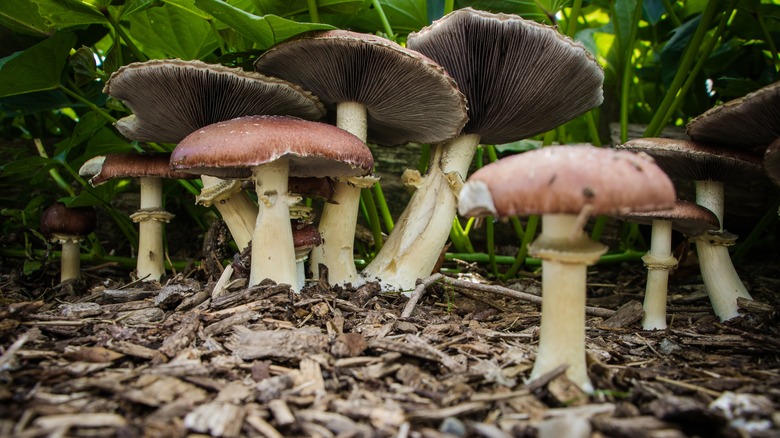
Garden decor is certainly a matter of personal opinion, but there are few decorations that transform a space as thoroughly as fairy houses and doors. Envisioning magical creatures scampering through the yard just out of sight can help to create a childlike season of wonder and whimsy in any type of garden. But it can be especially effective in a shady garden full of mushrooms.
While shade gardens full of hostas and ferns can be beautiful, you may find yourself longing for something a bit different — otherworldly, even. In that case, consider growing fungi instead of plants. While you could just hope for the best and wait and see if any interesting toadstools pop up, a more practical option is to intentionally cultivate easily identifiable types of edible mushrooms, like wine caps, in your shady fairy garden space.
Of course, it's essential to avoid eating mushrooms that you can't positively identify, so when you're searching for the right fungi to add to your garden, be sure to pick something that not only thrives in your climate but also won't be confused for any local toxic mushrooms. This can be an issue with types of Amanita mushrooms, as well as false chanterelles. Good mushrooms to consider growing in a garden setting include wine caps (Stropharia rugosoannulata) and oyster mushrooms (Pleurotus spp.), though wine caps give you that extra fairy-like setting.
How to prepare a garden bed for your mushrooms
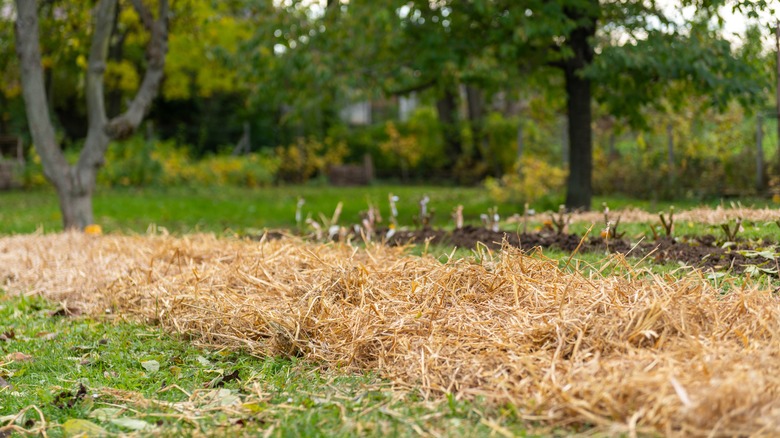
While you may have heard of growing mushrooms in buckets or tubs, this isn't the only way to cultivate them. If you already have a shady location in your yard, then you're well on your way to starting your own enchanted mushroom garden. Many people opt to start by laying down a barrier of cardboard to help prevent weeds. Then you're ready to put down a layer of substrate that's about 2 inches thick. This can be made of straw or wood chips and will help to provide food for the mushrooms to break down. (Don't forget that fungi are decomposers.) A mix of straw and wood chips is also an option, as the straw helps the fungi get a quick start and the wood chips provide long-term nourishment.
On top of the substrate, you'll need to spread your mushroom spawn. Grain spawn is living mycelium mixed with grain. Make sure to purchase yours from a reputable seller, as it is what will inoculate your patch with tasty mushrooms. Alternate layers of spawn and substrate, and then water your mushroom garden thoroughly. Stay on top of watering your bed a few days a week.
Once your mushroom bed has been created, you just need to be patient with your mushrooms. It can take almost a year for wine caps to be ready to harvest, but technically, it could be between 2 and 11 months. Be sure to check your mushroom patch especially closely after rain or if the temperature changes suddenly. These can both be signals for the mycelium to fruit, meaning you'll finally get to pick your mushrooms! Simply cut the stem and collect your bounty to wash, cook, and enjoy.
How to add whimsy to your fairy garden
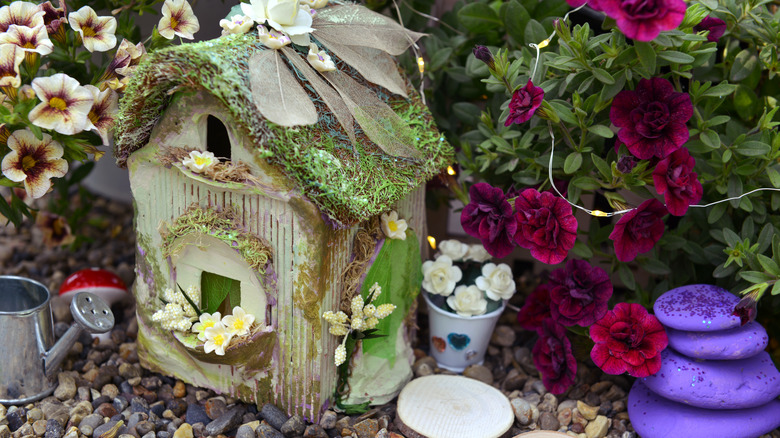
There's no one "right" way to create your fairy garden. You could purchase figurines and miniature buildings or opt to make your own town. Even a small painted piece of wood against a tree can quickly become the perfect fairy door. Just don't forget the mushrooms will be sprouting up unpredictably around town, and you'll need to be able to walk through your fairy village in order to harvest your bounty. So don't include anything too fragile or difficult to remove. You could even consider installing the garden with a path included in the design for easy access.
Simple details like roads of pebbles running between different buildings and a few houses made of broken flower pots can quickly transform your mushroom patch into a bustling city. Be sure to check your recycling bin for other potential buildings and accessories as well. For example, a fairy house can be a clever way to give old tea cups new life. Strings of fairy lights bring your garden to life at night. And creating small "log piles" made of twigs as well as miniature rock gardens can help your fairy village come alive while providing you with a fun and relaxing activity. The garden is your oyster, so have fun with it.