

The Old Farmer's Almanac Shares Their Strategy For A Front Yard With Curb Appeal
We may receive a commission on purchases made from links.
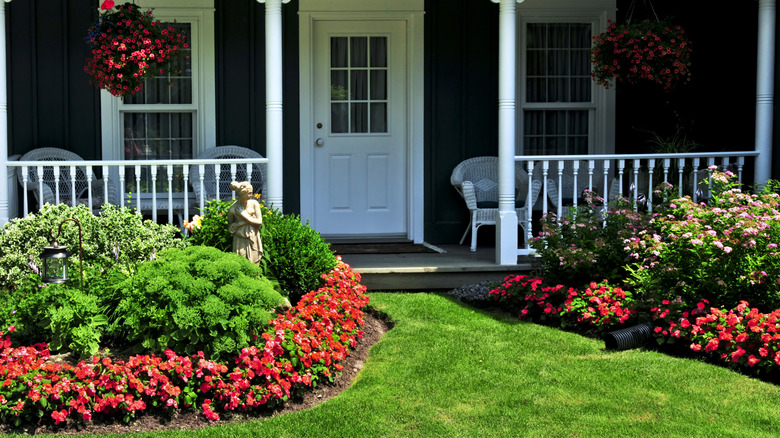
Fixing up your front yard with an immaculately landscaped garden is a tried-and-true way to increase your home's curb appeal, but it can feel overwhelming to get started. The Old Farmer's Almanac aims to aid in the process with a simple plan for boosting your home's value — or even just improving the look of your front yard overall. The pre-made design shows you how to plant a front yard flower garden with options for height and color. You can improve your landscaping by properly layering low-maintenance perennials. Then, you can take over from there to make it your own.
Think about how flowers, trees, and shrubs might frame the house as guests walk up to it or drive by. The Almanac's plan suggests flower varieties with the best curb appeal – like hydrangeas, mock orange, and crocus — along with tips to get a color palette of flowers that bloom at different times throughout the year. All of these options also help you create a layered design for height variance. Their plan includes a simple strategy for layering: A line of hydrangeas near the property line, 3 feet of garden bed at the front of a house, and a garden pathway or sidewalk down the middle.
While curb appeal is really personal preference, there are things everyone agrees on. Before you even get started with planting flowers, you should always tackle unsightly items first. Roses won't help if you've got a lot of garbage in your yard or a fence that's falling down. Also, evaluate how much sunlight your front yard actually gets. A shady yard requires different plants than a sunny one. Once you've taken care of these tasks, you'll be ready to try the Almanac's plan.
Arrange flowers in your front garden by height and color
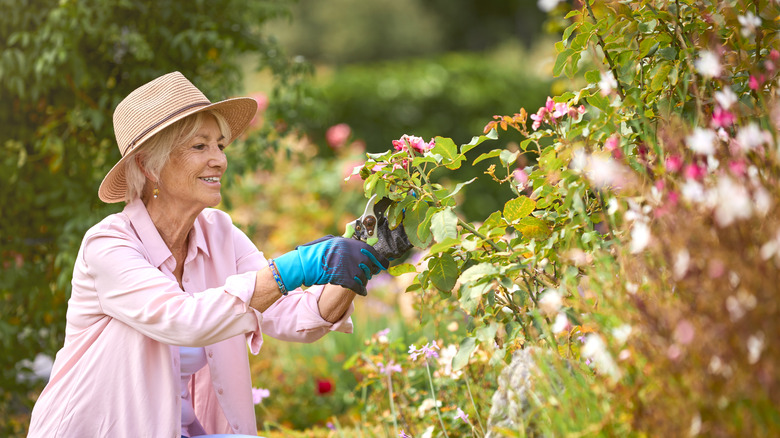
To start, prepare the flower bed by clearing weeds and adding in compost, garden soil, or other organic materials. Check your soil pH to make sure you don't need to make soil more alkaline or acidic for the plants you've selected. Try something like Irtov's 4-in-1 soil meter, which analyzes soil pH, moisture, temperature, and sunlight. Doing more work now will pay dividends later. Next, the Almanac suggests planting the back row of larger, shrubby perennials near the house, like climbing roses and mock orange.
In front of these, plant flowers like agastache, lavender, and lupine. These will give color and movement to the garden and help attract bees and other helpful pollinators. Finally, plant early-blooming bulbs such as crocus at the very front or edge of the flower bed, so that they're the first pop of color in early spring when everything else is dormant. Don't forget that not all climates are suitable for these shrubs and flowers, so double-check your USDA Plant Hardiness Zone before you plant.
Afterward, add a layer of mulch keep weeds at bay and water regularly to help new flowers grow. Luckily, these plants all require fairly little maintenance once they're established. And if you don't have the time for the Almanac's front yard flower plan, you can always try the simple addition that Chip and Joanna Gaines recommend to improve curb appeal: Adding seasonal planters to your porch.