

If Your Spider Plant Has Dry Brown Tips, It's Time To Rethink How You Water It
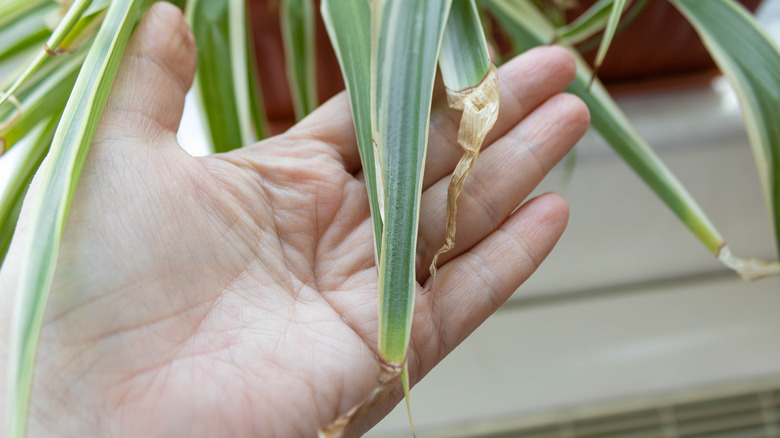
Spider plants are one of the most popular and lovable houseplants around. Not only do they grow well in many homes even without a ton of natural light, but they also offer a fun and unique shape thanks to their leaves and plantlets. Unfortunately, despite being relatively low-maintenance, these little plants aren't without their issues. Perhaps the most common problem spider plant (Chlorophytum comosum) owners run into is browning on the tips of the leaves. While there are a few possible causes for brown crispy leaves, many of the most common involve problems with watering.
If you've already checked that your spider plant is getting adequate humidity (between 40% and 60%) and isn't being over-fertilized, then it's time to take a hard look at your watering. Issues with underwatering or inconsistent watering, as well as problems with using the wrong kind of water, can all lead to leaf browning. Fortunately, spider plants tend to bounce back from these issues well once they have been addressed, and the plant won't mind if you snip off the browned parts of its leaves to help it look a bit nicer as it recovers.
How to water your spider plant for healthy leaves
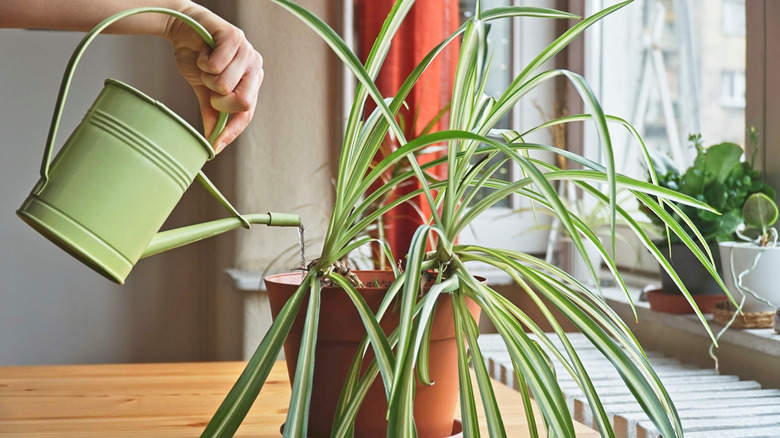
While spider plants are known for becoming victims of overwatering, they're certainly not immune to underwatering issues either. To ensure you're providing your leafy friend with the perfect amount of hydration, wait to water your spider plant until the top inch or two of growing medium is dry. The strategy here is to make sure that you aren't overwatering, but skipping this step could also lead to inconsistent watering. While you want the soil to dry out a bit, letting the soil get too dry between waterings can also lead to browning tips. You'll know that you waited too long if your potting soil is so dry that it pulls away from the pot edges or becomes cracked.
When you do water your plant, make sure to do so thoroughly. This means adding enough water that it flows through the pot and out of the drainage holes. Though you can water less during the fall and winter months (as this popular houseplant isn't actively growing during winter or autumn), you still need to water thoroughly for proper root growth.
If you're on a perfect watering schedule, but your plant still has brown tips on its leaves, this could be because you've been using tap water. Spider plants are quite sensitive to the chlorine and fluoride that this water tends to contain. You don't have to buy any special water for your plant, though. Just fill your watering jug with tap water and then let it sit out for about a day before using it to water your plants. This should give the chemicals enough time to evaporate and leave behind the perfect water to keep your spider plant healthy and thriving.