

The Surprisingly Useful Tool Every Gardener Should Have
We may receive a commission on purchases made from links.
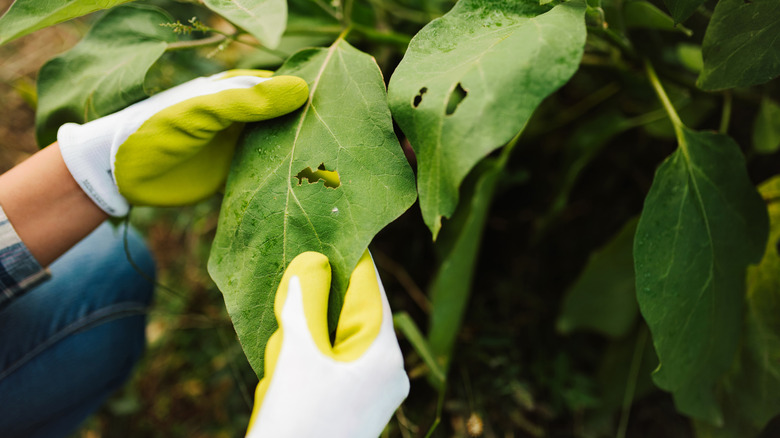
No gardener likes to be surprised by the sudden appearance of the telltale holes left behind by a hungry bug. Too often, by the time we notice problems, there's already a serious infestation underway. That's why it might be a good idea to invest in a special tool you might not expect: A magnifying glass. It can help you properly look — or scout – for the tiny insects who might be after your plants.
Scouting is when you regularly inspect flowers or vegetables in the garden for early signs of pests. These small, sneaky creatures can include aphids (commonly known as plant lice), cabbage worms, cutworms, or any number of other hungry bugs that feed on leaves and stems. It's best to catch them as early as possible to minimize plant damage. Scouting can be made more effective with magnification. Many critters are small, like aphids, who sometimes reach lengths of only ¹⁄₃₂ of an inch!
There are many kinds of magnifying glasses available — you could wear a decorative one on a necklace or lanyard or buy a jeweler's type that you wear like glasses. These work well if you don't want to have to carry something else along with your garden tools. Choosing one with a light will help you see in shady spots, however. Consider something like the JMH magnifying glass, a battery-powered handheld version that offers both yellow and bright white settings. These two lighting options can be helpful when trying to identify the sorts of bugs that tend to stay camouflaged on plant leaves.
Here's how to scout using your magnifying glass

Scouting is best done regularly during a plant's growing season, every morning if you can swing it. Take a slow walk through the garden (or your houseplants), inspecting each plant with your magnifier. Look for pests or any signs of plant diseases, such as the white dust left from powdery mildew. Mark observations in a notepad or your phone's notes app, recording anything you find.
As you're scouting with your magnifying glass, always check beneath leaves, as this is where spider mites, squash bugs, and many other invaders like to hide. They often lay eggs here, too.. If you find something, but aren't sure what it is, do some research. The Old Farmer's Almanac might be a useful resource to help identify the most common garden pests.
If you do find eggs, just remove them from the leaves and discard them. Adults or larvae can be knocked into a cup of soapy water. Dawn can be an effective insecticide, and getting rid of the pests now will save you many headaches and extra work later on. While you're inspecting plants with your new favorite garden tool, know that pests and disease aren't the only issues. Not receiving enough sunlight or overwatering may also be contributing to any problems in the garden. Either way, a magnifying glass can help you see problems with your plants that you may not even knew existed.