

DIY Your Garden Soil With A Technique That Saves Money And Boosts Plant Health

We may receive a commission on purchases made from links.
Anyone who's tried to create a raised flower bed knows that the trickiest (and most expensive) part can be filling up the wooden structure with pricey soil from the garden center. And raised beds tend to require quite a lot of dirt. For a cheaper, easier DIY technique, try the old German strategy of hügelkultur. This hack, which Europeans have been using for hundreds of years, involves utilizing old tree branches, leaves, compost, and other yard refuse at the bottom of your beds as nutrient-rich filler.
The concept of hügelkultur, a word that literally translates to "hill culture", involves making a mound-like gardening bed out of natural materials you probably already have in the yard. The goal is to mimic the natural ground found in a forest and use sustainable ingredients to help boost the soil organically. Decomposing wood and grass will add nutrients to the dirt that your flowers or vegetables need to grow. Using a method like this helps you create quality soil, ideal for raised gardens which require it. The raised "hills" are also designed to better snag rain and runoff water, so they don't need extra attention from the garden hose.
You can use this ancient layering strategy when you're building your own raised garden beds and want richer soil. However, you'll want to get started about six months before you intend to plant anything to give the mix some time to break down. To get started, you'll need three basic elements: Fallen wood in a variety of shapes and sizes, compost or grass clippings, and your preferred topsoil. If you've got it on hand, wood from trees like maple or oak work well in these mounds.
Build your own hügelkultur raised flower bed
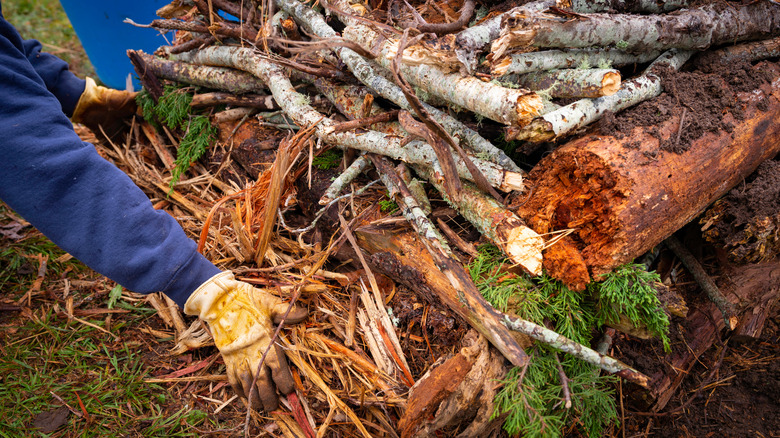
To create your own kind of "hill culture" in the backyard, start with your raised bed. If you don't have a raised bed yet, this trick will work without one. Simply dig a trench 1 or 2 feet deep. Save the soil you dig, because you can use this as a top layer. Begin by layering in the thicker logs or heavier branches — or the remains of a fallen tree into the bottom. Think of it as just one more creative way to use a tree stump. Then add smaller sticks and twigs. Pile your organic materials, such as grass clippings, leaves, or compost, on top of this.
On the very top of the mound, sprinkle on a few inches of soil. You can use some from your own garden or a nutrient-rich kind like Miracle-Gro organic outdoor potting mix. Then, plant your favorite flowers or vegetables on the top of the mound. Edible plants that grow on vines, like squash or cucumbers, will do really well here. Don't worry if your hügel grows taller than the raised bed — it should be between 3 and 5 feet high.
While hügels can be labor-intensive to build, you'll see over time that the decomposing branches and leaves will provide a rich environment for your plants. They should require less fertilizing and care in the long run. A typical hügel will likely last for about five years before it all completely breaks down.