

The Popular Fruit Tree You Can Grow Indoors Or Out In The Garden

While there aren't many fruit trees that can nourish you and your family all year, lemon trees are known for their ability to ripen in both winter and summer. These zesty, bright yellow fruits embody the hot and sunny environments they prefer. In fact, most lemon trees (Citrus x limon) are only hardy in USDA Hardiness Zones 9 through 11, and 'Meyer' lemons (Citrus x limon 'Meyer') are hardy in zones 8b through 11, where they can happily live in your backyard. But even if you don't live in a region warm enough to have lemon trees outdoors year-round, these trees tend to do well indoors in cooler climates.
Considering many lemon trees reach sizes of up to 20 feet, they might not seem like an obvious option for indoor growing, but the 'Meyer' lemon cultivar rarely grows past 10 feet. (Though you may also want to look for a thorn-free option!) As long as you provide your trees with enough light, water, and good soil, they're happy to produce year-round.
Of course, if you want to be able to transport your plants easily between outside and inside, make sure to grow them in containers. Ideally, you should opt for planters around 24 inches deep to grow your lemon in. And don't forget to pick containers with drainage holes in the bottom to prevent soil from getting waterlogged.
Caring for lemon trees indoors and outside
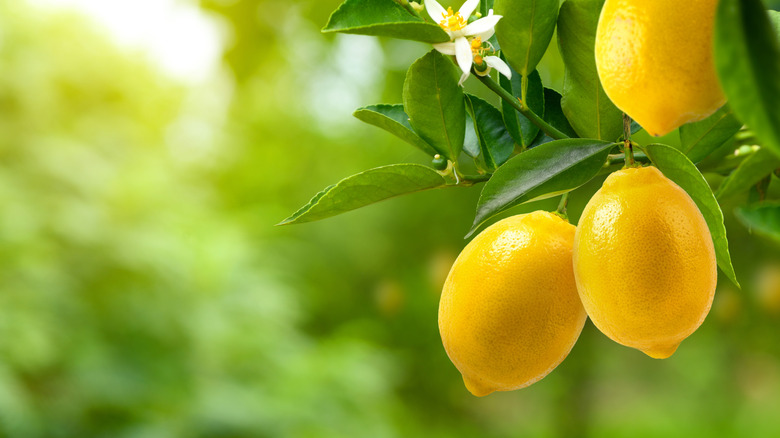
Lemon trees thrive in full sun conditions. This means providing them with at least 6 hours or more of direct light. So if you're growing your trees indoors, make sure you give them fluorescent or LED grow lights or full southern exposure to provide them with the best care and lighting possible.
They also require well-draining and acidic soil to grow their best. While it's important to grow lemons and other citrus in moist soil, you also have to prevent your tree's soil from becoming soggy, so it doesn't become prone to diseases like root rot. Because they're heavy nitrogen feeders, lemon trees benefit from having a high-nitrogen fertilizer added to their soil during spring and summer.
Don't forget to keep an eye on your temperatures in spring and fall, so you know when it's time to relocate your tree. Temperatures below 50 degrees Fahrenheit can be damaging to lemons and a sign that they need to head back indoors. And of course, avoid making the classic lemon tree mistake of forgetting to harden off the trees in spring and fall to help them adjust to their new home. Hardening off a plant entails exposing it to its new home for a few hours at a time, until after a week or two, it has fully acclimated and shouldn't experience shock.