

The Simple Hummingbird Feeder Addition That Can Help Deter Wasps
We may receive a commission on purchases made from links.
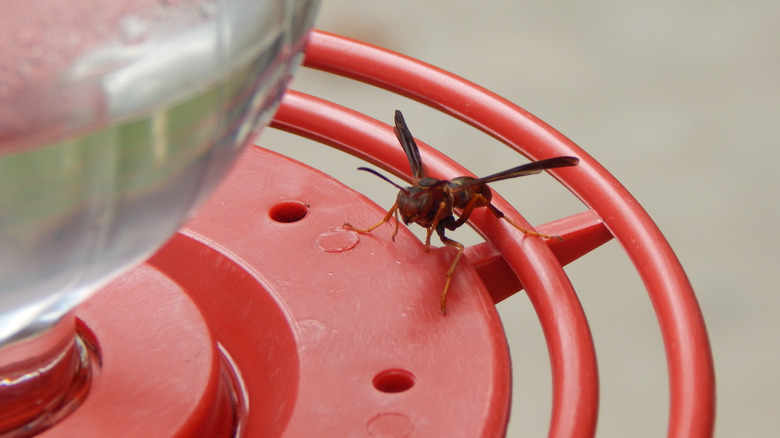
If you're preparing for the springtime return of the ruby-throated hummingbirds from their far southern winter retreats, you may already be getting your hummingbird feeders out of storage to welcome the little buzzers home. However, even if you're looking forward to watching hummingbirds flit around your yard, it's likely you aren't quite as jazzed about some of the other frequent visitors to your feeders. Sugar-loving wasps can be a real nuisance in an otherwise tranquil garden or patio setting, and hummingbirds might agree. While hummers will actually eat some species of wasps, competition from other wasp species may discourage the little birds from stopping at your feeder for a sip.
One good method to repel wasps from the hummingbird feeder in your garden is to use bee guards on your feeders. Essentially, bee guards take advantage of the fact that hummingbirds have longer tongues than wasps. The comparatively short proboscises of bees and wasps can't reach as easily through the plastic screens of the guards, making them a fairly effective method of wasp control around feeders. Although very small insects may get through the bee guard into the filter mouth, no need to worry: These can provide a much-needed protein boost for the hummingbirds!
How to use a bee guard on a hummingbird feeder
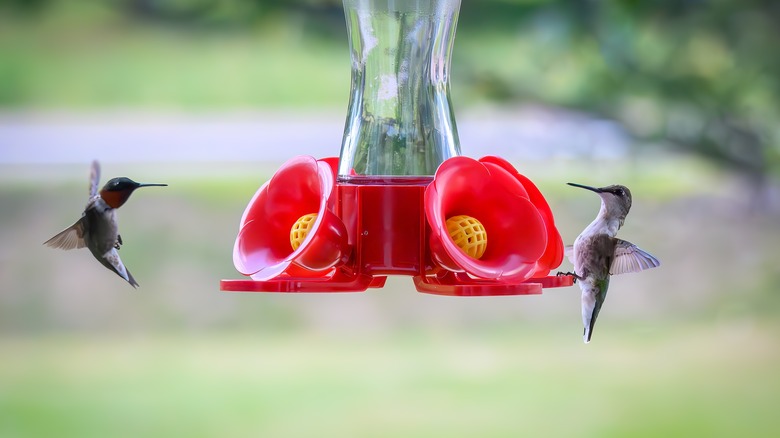
Although many newer feeders are sold with some form of bee guard already equipped, you can also easily retrofit a feeder you already own by using products such as these Aspects hummingbird nectar guard tips, available on Amazon. The guards fit right over the feeding tube. Other styles are shaped more like a little cage that fits over or onto the holes in the feeder.
One difficulty you may run into while trying to avoid attracting wasps to your hummingbird feeder is that you may not want to buy yellow bee guards. Although they can't see red, wasps tend to be attracted to yellow flowers — and therefore yellow nectar guards. The hard part is that it can be almost impossible to avoid yellow hummingbird accessories. The good news is that even if wasps do stop by, the guard should discourage them regardless.
It's very important that you clean the bee guards on your hummingbird feeders frequently. Dirty feeders and old or moldy nectar can cause fungal infections in hummingbirds that may be fatal. Additionally, you'll need to keep the outside of the feeder itself clean. After all, what's the point of blocking bees and wasps' access to nectar if there are easily accessible droplets that they can lap up? You can use a solution of one tablespoon of white vinegar to one cup of water to clean your feeder and its components; just make sure to rinse thoroughly before you refill it.