

The Low-Maintenance Flowering Plant That Loves Heat And Attracts Butterflies
If you love watching butterflies, then you'll want Lantana camara in your garden. This tropical flowering shrub has year-round blooms in warmer climates that will keep these pretty insects coming back season after season. But to be successful, pick the best cultivar and plant this heat-loving perennial in the right environment.
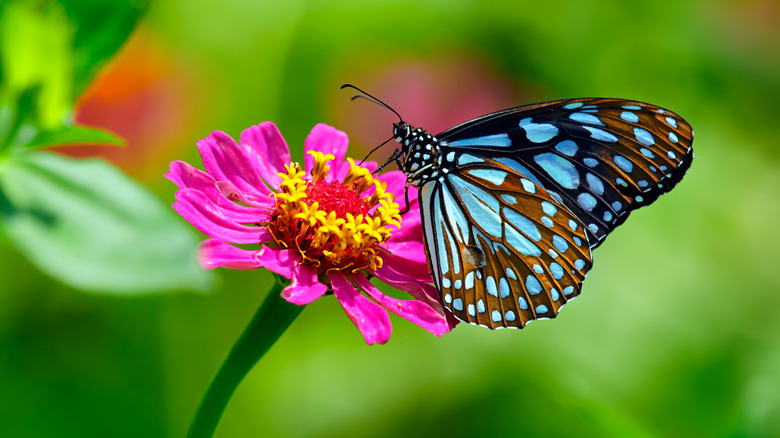
Butterflies love lantana because it offers a cluster of small, tubular flowers all rich in sweet nectar. The wide surface of this dome-shaped grouping gives butterflies a comfortable spot to rest and feed, and even hummingbirds dive in to enjoy the nectar. Lantana plant colors come in a variety of bright hues, including orange, yellow, lavender, and pink. Their pretty flowers sometimes change colors, too, starting as white or yellow and slowly transforming to red or orange over time.
Lantana of any kind is appealing to the butterfly visitors you want to bring into your yard, but some cultivars have been found to be more appealing than others. 'New Gold' and 'Radiation' are both cultivars proven to attract the pollinators, according to a study by Auburn University conducted in 2002 and 2003. During the study, these two were visited by more butterflies than the other eight cultivars they tested. Also worth mentioning are 'Carlos' and 'Confetti', which both contain the highest nectar concentrations overall, as noted in the Auburn study.
Here's how to grow butterfly-friendly lantana
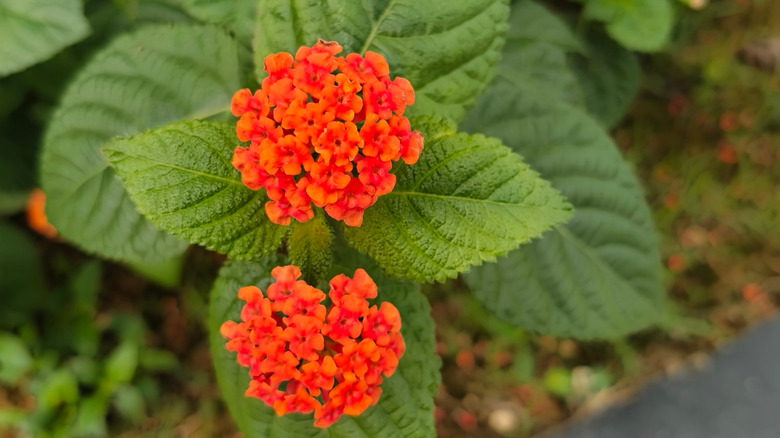
Lantana acts like the perennial it is in USDA Plant Hardiness Zones 9 to 11 with year-round blooms, but is mostly grown as an annual in colder zones. Before planting lantana, pick a spot with well-draining soil. Since it originated in hot, dry locations in Mexico, it prefers dry conditions (making it also drought-resistant). If you've got waterlogged soil, try adding compost to help moisture keep moving through. Allow at least a foot between each plant so it has space to grow and expand. Outside of moisture levels, it isn't too picky about the soil, though, as it's fine with loam, rocky, or even clay dirt. Even salty soil doesn't ruffle its feathers, which is good news if you live near the coast.
In the right zone, planting lantana in the ground is pretty easy, but you can also grow lantana in hanging baskets or containers on the patio in less ideal climates. They do great in at least six hours of full sun a day. Container planting also has the benefit of being easily moved. Lantana dies in temperatures lower than 28 degrees, so be sure to cover it or move its pot indoors before frigid temperatures arrive.
While you can grow this tropical bloom from seed, it takes a long time to get established and flower. Cuttings might be a better option if you'd like to entice butterflies to the garden sooner rather than later. It's fairly easy to divide a lantana plant; just find a stem without flowers. Snip it off and put it in water. Remember, this flower grows and spreads so easily that it might try to take over a garden bed, though many newer cultivars don't self-seed.