

The Most Efficient Way To Use A Snow Blower In Your Yard This Winter
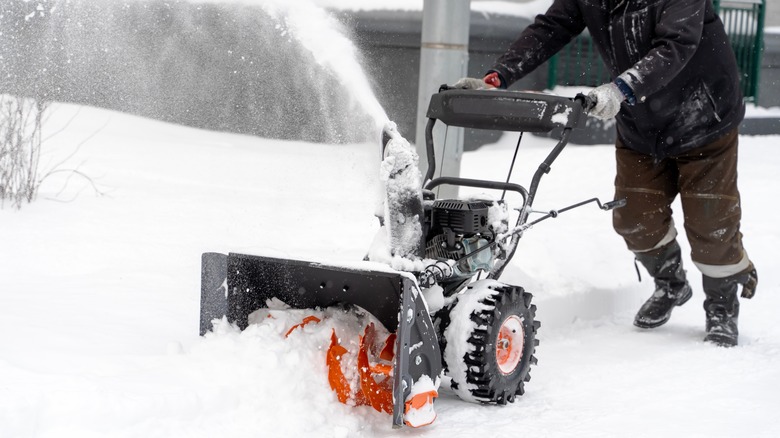
Snow blowers are made to clear accumulations quickly off the driveway and sidewalk, especially after a heavy blizzard, but using one does require at least a little planning ahead. If you don't plan your route in the yard, then you might accidentally bury evergreens or shrubs and spend extra time in the frigid weather digging them out. The best way to use this machine is to give extra thought to where you want the discarded snow to go so that you don't damage or bury your landscaping.
First, if you want to protect your shrubs from heavy snow, then you probably don't want to aim a cannon at them. Blowers suck up anything in their path, including salt, gravel, and ice. Your average single-stage machine, often with a plastic or metal auger, hurls gravel or salt about 20 feet. More complicated two-stage machines can double that reach. With reach like that, don't direct the chute at cars, any buildings, or the street, either.
Besides the damage caused by hurtling debris, rock salt can singe evergreen needles, as well as the twigs and buds of deciduous trees and shrubs. Plus, excess salt in the lawn can stunt the growth of grass and other plants the following spring as well. So it's best to aim for a side of your driveway or sidewalk that is completely free of trees, shrubs, and structures. To create piles on just one side of the driveway, always start on the opposite side and wind your way back to keep moving the snow in the direction you want. But before you get started, make sure that there aren't branches that might get lodged in the blower.
Direct snow away from trees and shrubs
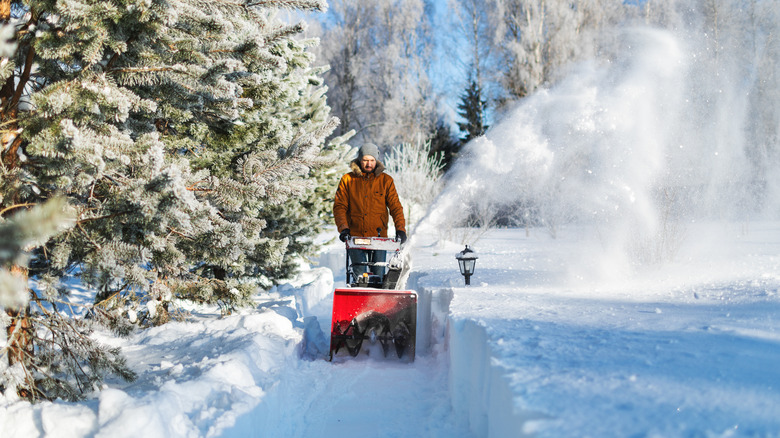
Once you have a direction to send the snow, using the snowblower is as simple as pushing it up and down the driveway in straight rows, turning at the end. It's a lot like how you use a lawn mower to cut grass. Don't forget to make a quick adjustment to the chute every time you make a turn, keeping it focused away from your plants. Also, it's helpful to have your owner's manual handy to troubleshoot the snow-blowing machine if you run into trouble.
Every snow blower has limits. Many less powerful, single-stage snow blowers tap out at around 6 inches of accumulation, while two-stage types are made to handle 10 inches or more with a max of about 16 inches. If you're not sure about the kind you have, check your owner's manual. To be more efficient and spend less time outdoors, one part of making a snow removal plan is knowing what your machine was designed handle.
For serious storms, be prepared to go over the same patch more than once. To lower the chances, you need to overlap your loops to increase removal efforts and save time. And while you want to be efficient, don't rush. It's best to be slow and steady with your blower, especially in heavy snow. Going fast risks clogging your chute and spending more time clearing out the machine, which defeats the purpose of having a good plan. Work smarter, not harder, with your snow blower to help protect your garden from heavy snow.