

The Garden Plant That Attracts Snakes By Providing A Luscious Habitat For Them
We may receive a commission on purchases made from links.
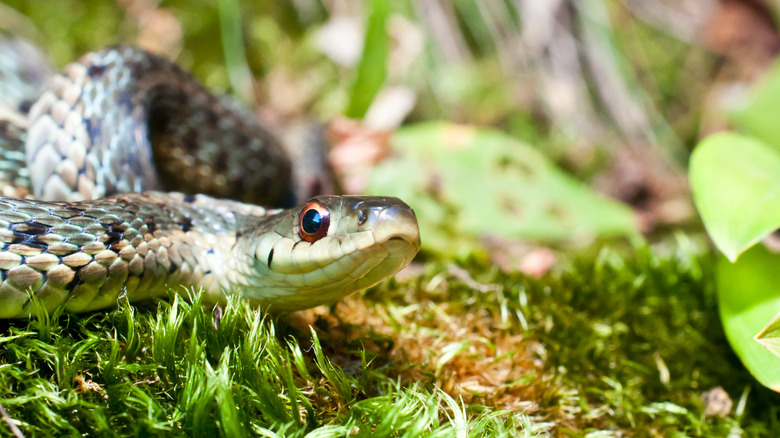
Snakes love to sneak around the garden, moving stealthily between covered, shady spots. So naturally, tall ornamental grasses can be one of their favorite places to hide. That makes pretty pampas grass (Cortaderia selloana) a magnet for cold-blooded intruders who may want to move through your yard.
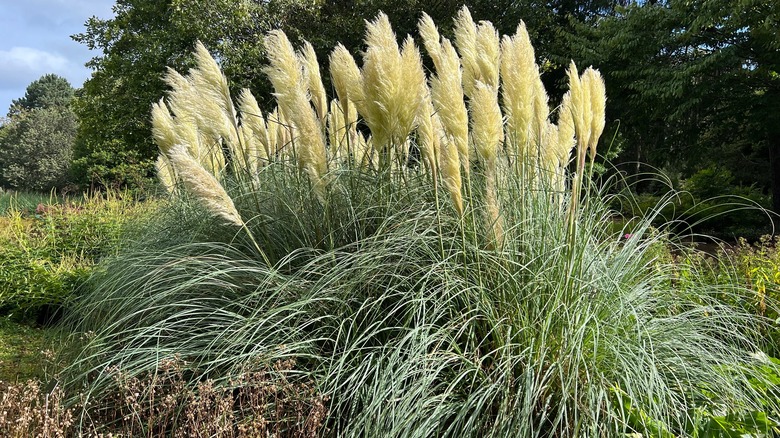
Pampas grass, native to South America, is known for its thin, green leaves and tall, white, feather-like puffs. While these plumes can give the garden or your indoor bouquets an interesting texture, reptiles are more drawn to the cool cover the grass provides on hot days. It's also where some of their favorite prey, like mice or frogs, might hide. Snakes use the cover of the dense grass to sneak up on the prey they want to eat while also hiding from diving hawks or other predators that might want to turn the tables and prey on them.
Most of the time, you can keep snakes out of your yard by keeping your grass mowed and not letting it get overgrown. But pampas grass is usually planted as an ornamental piece in the garden, as it can reach an eye-catching height of 6 feet tall. If snakes are a major problem in your yard, it might be best to skip planting this grass (or tear it out) in order to deter the slithering creatures. You might want to avoid it, anyway, if you live in California or Oregon, where this hardy perennial is considered an invasive weed.
Remove pampas grass in these steps
This ornamental grass thrives in USDA Plant Hardiness Zones 6 through 10 in a variety of soils, and it's hard to kill. Most of the time, that would be a plus, but if you already have this perennial in your yard and want to get rid of it, you'll have to learn how to remove pampas grass. The best strategy is (hypothetically) the simplest: Dig up the plant.
When looking to pull it out, always wear gloves. The thin leaves have sharp edges, and you can easily cut yourself if you're not properly protected. Make sure you remove its crown and the roots, or you'll have new bothersome sprouts next spring. You don't necessarily have to toss the plant. Think about transplanting it to your patio, where you can grow pampas grass in containers. This can help you keep the pretty aesthetic, but it might not be as alluring to snakes. Keep in mind, though, the reptiles have been known to hide out in flower pots.
Remember that this variety of ornamental grass self-seeds. So after you remove it from the flower bed, know that there are probably seeds left behind in the dirt. To smother any possibility of new sprouts, cover the soil with mulch or landscaping fabric when you're done to block sunlight and neutralize seeds. But if they sprout anyway, you can try an herbicide containing glyphosate, such as Compare-N-Save grass and weed killer. In the freed-up space, try growing snake-deterring flowers, like lavender or marigolds.