

The Unique Type Of Water That Can Keep A Spider Plant Healthy And Thriving
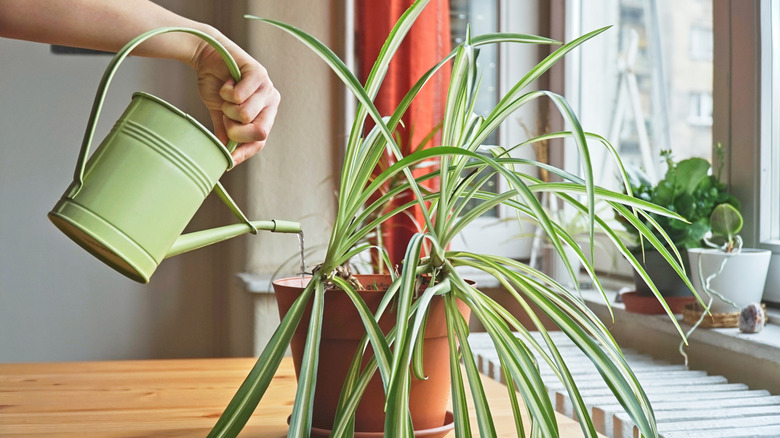
If you rinse your rice before you cook it, you might end up with cloudy, starchy water. There's no need to throw it out! It's packed with minerals that may help your spider plant (Chlorophytum comosum) thrive. Plus, you can conserve water and help reduce your water bill at the same time.
In Japan, people have long known the benefits of using washed rice water to feed crops, but they also say it can moisturize skin or even soften hair. There's some evidence it helps boost leaf growth and might be one more natural organic source of nitrogen fertilizer. Discarded rice rinses include nitrogen, phosphorus, potassium, and zinc, minerals that are beneficial for your spider plant. Malaysian researchers found that letting the solution ferment for a few days increased the fertilizing power. They let starchy residue left over from rinsing rice sit for three days and then watered choy sum outdoors. After multiple waterings, it helped the leafy green Chinese vegetable improve growth.
While there's no direct proof it also works well on other kinds of plants, there's little danger in trying it. Rice water, like unsalted pasta water, may just be one more great way to utilize common household items to add nitrogen to your potted favorite. It'll also help you reduce water waste. That's better for the environment and your water bill. If you want to try the hack, then all you need is some rice, water, a cloth, and a jar or other container.
Here's how to use rice water on your spider plant
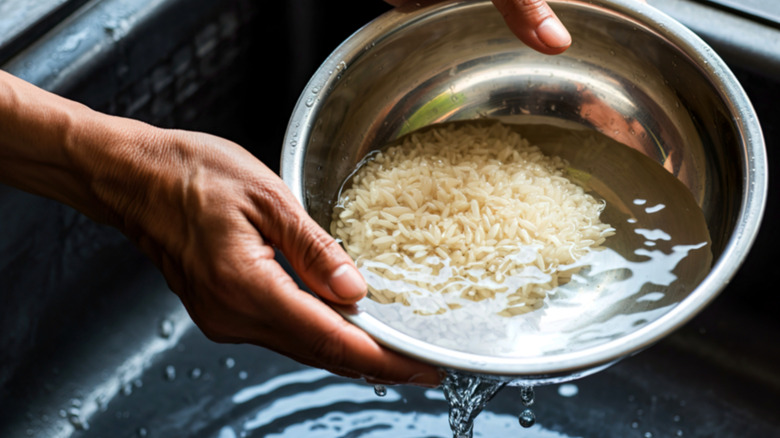
To try this watering hack, first wash or soak uncooked rice in a bowl by adding enough water to cover it by an inch or so. Consider using purified or bottled water, rather than tap water, because spider plants can be sensitive to chlorine, fluoride, and other chemicals found in water from the faucet. Sometimes, these can even brown leaves.
You also might want to try washing brown rice rather than white if you want to pack in the most nutrients, since that variety has more magnesium, potassium, and B vitamins than the white kind. Put the grains in a bowl. Then, add water. You'll notice the water clouds almost immediately. Give it a good swirl. Drain the water out through a sieve into a jar or other container. If you want to let the starchy solution ferment, cover it with a cloth and leave it alone for a few days. Beneficial bacteria will grow. Smell it occasionally. When you notice a few sour notes, you'll know it's fermented and ready to use.
Next, go ahead and pour some of the cloudy solution into the soil. Make sure the dirt is slightly dry first before you water. Overwatering can lead to root rot or other fungal diseases for your spider plant. But this trick of using rice water might just be one way to keep this popular houseplant thriving throughout the winter.