

11 Whimsical Plants That Deserve A Home In Your Backyard Fairy Garden
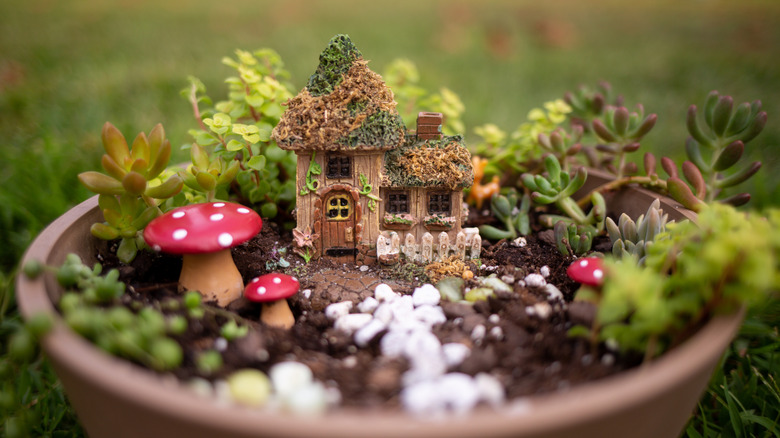
If you're hoping to instill a love for green and growing things in young children (or the young at heart), designing and planting a fairy garden can be a magical gateway to future gardening endeavors. By including plant selections with a fanciful, playful aesthetic, as well as some set dressing in miniature, you and your littlest helpers can create a tiny world all your own. Plants such as Irish moss, partridgeberry, and creeping thyme can help create fertile ground for imagination, curiosity, and wonder.
When planning your fairy garden, you'll need to ask yourself a few questions. Do you want this to be a permanent outdoor installation, or a container garden that you move indoors during cold or inclement weather? What is the theme of your fairy garden, and who do you imagine lives there? Once you've come up with some ideas, you'll want to visit a garden center or do some research to find plant selections that have complementary water, light, and soil needs. And don't forget the decorations! Your resident fairies will need homes, bridges, and other infrastructure in sizes suited to the scale of tiny Fair Folk. This is a great opportunity to explore ways to reuse teacups in the garden and other upcycling methods for old junk.
Galax
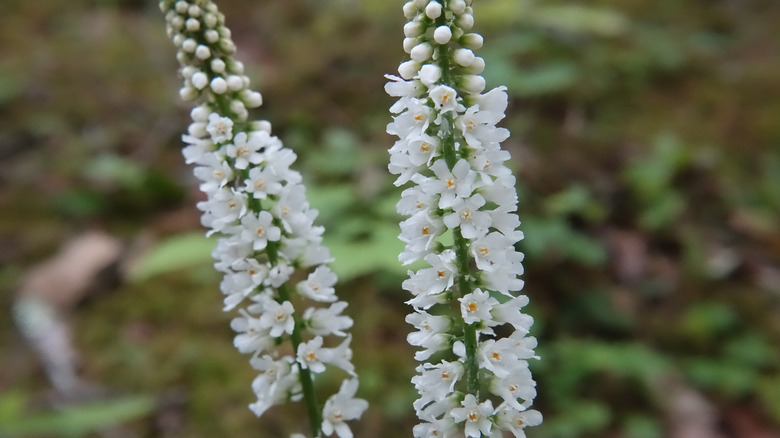
For a fairy garden nestled in cool, moist shade, you can't go wrong with galax (Galax urceolata), which is also known as wand flower. It's easy to imagine tiny fairies sheltering from the rain beneath its sweetly rounded, heart-shaped leaves or using its clustered wands of dainty white flowers to cast spells. Pollinators such as bees will be drawn to the blooms, and this perennial's leaves even offer winter interest, turning from shiny green to red as the weather chills. An eastern U.S. native, galax grows best in USDA Zones 5 through 8 in acidic soil rich in organic matter.
Irish moss
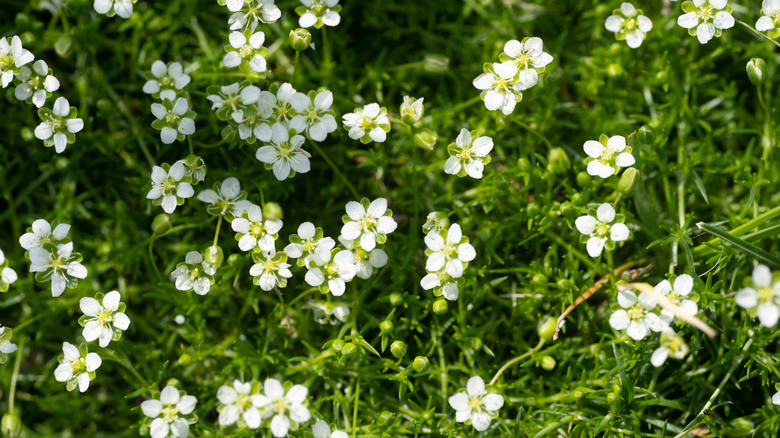
Nothing creates a fanciful atmosphere in a fairy garden quite like a soft miniature lawn of Irish Moss (Sagina subulata). The name is actually misleading: Despite its carpet-like growth habit and mossy appearance, Irish moss isn't a true moss at all, but a member of the carnation family. This flowering plant has tiny, daisy-like white blooms in spring and summer that would make a size-appropriate bouquet for a fairy. A full sun or part shade perennial hardy in zones 4 through 8, Irish moss can hold up to a bit of foot traffic from little ones playing pretend.
Partridgeberry
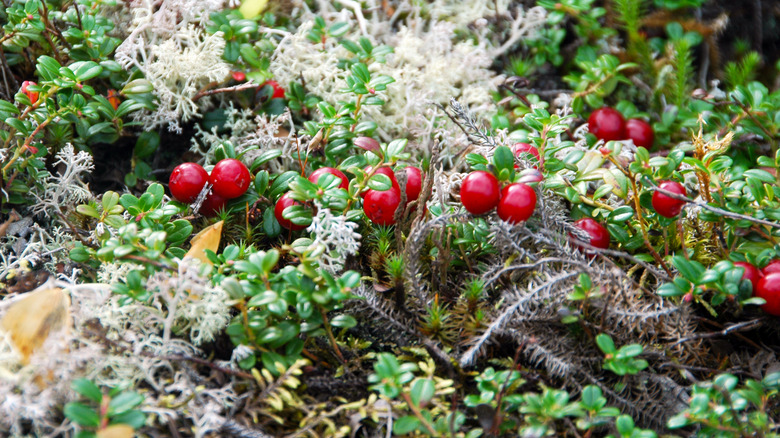
With itty-bitty, fragrant white blossoms that bloom in pairs, followed by adorable, bright red berries, partridgeberry (Mitchella repens) is perfectly scaled for a fairy garden. This fragrant, shade-loving plant grows to about three inches tall and is a particularly polite and non-aggressive creeping addition, making it ideal for compact spaces. Best suited to zones 3 to 8, partridgeberry is at home in heavy shade and can tolerate some drought, though it prefers moist soil. You can expect visits from local songbirds and other small animals in search of the edible berries, though deer will probably leave them be.
Globe candytuft
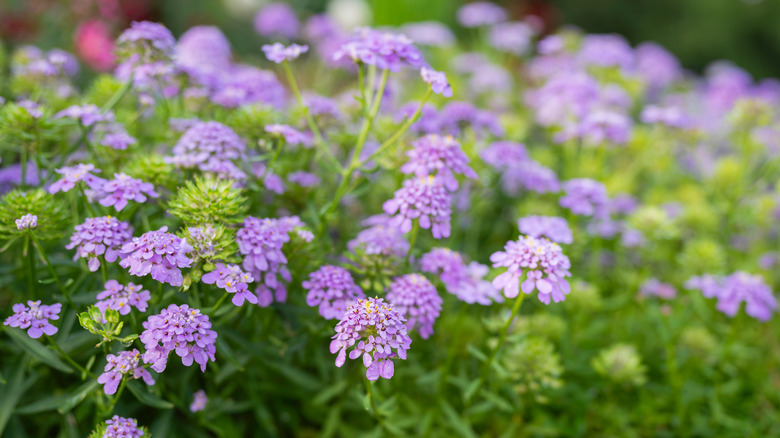
A coastal Mediterranean import, globe candytuft draws its Latin name (Iberis umbellata) from its umbrella-shaped blossoms. What could be more fairy-like than tiny umbrellas? You can find these annuals in a variety of colors, including pink, purple, and yellow. Globe candytuft is hardy in zones 3 through 8, and although it's unfussy about its soil, it does tend to get uncomfortable in particularly hot summers. A sunny fairy garden would probably be the best application for these flowers. Although some light shade won't hurt them, you'll see more flowers in full sun.
Southern maidenhair fern

Lovely, lacy Southern maidenhair fern (Adiantum capillus-veneris) can bring some delicate greenery to your fairy garden, especially if it's humid and shady (too much sun and it might get sunburnt!). Hardy in zones 6 to 9, it favors rich, moist soil, and it can spread via rhizomes to become ground cover if it's grown in the right conditions. Although Southern maidenhair fern is generally a low-maintenance plant, it may require fertilizer, depending on your location. If it's native to your area, you won't need to adjust the soil conditions.
Creeping thyme
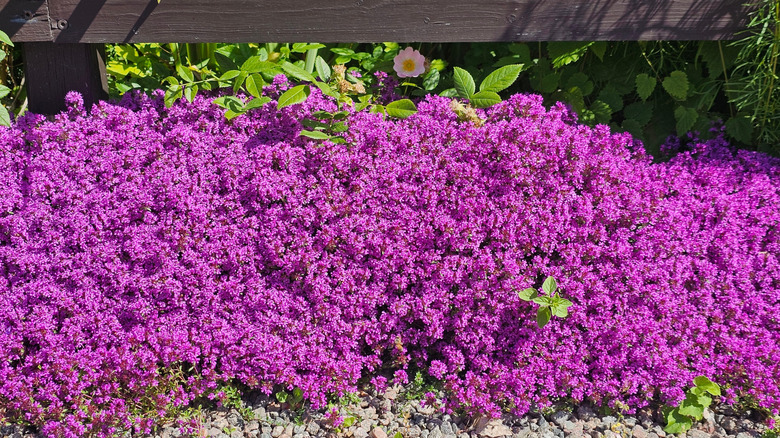
Crushing creeping thyme (Thymus praecox) underfoot won't bother the plant much, but it will release a spicy fragrance that can lend sensory magic to your fairy garden. In summer, it puts on a show of tiny, pinky-purple flowers that draw in bees and butterflies. This perennial groundcover is best for full sun gardens in zones 5 through 8 and tends to prefer dry soil over moist soil — the rockier and more apparently inhospitable, the better. When you grow creeping thyme in its favored conditions, it will spread to form a mat during the first few years of its life.
Rain lily
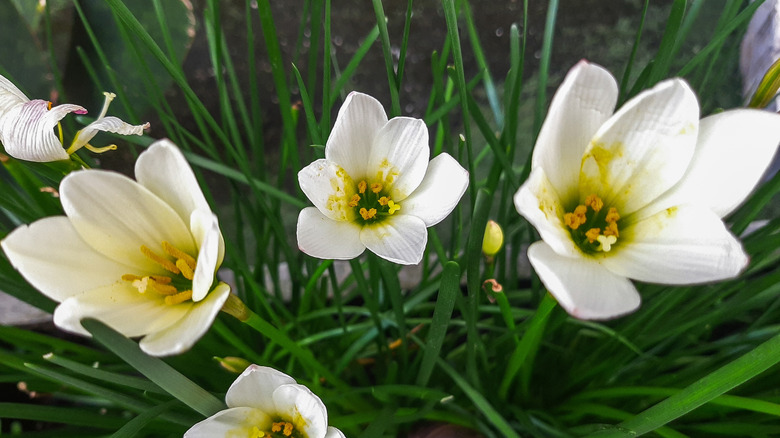
Imagine this: The sun comes up after days spent sheltering indoors from heavy rains, and you run outdoors to check on your fairy garden. Not only has it escaped unharmed, but like magic, your rain lilies (Zephyranthes candida) have bloomed. These sweet-looking white and yellow flowers tend to bloom after rain, with each blossom remaining for three days, with more emerging intermittently. A perennial hardy in zones 7 through 10, rain lily can also be grown in cooler climates if you dig up the bulbs before winter. They look best in full sun but can grow in partial shade.
Fiber optic grass
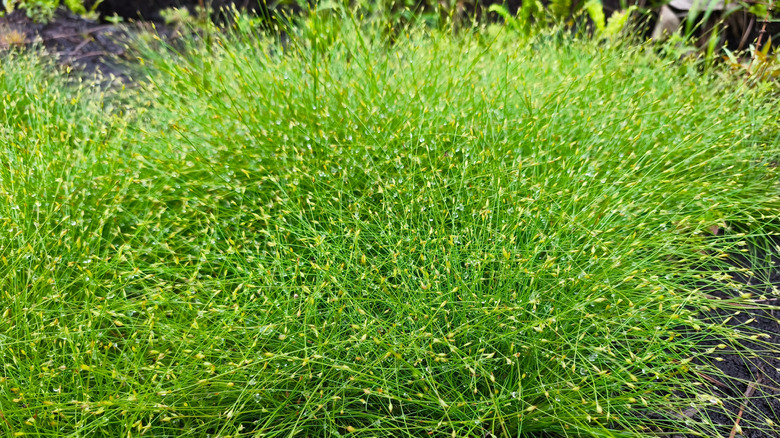
So-called due to the mystifying aesthetic effect of its tiny flowers atop long strands, fiber optic grass (Isolepis cernua) can add a unique visual texture to your fairy garden. In fact, you can also find them sold under the moniker "Fairy Lights." Fiber optic grass is actually a perennial sedge hardy in zones 8 through 11. This plant favors a full-sun location with moist soil, as it grows wild in wetlands and marshy sites. Try planting it along the banks of a little backyard pond or other water feature as part of an aquatic fairy garden.
Drummond's wood sorrel
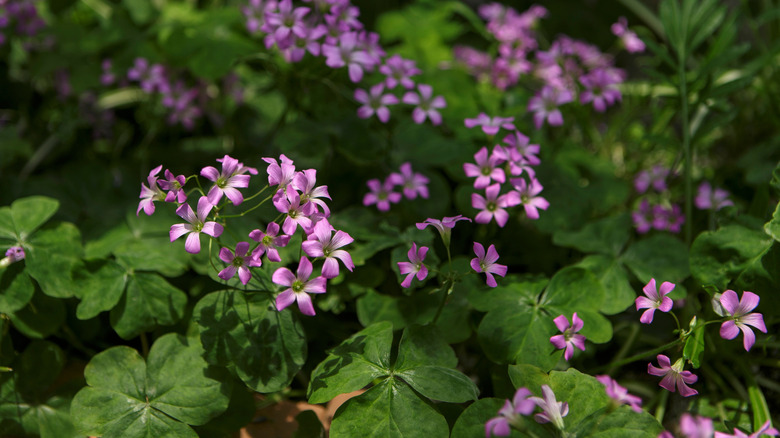
With cloverlike leaves and sweet little lavender-colored flowers that fold themselves down when the sun is scarce, Drummond's wood sorrel (Oxalis drummondii) definitely looks like the kind of plant fairies might shelter beneath. This U.S. native wood sorrel is ideal for use as a ground cover for lower foot traffic areas and is hardy in zones 8 through 9. Although it can tolerate sunny sites, it does prefer some shade when the afternoon sunlight gets intense. Its uniquely shaped leaves are actually edible and contain high amounts of vitamin C, though potently sour.
Polka dot plant
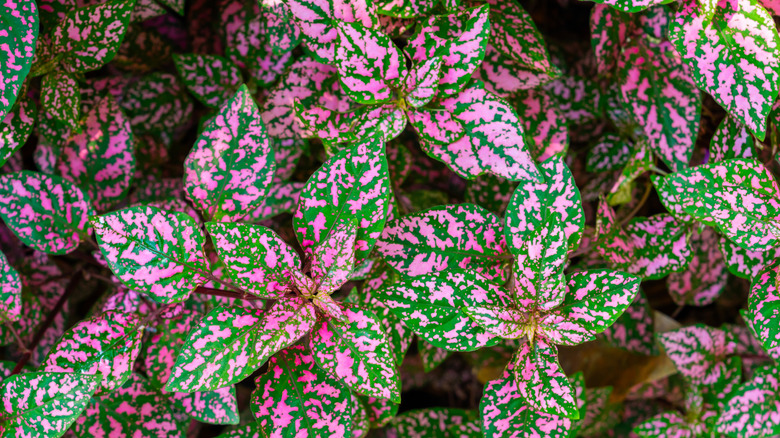
Polka dot plant (Hypoestes phyllostachya) can be a charming tropical selection for a container fairy garden, an annual garden, or a garden in warmer climates such as those found in zones 10 and 11. As its common name suggests, the polka dot plant's leaves feature whimsical splotches of color ranging from white to pink to red. You'll see the best color from plants grown in partial or filtered sunlight. Too much or too little light, and the colors might fade. The flowers are relatively unremarkable, and cutting them off can redirect energy to the more interesting leaves.
'Angelina' stonecrop
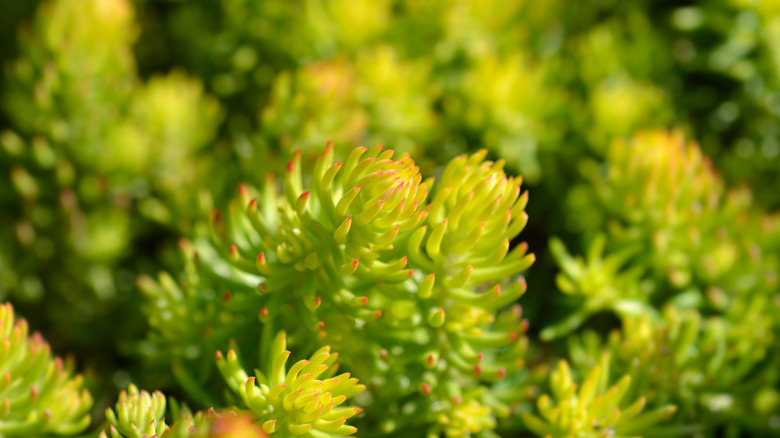
For a fairy garden that has visual interest after the warm weather of summer has passed, try the 'Angelina' cultivar of stonecrop (Petrosedum rupestre 'Angelina'). A European native often found growing on walls or roof shingles in the wild, stonecrop is happiest in full sun applications, though some light shade won't do it much harm. This plant forms low, wide mats of spiky evergreen foliage that is yellow in spring and summer and turns reddish orange in the colder months. You can eat the youngest leaves and shoots of this plant (though too many may upset sensitive tummies).