

What The Old Farmer's Almanac Says About Sowing Seeds Outdoors In Winter
With snow on the ground, common sense says to wait to plant until the ground thaws. But you might be surprised to know that there actually are some seeds that don't mind a winter wonderland. Don't just take our word for it, though. You might consider turning to the Old Farmer's Almanac for gardening wisdom. The 200-year-old publication says there are some common seeds that you can sow outside before spring, turning the "garden season" into an all-year thing.
When you're preparing the garden for heavy winter snow, take a look at what seeds you may be able to sneak in there. Certain plants crave the freezing temperatures because they need a prolonged period of cold in order to germinate. This is called seed stratification, a natural defense against early germination. In nature, if plants germinate early, then the little sprouts will be killed by ice and snow, not surviving to bloom in the spring. But some seeds come with a special waxy coating that keeps them from getting started too soon. The cycle of freezes followed by thaws eventually breaks down the coating, so they're ready to germinate at just the right time when the weather warms.
If you think about wildflowers dropping their seeds in fall, this isn't too surprising. The flowers good for winter planting include baptisia, coreopsis, forget-me-not, and lavender. And these are just a few perennial seeds that need stratification. And don't worry about frozen soil in December or January. You can get around it by using milk jugs.
Try a few different ways to stratify seeds this winter
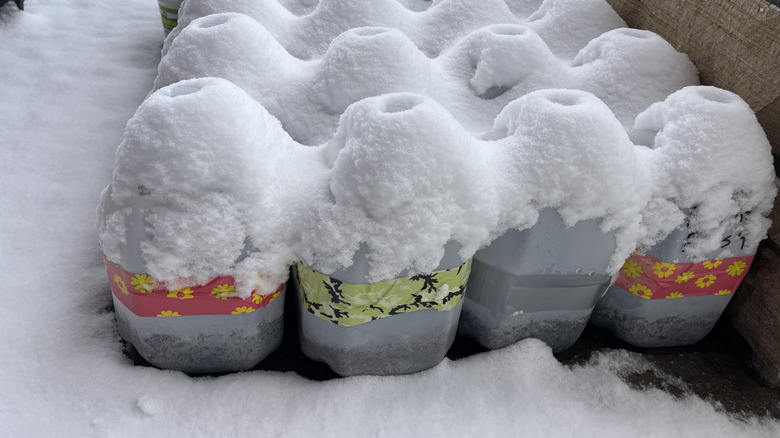
Milk jugs are the classic budget method to make your own greenhouse, so you'll have a mini plant nursery in January or February. Just cut the jugs in half, making the incision below the handle. Drill or poke a few holes in the bottom half so water can drain. Fill the bottom half with soil, press seeds into the surface, and give it a dose of water. Tape the top half of the jug to the bottom, and then place the jug in a sunny spot in the garden that's blocked from the wind. Let them enjoy the cold. In the spring, watch for green sprouts and remove the lid when temperatures warm.
If you want to start seeds indoors, you can stratify them there, too. Instead of milk jugs, tuck them into a plastic bag with moistened soil and put them in your refrigerator. Just make sure they're kept in temperatures colder than 45 degrees to simulate winter cold.
While you can help nature along by creating your own little winter plant nursery with old milk jugs or renting out your fridge space, you don't have to do this. You can actually let nature do the heavy lifting outside if you already have some of these winter-sowers in your yard. Self-seeding flowers in the garden are stratifying their seeds outdoors naturally and will give you new plants come spring.