

The DIY Solution That Can Melt Snow & Ice (And If It's Safe To Use In The Garden)
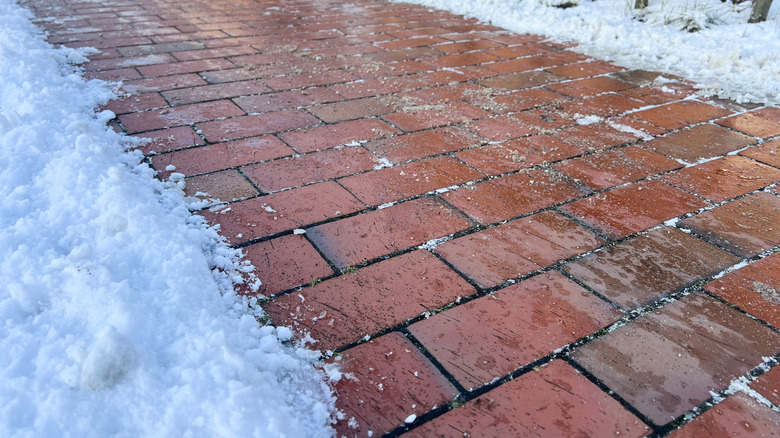
Surprise snowstorms can catch anyone off guard, especially in regions not used to snow. With The Old Farmer's Almanac predicting snowfall at higher than normal rates in places like the Carolinas this winter, rock salt may be in high demand. If you get stuck without any, don't worry. A simple, quick home remedy using alcohol and dish soap can help melt snow and ice.
Rock salt (sodium chloride), while great for keeping surfaces free of snow, can damage plants in two ways. One, it can seep into the soil and dehydrate or kill the roots of lawns and your garden plants. And two, it can splash on foliage, damaging leaves and evergreen needles alike. Salt water effects on plants can be serious, and too much can even kill a plant or tree. If you notice a lot of browning foliage lining walkways in the winter, ice melt might be the culprit.
To avoid salt, try an easy DIY solution of alcohol, water, and dish soap. The general idea is that alcohol freezes at a lower temperature than water, and well below most winter lows. So this solution should discourage ice from forming and from refreezing after it melts. But is it safer than salt? The jury is out on that one. Rubbing alcohol and dish soap in concentrated quantities can hurt plants, too. That said, this particular DIY hack doesn't call for high concentrations of either dish soap or rubbing alcohol, so it may be a safer alternative than salt.
How to use rubbing alcohol and dish soap to melt ice and snow
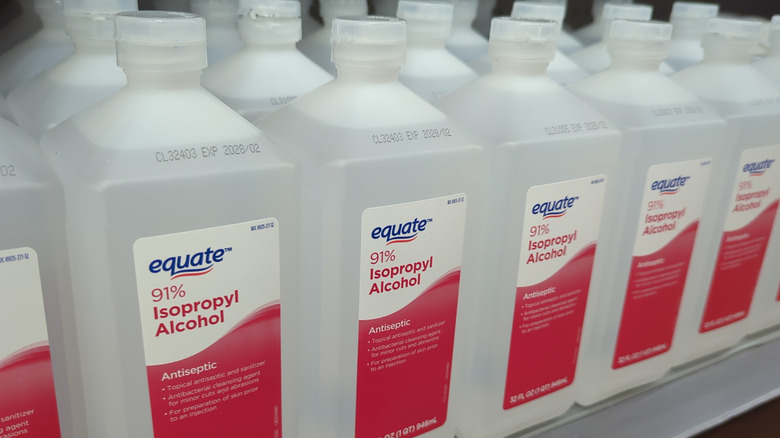
How effective is this DIY ice melt? Some homeowners swear that it keeps hard surfaces free of ice. Others say it's not as good as salt at keeping moisture from refreezing. It can't hurt to try, however, especially if you find yourself out of other options or there's a run on rock salt right before a big storm.
Just mix six drops of dish soap and 2 ounces of rubbing alcohol into half a gallon of warm water, according to the recipe given out by WYFF Channel 4 News in Greenville, South Carolina. Then, either pre-treat sidewalks or pour it on the ice or snow after it's arrived. There are other variations of this recipe that call for a cup or more of rubbing alcohol in the mixture. Just be careful not to use too much dish soap in your solution since too many suds might just be a slippery mess itself.
To make sure you don't harm plants with either your DIY solution or salt, use it only where you absolutely need it to keep surfaces safe for walking. And if neither of those solutions appeals to you, another thing to try is spreading fertilizer on driveways. It's a pricier option than salt or alcohol, but it's safe for plants. Regardless, it's a good idea to be prepared for how much precipitation the Almanac predicts for this winter.