

Manage Excess Water In Your Yard With A Gorgeous Tree That Will Drink It Up
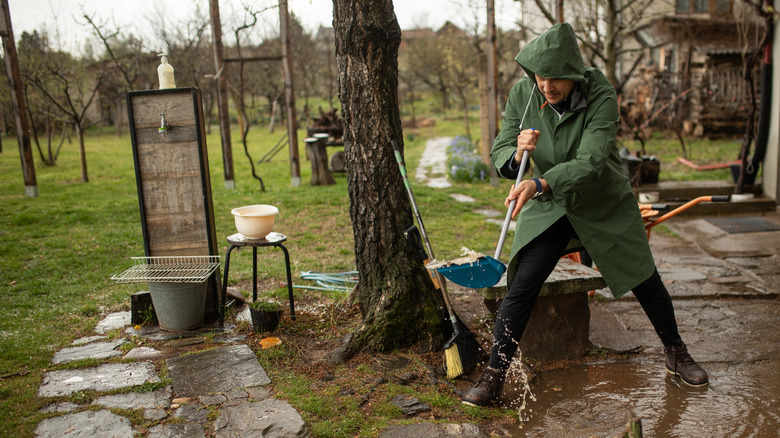
Living in an area with waterlogged soil can make gardening and landscaping a frustrating challenge. When soil is constantly saturated, there's very little room left for oxygen, which can result in poor growth and susceptibility to disease. If you've just about resigned yourself to soggy shoes, clouds of mosquitoes, and little visual appeal in your swampy yard, you might want to try planting the elegant and thirsty weeping willow (Salix babylonica).
These striking willow trees are originally from China, and although you'll probably see them sold as S. babylonica, it's likely that the plants you're seeing are actually hybrids or look-alikes. In fact, there may not be any true S. babylonica left! But there are other distinct cultivars available, too, including some that may actually be better suited to smaller spaces. 'Scarlet Curls' is a great example that boasts uniquely colorful branches that are red when young and turn yellow as they age.
Planting a weeping willow can have additional benefits, such as reducing soil erosion and attracting pollinators to your yard. However, keep in mind that you'll need plenty of space, as it can grow 35-45 feet tall, and just as wide. If your yard is small and crowded with sewer lines or a septic tank, this tree may not be the best selection: The root system of a weeping willow can be three times as expansive as the tree itself and can be destructive. As always, consider the right plant for the right place.
How to care for a weeping willow
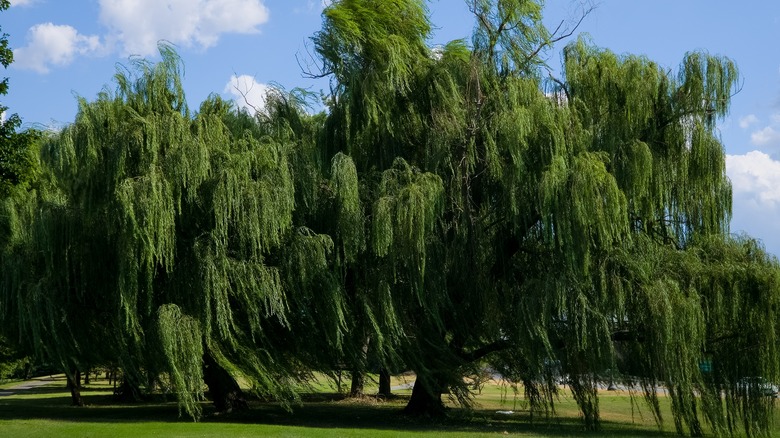
If you think you have the room and the water to support a weeping willow, the next thing you'll need to do is find an ideal site to plant it. This location should be as far from underground utilities as possible to prevent damage from naughty roots, away from swimming pools and other areas where you don't want dropped twigs to accumulate, and should ideally receive plenty of sunshine. Hardy in USDA Zones 6 through 8, you can plant a new weeping willow in the cooler, wetter weather of spring or fall, as the additional moisture can help young roots get a good start. Weeping willows are happiest in acidic soils, but can still thrive in neutral or alkaline environments. They can even tolerate some salt. In fact, if heavy metals in the soil of your yard have made it an inhospitable environment for other plants, a weeping willow may actually mitigate this a bit by absorbing pollutants.
These trees are resistant to the attentions of browsing deer and aren't bothered by the effects of black walnut, but pests such as aphids, scale, and caterpillars may feed on a weeping willow. Keep an eye out for issues like willow scab and willow blight, which are both caused by fungi — pruning out infected branches can stop these fungal issues from infecting the trunk. Regular fertilization can help keep trees strong and healthy. Just make sure you use a slow-release fertilizer to reduce the risk of contaminating nearby water sources via runoff.