

The Essential Gardening Task To Prep Cherry Trees For Winter For Delicious Fruit In Summer
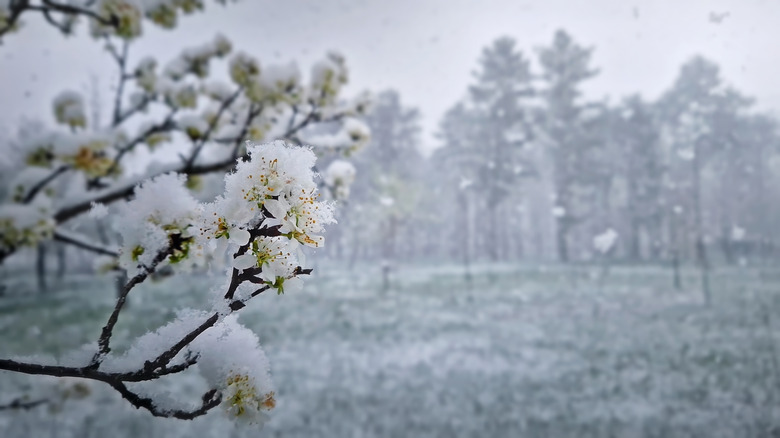
No one wants to see a cherry tree fall prey to the pitfalls of winter and then produce a batch of sour or puny fruit in the spring or summer. You can do one thing now to help prepare your fruit-bearing favorite for the cold months ahead. Protect the bark with some white, water-based latex paint.The sweet cherry tree (Prunus avium), a cousin of the rose bush, happens to be one of the more cold-hardy fruit producers, since it thrives in USDA Plant Hardiness Zones 3 to 8. It's really the delicious fruit tree you should be planting in the fall. But once you do, know that its trunk will need extra protection during its dormant season.
Some plants, especially young ones, can suffer sunscald. This happens when the bark freezes and then thaws rapidly in the sun, often on the south-facing side. This fast freeze-and-thaw cycle leads to cracking bark as moisture contracts and quickly expands again. Eventually, once the weather warms, pieces of bark slide off – leaving the layer beneath exposed and vulnerable.
Cherry trees of any age can be particularly susceptible to sunscald because they have thinner bark. This means they have more trouble with temperature regulation. Paint, through a process sometimes called whitewashing, protects them by reflecting light away from the surface. In order to properly paint fruit tree trunks, you'll need to gather a few supplies: Some nontoxic, water-based, latex paint, a paintbrush, water, and a mixing pail.
Painting your cherry tree trunk to protect it in winter
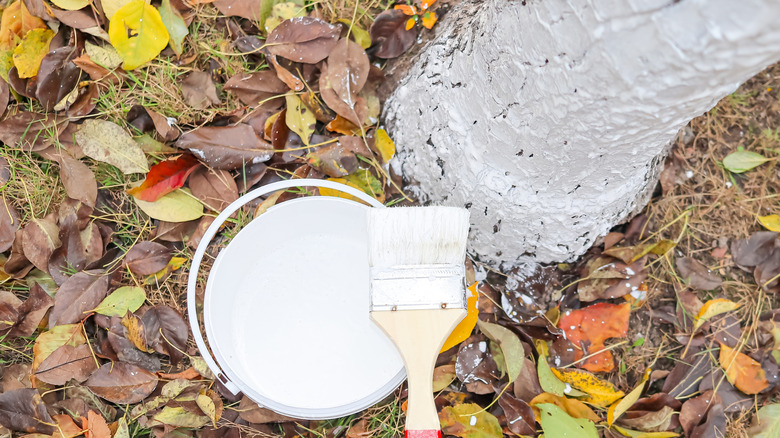
It's best to opt for interior paint rather than outdoor paint, as these are safer for the tree. Never use oil-based kinds. You don't necessarily have to use white, but pick a lighter color at least. A darker one will absorb heat, which defeats the whole purpose. Some gardeners swear by dissolving lime into water as their whitewashing solution, but this can be caustic and sometimes damage the trunk. It's safer to use diluted water-based latex paint.
To get started, dilute your water-based latex paint by half. For every quart of paint, mix in about a quart of water. Next, use a brush, and not a sprayer, to apply a nice, thick coat. One layer should be enough protection. If you don't have paint, you could also buy specialized trunk wraps made of plastic or kraft paper – once again, just make sure you don't purchase these in dark colors. Remove them when spring arrives so that moisture or bugs don't make their way between the barrier and the bark.
A barrier helps the trunk maintain a more consistent temperature — and it also helps protect the tree from other pests, like mice or voles. During winter when other food sources become scarce, these small pests can come for the cherry bark. If it's covered, it won't be as appetizing or accessible. Painting the trunk, no matter your variety of cherry tree, can be the one task you do this winter to make sure you've got a big harvest of delicious fruit next spring.