

Take Control Of Unwanted Crabgrass With A Simple Solution For Your Lawn
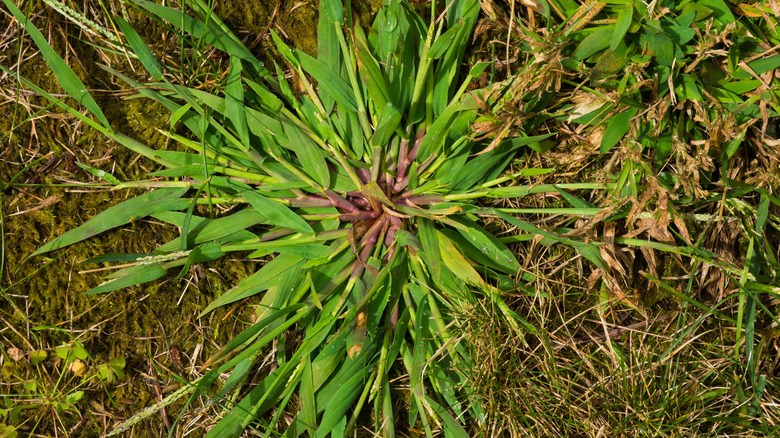
No one wants an otherwise pristine lawn marred by crabgrass. That's why the best way to take control of this invader is to apply preemergent herbicide in the spring. This method will help you head off this unwelcome guest before it gets established in your yard, and it's way more effective than trying to use postemergent herbicides. That's because killing crabgrass in July is harder than in the spring. This invasive plant's seeds germinate in spring to early summer — basically whenever the soil gets to 55 degrees or a little warmer. You'll need to apply weed preventor right before seeds begin to germinate, typically a week or 10 days before you expect soil to reach the ideal temp. This gives the chemicals enough time to interfere with the plant's development.
While you might be able to kill crabgrass with baking soda, it's probably best to shop for a preemergent solution that includes pendimethalin, prodiamine, or dithiopyr, all known seed development disruptors. They all work in similar ways by preventing plant cells from dividing. That means the weed doesn't grow and simply fails.
Word to the wise: Be very careful when spreading it around. It can interfere with other plant development too, like vegetables or flowers you're growing from seed in adjacent flower beds. This includes young grass, as well. So, avoid using preemergent herbicides on recently laid turf or after you've reseeded the grass. If you have to do so, try specialty varieties like mesotrione or siduron. These will leave grass seeds alone, but they may not be as powerful of a deterrent for weeds.
How best to apply preemergent herbicide to your yard
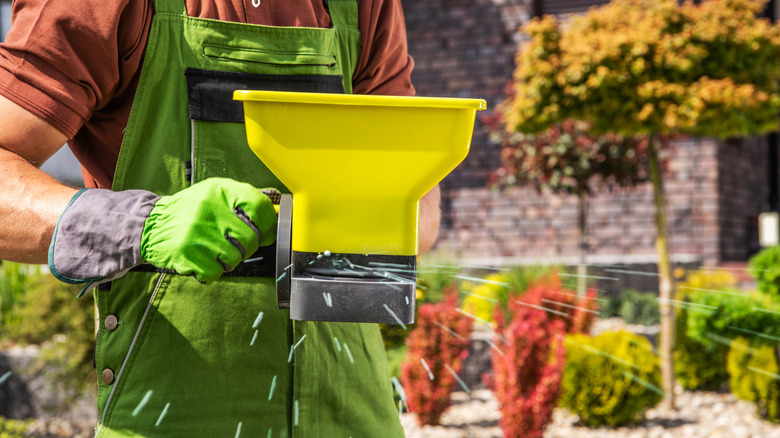
To get a jumpstart on tackling crabgrass, aim for applying your preventor sometime between mid-March and early May, typically near the same time forsythia flowers bloom. If the weather is warmer than usual, you'll probably be out with the spreader sooner rather than later. When using preemergent, be sure to follow all directions on the packaging carefully.
Spread the granular bits evenly over your lawn. Lay them out a day or two before you expect rainfall. If rain isn't in the forecast, plan to water the lawn yourself. This helps the chemicals get below ground where they can best interfere with seeds. If chemicals hang around on the surface, they can't do their jobs. And they have a lot of seeds to kill. A single plant can produce 150,000 seeds. That's no joke. If the first round of preemergents doesn't work, you can spread a second dose a couple of months after the first. If crabgrass still sprouts, then you may need to try postemergent herbicides, too – or else consider a complete renovation of your lawn by the time autumn rolls around.
Before using a herbicide, always double-check that's it safe for your type of grass. Some herbicides shouldn't be applied to grass during drought or other times of duress, like if you're dealing with fungal infections. Regardless, getting rid of weeds makes more room for healthier grass to grow. Then you'll know you've taken control of crabgrass for a healthier lawn.