

How To Grow Strawberries Indoors For A Delicious Harvest All Year Long
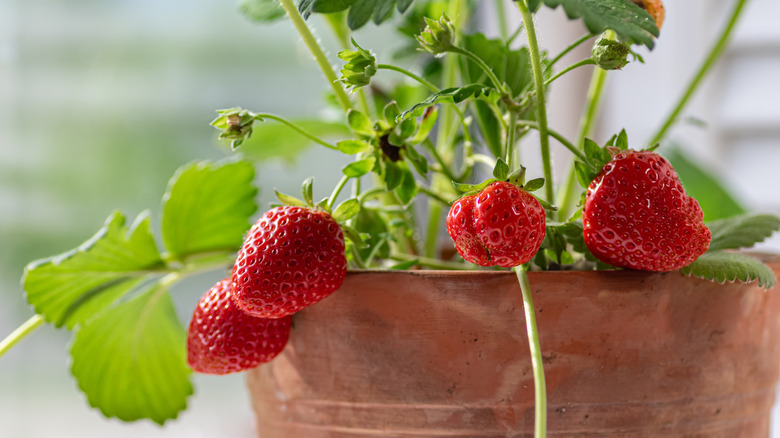
As summer weather fades away, so does the promise of fresh, sweet strawberries from the backyard. That is, unless you find a way to turn your windowsill into a mini garden. This winter, grow strawberries indoors for an always-fresh alternative to prowling your grocery store's produce aisle.
The perfect climate for strawberries outdoors typically includes USDA Plant Hardiness Zones 3 to 9, depending on the variety. They will thrive at the ambient temperature of your home, as long as it doesn't get too drafty. The first step in growing these plants indoors is picking the variety that makes the most sense. Avoid picking up a June-bearing variety, which produces all of its berries in just a few weeks of the year. Instead, go for day-neutral varieties since they continuously grow fruit — as long as they don't get too hot. Try out 'Albion' or 'Everest' as great-tasting cultivars for indoor berry growing.
If you prefer plants that bloom with pretty pink flowers as well as fruit, then you might want to look for the ornamental 'Summerbreeze Rose' or 'Ruby Ann'. Everbearing varieties, which have multiple but not continual yields, can be a great type to grow indoors, too. While they don't produce quite as many berries as day-neutral strawberries, they do have multiple harvests, and they do well in containers. 'Ozark Beauty' and 'Rockhill' are two great cultivars to buy.
Choose the right pot and a sunny spot for your indoor strawberries
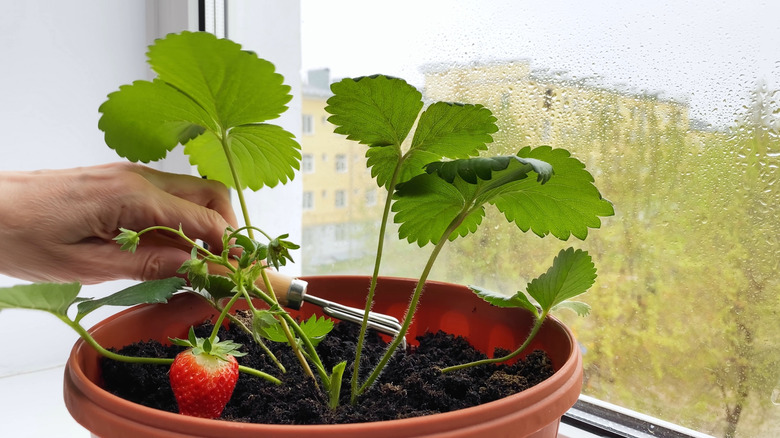
Next, you'll need to pick a container for your plants. Strawberries grow roots that are relatively shallow, so they don't need deep pots. However, they do like the space to grow horizontally. Try a container that's at least a foot wide and about 8 inches deep, though the roots may only need as little as 6 inches. It's probably best to use dormant or live plants rather than trying to grow strawberries from seed because many varieties require a cold stratification period, making it slightly more complicated. This might mean, however, that the kind of plants you want to buy at your local nursery might only be available during the growing season.
You should be able to fit a few plants into your foot-long container. Allow about 8 inches or so between each one. Use a kind of potting soil that drains well but doesn't get too dry. Strawberries crave consistent moisture, and their shallow roots are sensitive to dry soil. It's also a good idea to add fertilizer to the pot, either with a type of all-in-one starter soil or as an additive.
These plants also need plenty of light, so make sure you set them near a sunny window, or get grow lights ready. Know that in the life cycle of a strawberry plant, they'll need to be pollinated to bear fruit. Without any bees to help you, this job will fall to you. Grab a Q-tip and rub it inside one flower, and then another. Now you're ready to enjoy your berry harvest all year.